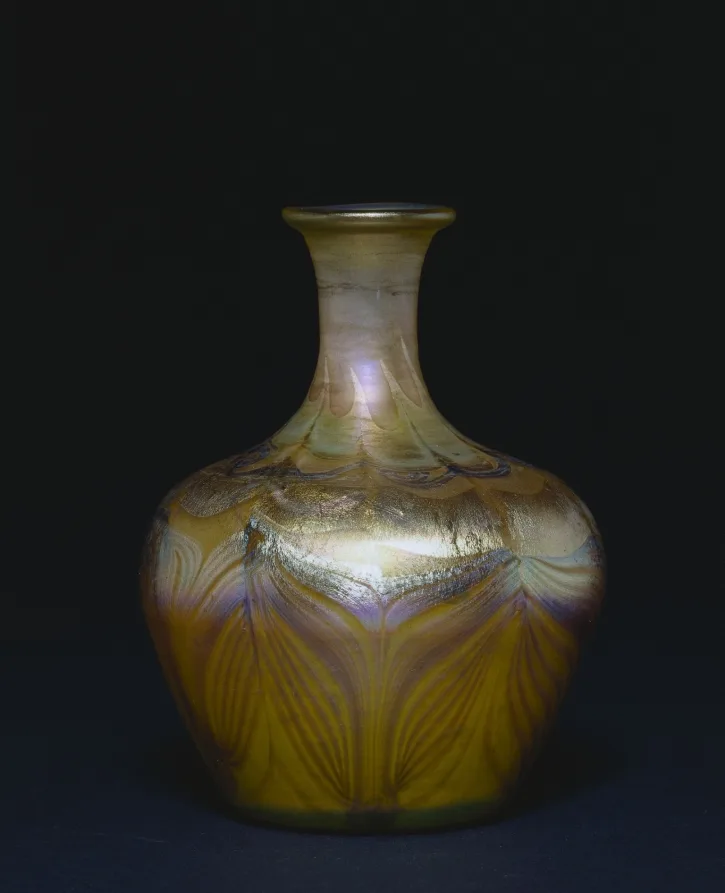
 America · c. 1905–10
Vase
Louis Comfort Tiffany (American, 1848–1933), designer; Tiffany Studios (United States, New York, 1902–32), maker
favrile glass
One object produces reflections in actual glass; the other uses paint to suggest several different materials. Compare curved surfaces, edges, and highlights while remembering that the photographs add another layer to both encounters.
America · c. 1905–10Louis Comfort Tiffany (American, 1848–1933), designer; Tiffany Studios (United States, New York, 1902–32), maker
favrile glass
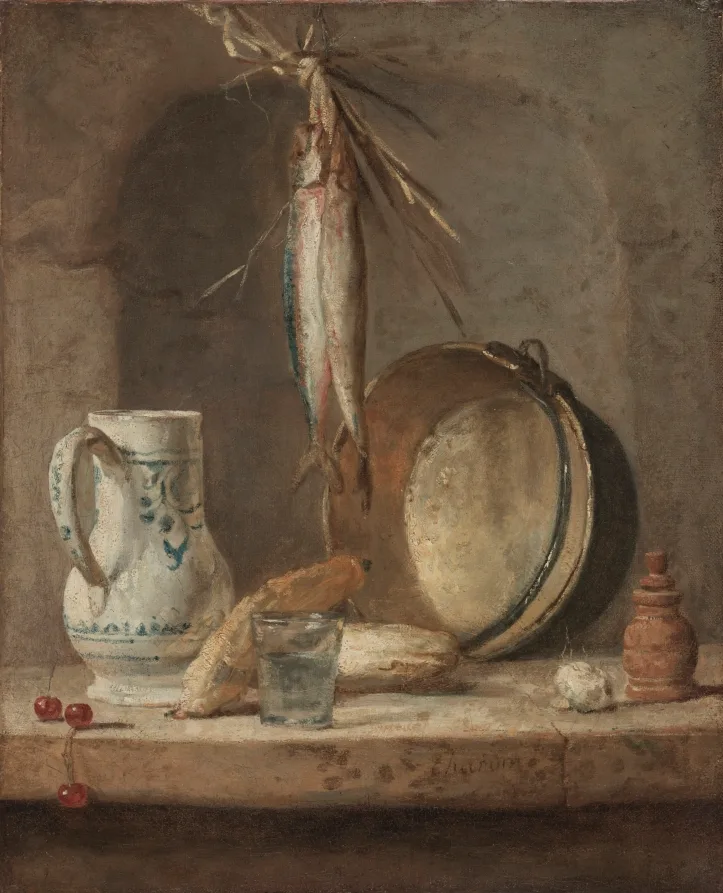 France · c. 1735
Jean-Siméon Chardin (French, 1699–1779)
oil on canvas
The Favrile vase’s shoulder carries luminous changing colors. Chardin’s pale jug has broad highlights and soft shadows that describe a glazed surface. Both reward attention to light, but the vase interacts physically with illumination while the jug’s depicted effects are fixed in paint.
Tiffany’s flared rim catches a narrow bright highlight. Chardin’s drinking glass must retain a visible boundary while suggesting the bread behind it. Edges reveal different problems: shaping a reflective object and painting the appearance of a partly transparent one.
The vase’s repeated featherlike lines follow its rounded body. Chardin’s hanging fish create a narrow reflective counterpoint to the vessels below. In each case surface variation guides looking, but a designed glass pattern and painted fish skin arise from different subjects and methods.
A photograph cannot reproduce every changing color of Favrile glass, while Chardin’s material effects are painted illusions. Similar highlights do not mean the two objects share a manufacturing technique.
The comparison of visible choices is our own reading. Follow either artwork page for its full context, uncertainty note and image-rights record.
Glass, furniture, a society portrait, and a boxing ring organize attention differently.
Printed cotton, woven wool, glass in paint, and ink ask for different kinds of looking.