What surfaces can do
An image can represent a material or make its own material visible. This route compares those two possibilities across decorative textiles, still life and printmaking. Follow repeated forms, reflective edges and accumulated marks, then connect them with the documented process. Similar visual richness does not mean that the objects were made, handled or used in the same way.
Begin the journey ↓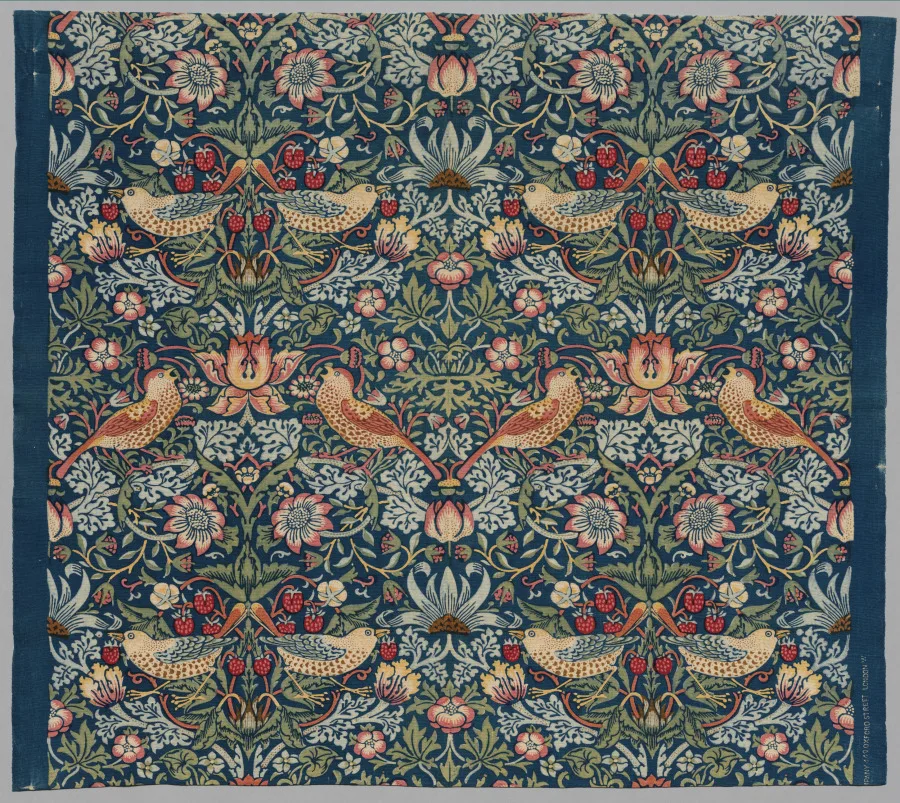
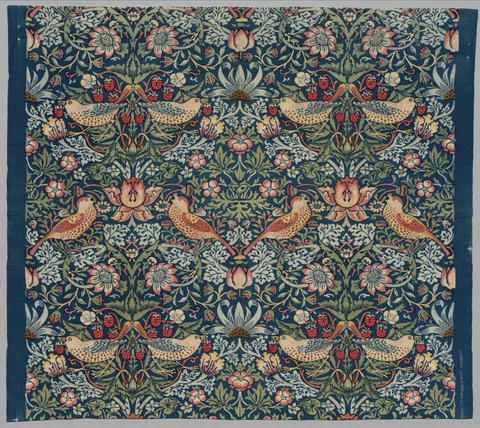
Blue belongs to the making
The blue ground is part of the textile’s dyeing and printing sequence. It supports birds and plants as a manufactured repeat. Keep the date of this later cloth separate from Morris’s role as the earlier designer.
Carry this question: Where does the blue ground help separate the repeated figures?
Open the artwork ↗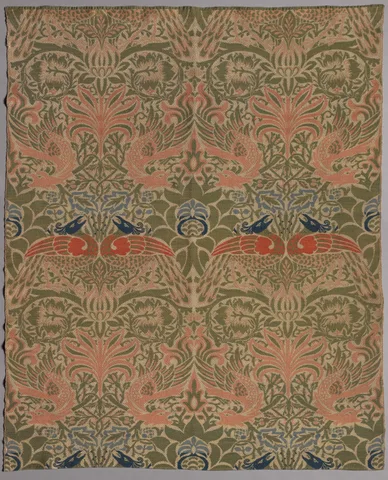
Wool changes a room
The dense woven surface gives pattern a physical presence. The museum relates the textile to warming wall hangings, bringing use and room effect into the reading. The named birds and dragons matter alongside the weight and structure of the cloth.
Carry this question: How does the woven surface differ from a smooth printed pattern?
Open the artwork ↗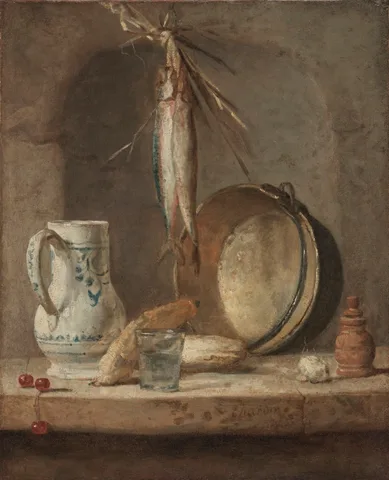
Paint makes glass seem transparent
The painted glass must remain visible while allowing a sense of the bread behind it. Compare this represented material with the actual textile surfaces. Changes in edge, colour and light make paint suggest something with very different physical properties.
Carry this question: Which edges let you recognise glass without making it look opaque?
Open the artwork ↗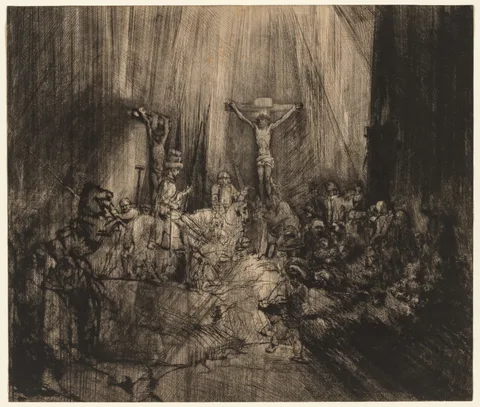
Ink changes a particular impression
Tone at the sheet’s edges depends partly on ink left on the plate during printing. The museum distinguishes this impression and the reworked fourth state. The visible surface records decisions beyond the initial cutting of the image into metal.
Carry this question: How does the surrounding ink change the force of the illuminated centre?
Open the artwork ↗Look at a pair more closely
- Nature becomes a repeat
Strawberry Thief and Peacock and Dragon
- What darkness lets us see
La Tour’s Peter and Rembrandt’s Three Crosses
- A surface and its painted image
Tiffany’s Favrile vase and Chardin’s pantry shelf
Read with the sources
Historical context follows the individual museum records linked on each artwork page. These routes make original comparisons of visible form; resemblance alone is not evidence of shared meaning or direct influence.