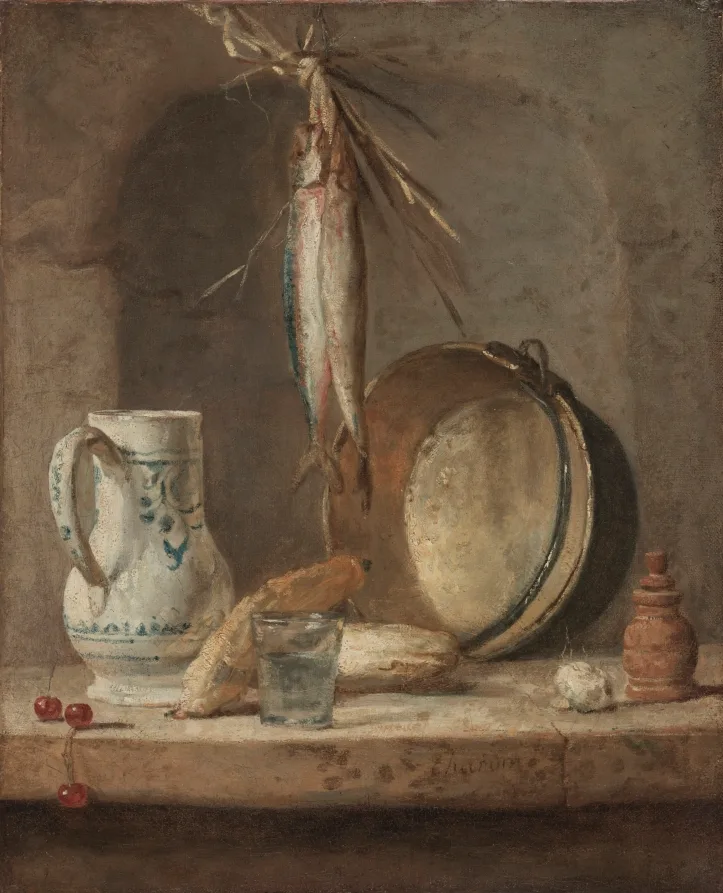
A pantry shelf becomes an experiment in looking, where each ordinary surface asks paint to behave differently.
Nothing here requires a dramatic story. Hanging fish, bread, a jug, a glass, and a leaning dish establish a modest pantry arrangement. Yet the surfaces differ sharply: the glass is partly transparent, the jug catches a soft glaze-like light, and the fish interrupt the wall with narrow reflective bodies. The small cherries near the edge add a concentrated red accent.
The museum describes Chardin’s still life as a sustained investigation of observation, light, and material effects. His technique combined delicate glazes with thicker dragged paint, and he expected close inspection. That account makes the ordinary subject more demanding rather than less. Compare the jug’s broad curved surface with the rim of the glass, then look at the shadows binding objects to the shelf. The painting’s achievement lies in making different materials coexist in one believable atmosphere while allowing the worked surface to remain rewarding when attention moves closer.
The supplied record does not assign a symbolic code to the pantry objects. Their arrangement invites discussion of material and observation, but an ordinary food item should not automatically be turned into a moral emblem without supporting evidence.