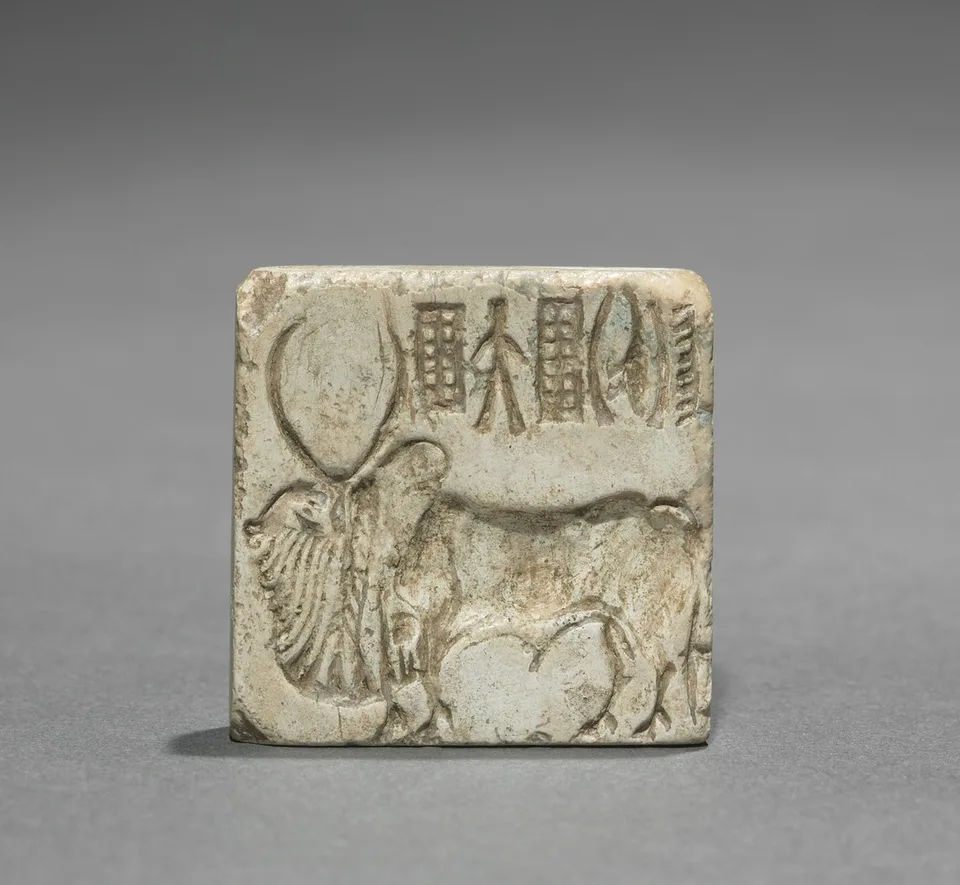
 Pakistan, Indus Valley civilization · c. 2000 BCE
Seal with Two-Horned Bull and Inscription
Unknown maker
steatite
Both objects place recognisable images near written signs, but the available knowledge is unequal. The Indus script remains undeciphered, while the Korean manuscript belongs to an identified Buddhist text. Compare what can be described visually with what requires a reliable reading tradition.
Pakistan, Indus Valley civilization · c. 2000 BCEUnknown maker
steatite
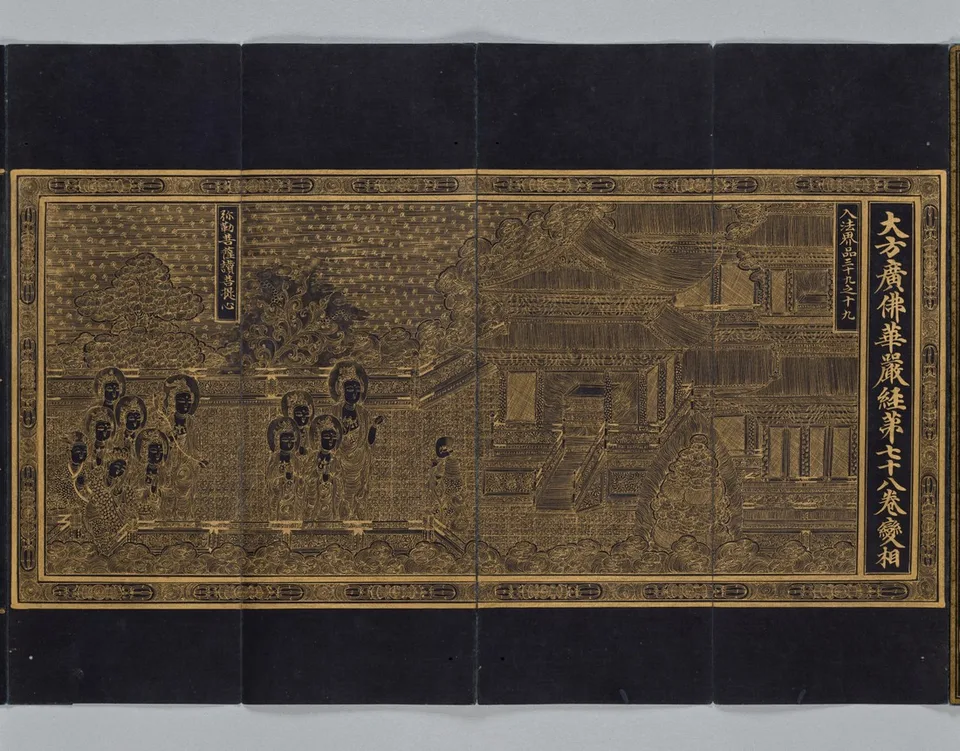 Korea, Goryeo dynasty (918–1392) · 1300s
Maker unrecorded
Folded book with illustrated frontispiece; gold and silver on mulberry paper
The seal’s sharply cut signs can be distinguished by shape without being translated. The sutra’s title panel belongs to an identified sacred volume. Visual clarity alone does not determine whether a writing system can currently be read.
The bull’s horns make the animal recognisable even beside unread signs. Gold figures in the manuscript establish a sacred encounter within a known textual context. In each case the image offers information, though it does not automatically decode neighbouring writing.
A few carefully selected lines describe the bull’s anatomy in a tiny stone field. Dense gold lines articulate the manuscript’s building and setting. Both show deliberate control, but their different supports and purposes shape what detail is useful.
These objects have no proposed historical connection here. The comparison concerns the limits of reading images and writing, not a shared language, symbolic system or religious function.
The comparison of visible choices is our own reading. Follow either artwork page for its full context, uncertainty note and image-rights record.
Six different relationships between figure, story, writing and spiritual authority.
Good wishes, coloured figures, a mechanical diagram and unread signs.