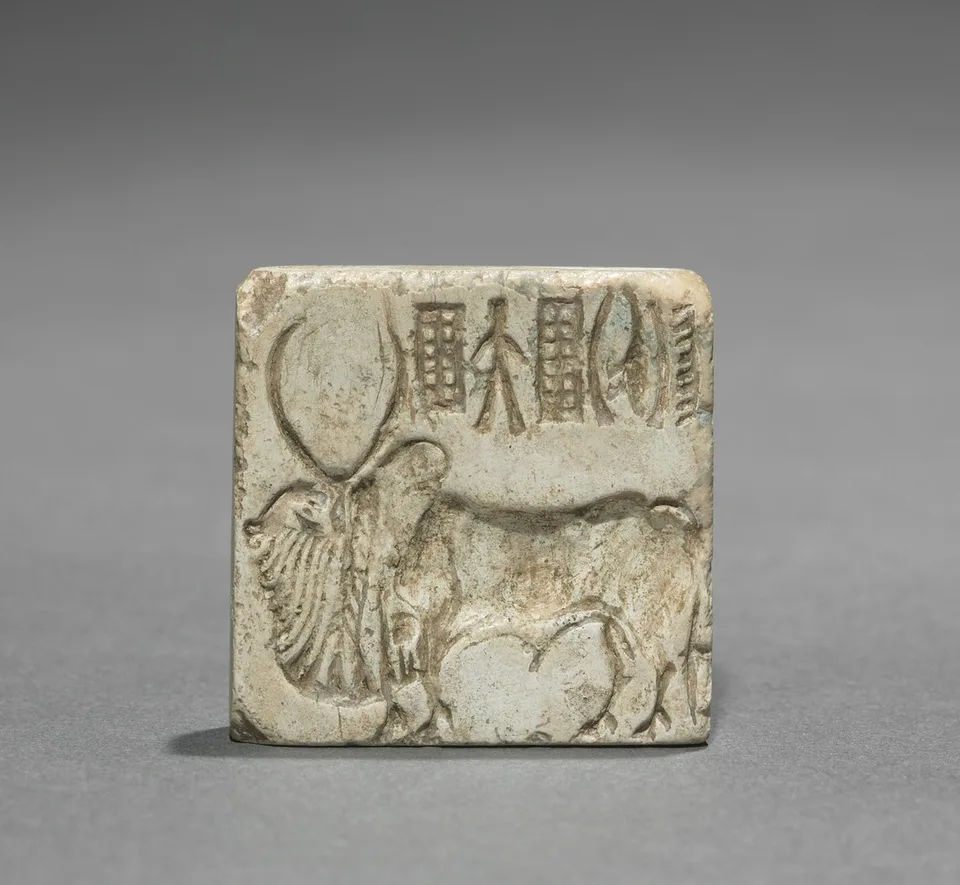
Compare the carefully carved bull with the signs that still resist translation.
The bull is readily recognizable, but the row above it presents a different kind of challenge. Tall horns curve into the upper left of the square, while the remaining space holds a short sequence of signs. The animal’s body is described with remarkably selective lines: the back, shoulder, neck fold and legs carry much of the information. All of this occupies a steatite object only about three centimetres across, so the enlarged photograph changes the physical scale at which we encounter its detail.
The museum dates the seal to around 2000 BCE and associates it with the Indus Valley civilization in what is now Pakistan. It suggests that seals of this kind probably identified merchandise or property. That proposed function does not supply a translation of this inscription. The record explicitly treats the script as undeciphered. The image therefore offers a useful boundary between recognizing a pictured animal and reading a written message. We can describe the number, shape and placement of the marks without assigning them invented names, ownership claims or religious meanings.
The inscription is undeciphered, and use for identifying property is qualified. Recognizing the bull does not allow us to translate the signs or name the seal’s original owner.
Which statement respects the evidence available for the inscription?
Practise looking at Seal with Two-Horned Bull and Inscription →