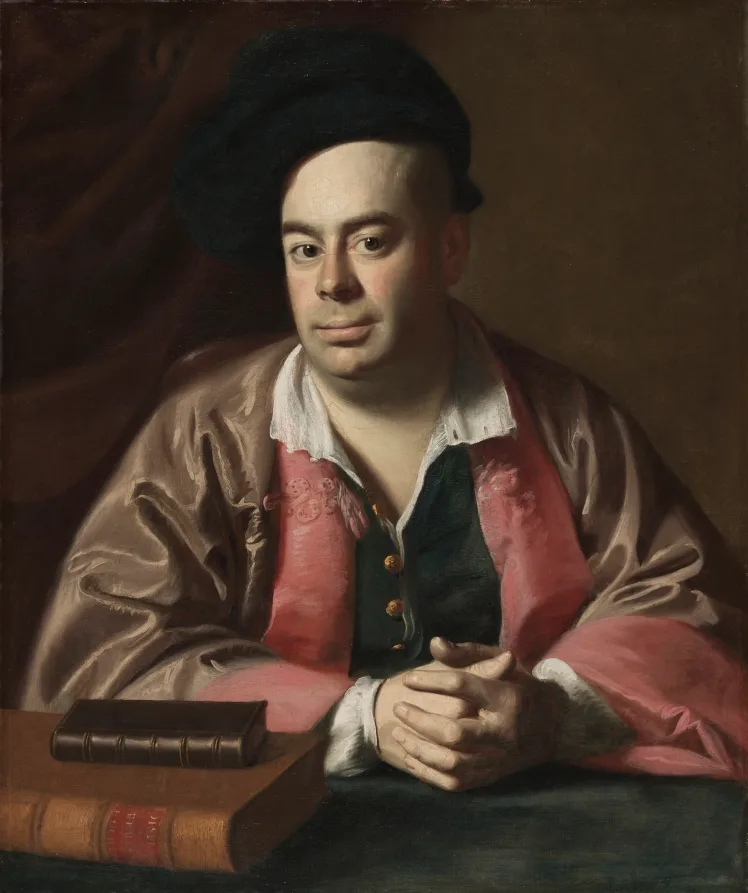
 United States · c. 1765
Nathaniel Hurd
John Singleton Copley (American, born The Thirteen Colonies, 1738–1815)
oil on canvas
This pairing reconnects an object with the person identified as its maker. A painted portrait and a silver teapot present skill differently: one through a carefully fashioned social appearance, the other through a functional object’s form and finish.
United States · c. 1765John Singleton Copley (American, born The Thirteen Colonies, 1738–1815)
oil on canvas
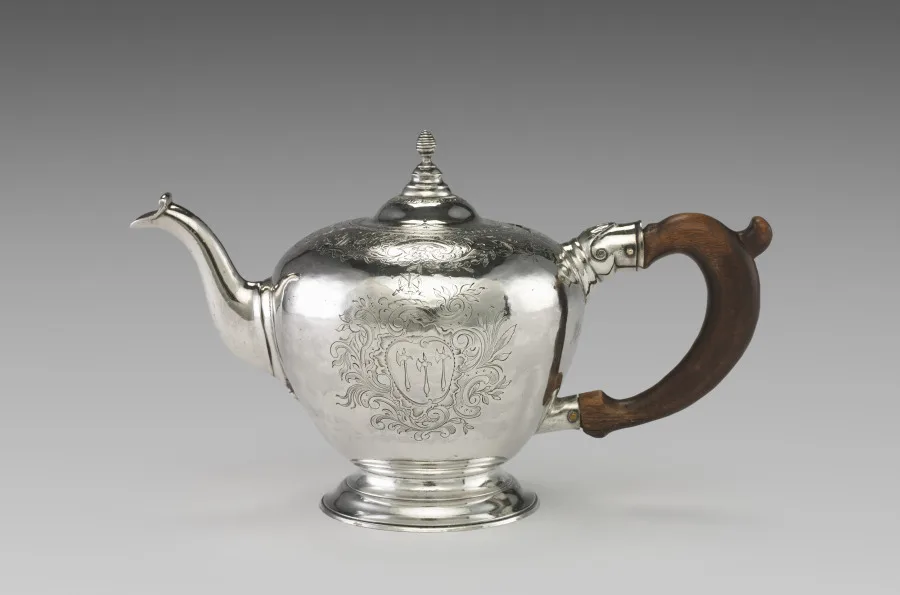 America · c. 1755–60
Nathaniel Hurd (American, 1730–1778)
Silver, Wood
Look at the painted textures of collar, coat and head covering, then at the metal body of the teapot. Copley makes paint suggest fabric; the silver object reflects the light of its photographic setting.
The portrait presents a person rather than a demonstration of manufacture. The teapot’s handle and spout, however, invite you to imagine a hand in use. Neither image alone reveals every step of the silversmith’s working process.
The museum identifies Guillim’s Display of Heraldry among the books beside Hurd and suggests that the teapot’s Gibbs family arms were probably drawn from that reference. Compare the painted book with the engraved design: a source used by a maker can become visible in both a portrait and an object.
The pairing follows the museum’s maker attribution. It does not establish that this particular teapot appears in the portrait or that its commission caused the painting.
The comparison of visible choices is our own reading. Follow either artwork page for its full context, uncertainty note and image-rights record.
Clothing, adornment and the making of a public self.
Let the material change the questions you ask.