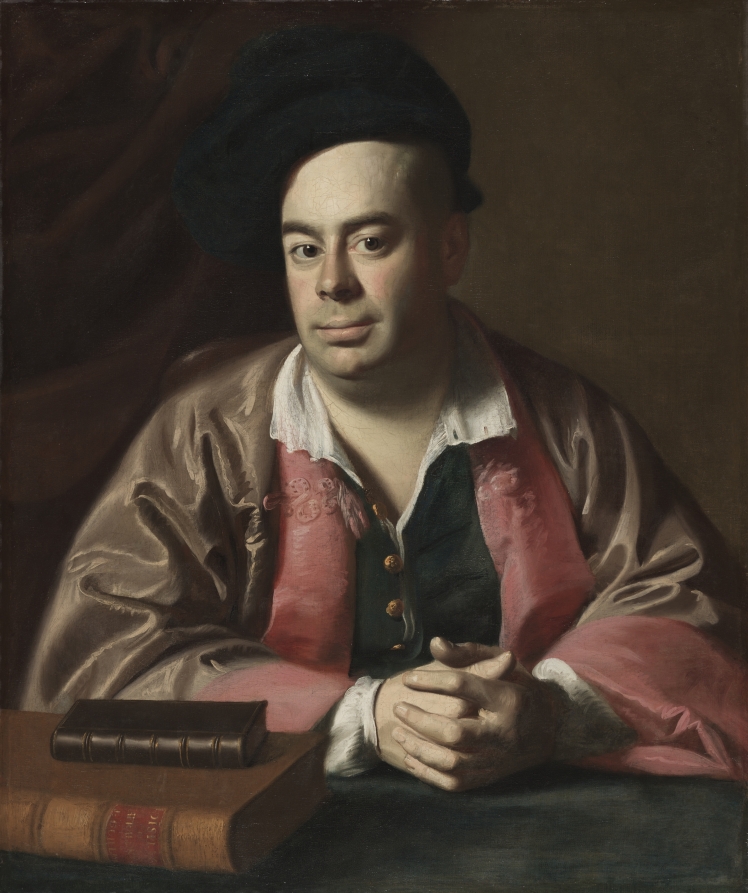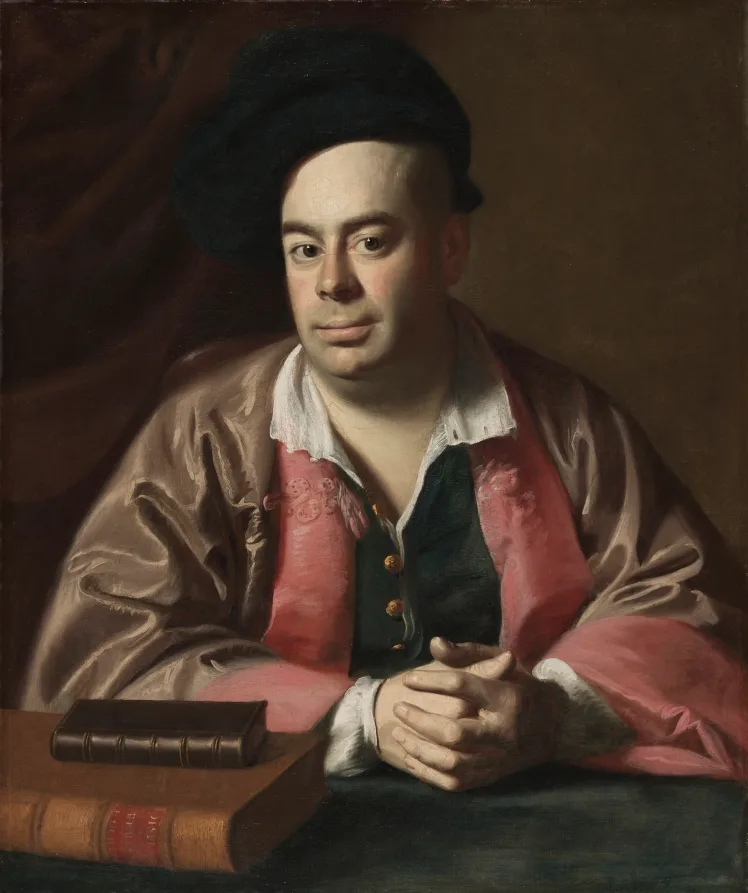
An open collar and a stack of books introduce a skilled maker without showing him holding a single tool.
How would you paint someone who makes things? Copley shows the Boston silversmith and engraver Nathaniel Hurd at rest, without a hammer or piece of silver. The open collar, soft cap, and relaxed hands suggest an informal encounter. The museum even sees the sitter’s approachable expression as evidence of the friendship between artist and subject, although an expression alone cannot prove a personal relationship.
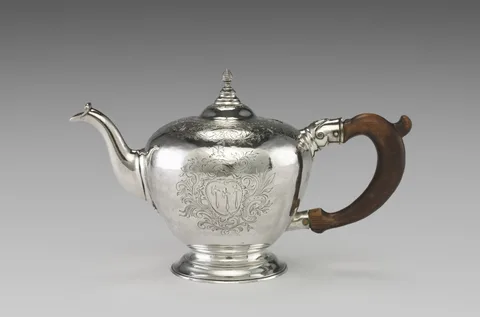
The books add another dimension. Hurd’s craft included engraving designs, and the museum’s record for his silver teapot connects its heraldic decoration with the book beside him in this portrait. The image therefore presents skill as something that involves knowledge as well as physical work. Compare the carefully described sheen of his clothing with the quieter surface of the books. Copley’s own ability to differentiate textures becomes part of this meeting between two makers: the painter demonstrates his craft while representing the silversmith’s social presence and intellectual resources.
Informality here is a carefully constructed portrait effect, not an unfiltered glimpse of daily life. The suggestion of friendship is the museum’s reading of the expression; the image alone cannot establish what Hurd felt.