Dressed to be seen
Clothes are useful evidence, but they are not a transparent record of a person’s life. A portrait can stage informality; a court image can magnify rank; a mask can belong to a performance that a museum photograph cannot reproduce. Look at how artists direct attention to fabric, ornament and the face, then consider whose identity is being presented and to whom.
Begin the journey ↓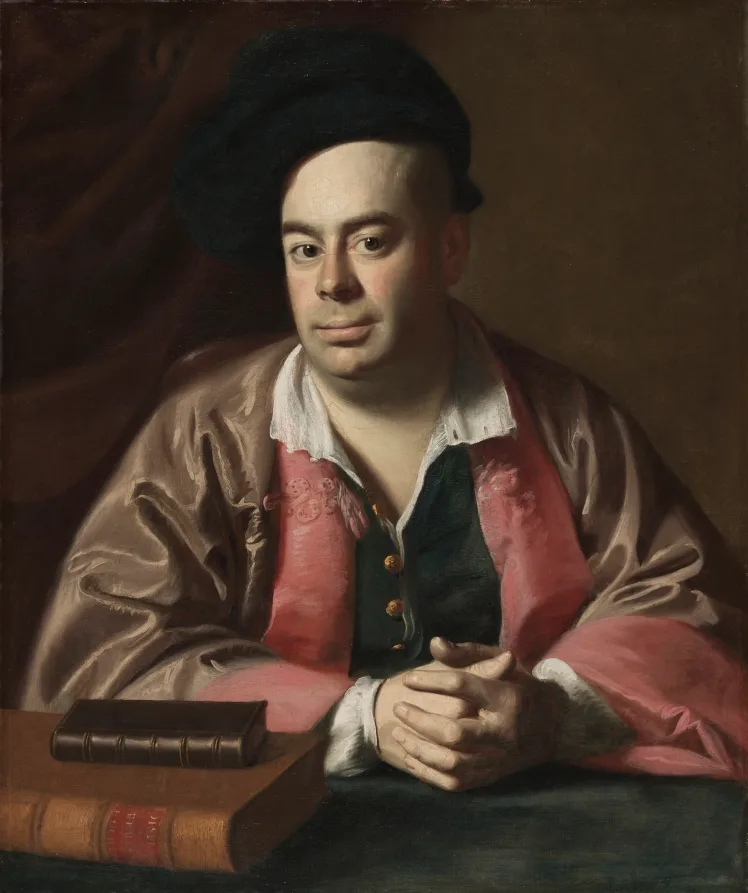
The work of looking informal
The open collar and soft head covering offer a deliberately relaxed presentation. Compare their treatment with the attentive face. Informality in a portrait can be a choice about how a sitter wishes to be known.
Carry this question: Which visible choices make the portrait feel conversational?
Open the artwork ↗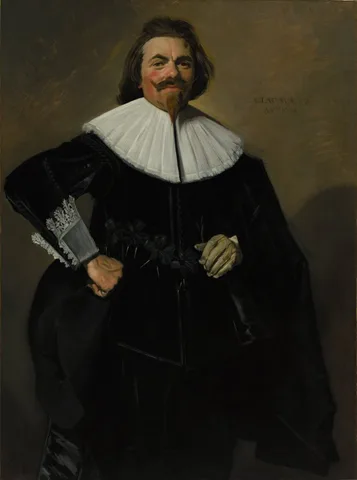
Black is full of information
Dark clothing does not mean a lack of detail. Follow the boundaries between sleeve, collar, hand and background. Shape and texture make an emphatic presence from a restricted colour range.
Carry this question: Where do white accents concentrate your attention?
Open the artwork ↗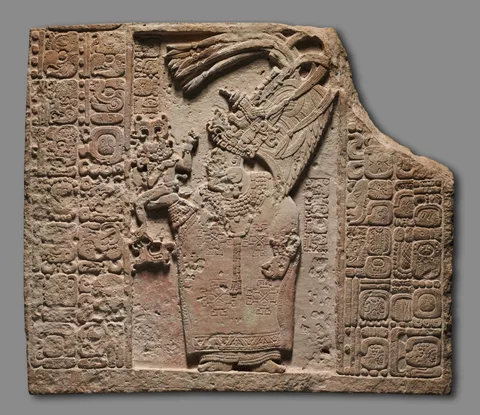
Clothing in a carved court image
Look closely at the figure’s headdress and patterned clothing. The museum’s account of the Maya court supplies political context. Carving converts costume into lines and raised surfaces that still demand close attention.
Carry this question: What is easiest to read as a silhouette, and what requires zooming?
Open the artwork ↗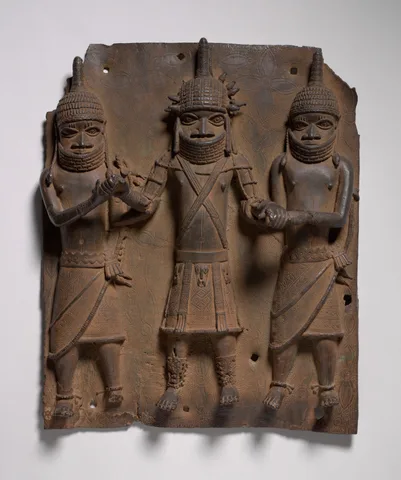
Rank takes visible form
A royal plaque turns dress and the relationship between figures into a statement of hierarchy. The object’s later history also matters: its removal during the British attack on Benin in 1897 is part of reading it responsibly today.
Carry this question: How do size and adornment work together?
Open the artwork ↗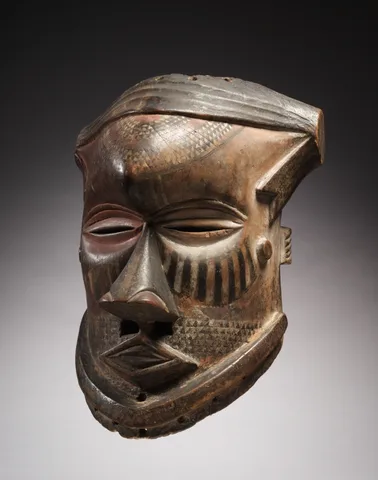
Imagine a moving presence carefully
The photographed mask preserves materials and form but not a complete performance. Attend to surface, facial construction and adornment. Avoid treating a worn, moving object as only a static portrait.
Carry this question: How do painted bands and carved planes organise the face differently?
Open the artwork ↗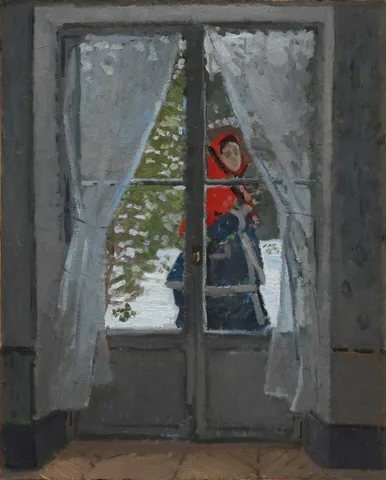
A single colour makes an entrance
A red head covering becomes a focal point inside a scene structured by window, snow and interior space. Clothing can organise a painting even when it is not an explicit badge of rank.
Carry this question: How soon do you notice the red, and what frames it?
Open the artwork ↗Look at a pair more closely
- Status raised from a surface
A Benin royal plaque and a Maya royal woman
- A maker beside his work
Nathaniel Hurd’s portrait and silver teapot
Read with the sources
Historical context follows the individual museum records linked on each artwork page. These routes make original comparisons of visible form; resemblance alone is not evidence of shared meaning or direct influence.