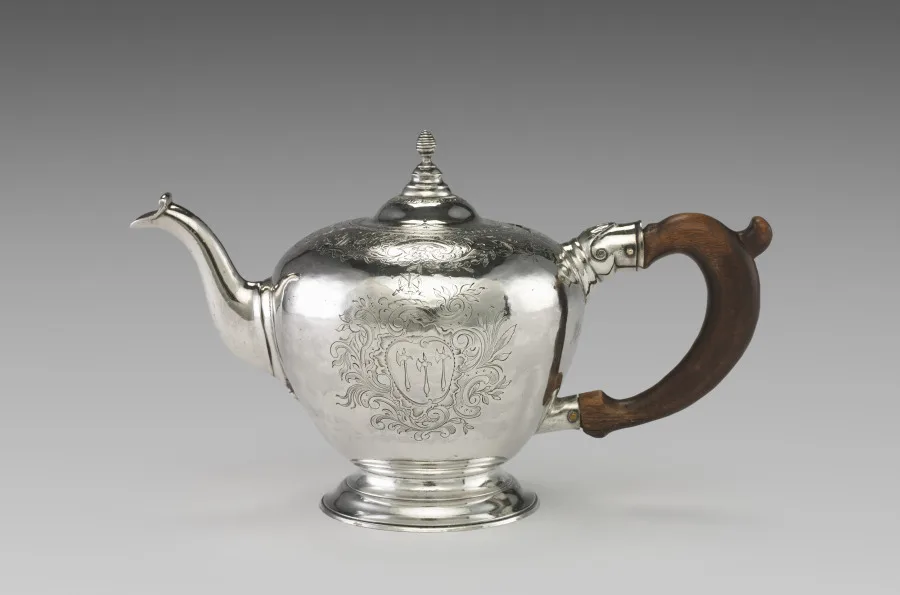
A useful vessel also carries a family’s identity, engraved into a bright surface that rewards a closer look.
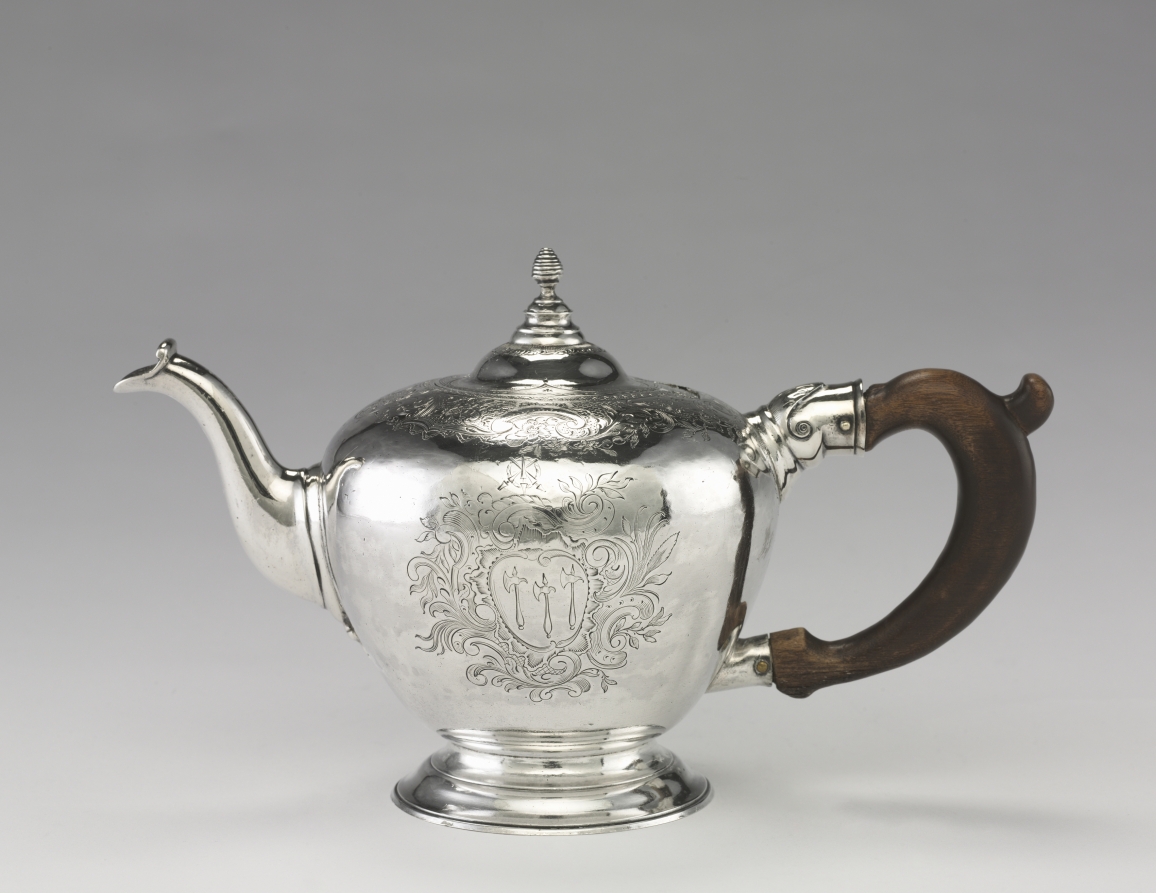
The teapot has an immediately readable job: a lid at the top, a spout for pouring, and a handle on the opposite side. But the surface does more than hold tea. Fine engraved decoration surrounds a coat of arms associated with the Gibbs family. The museum connects this design, probably drawn from a published heraldry reference, with Nathaniel Hurd’s expertise as both a silversmith and an engraver.
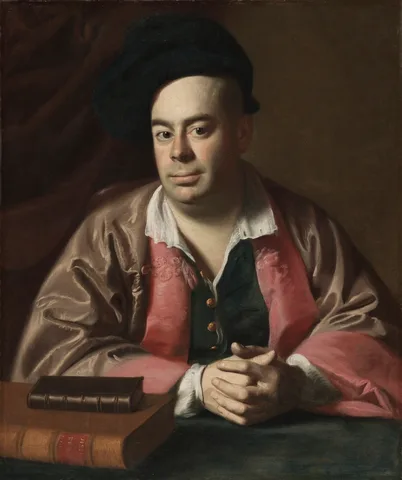
Compare this object with Copley’s portrait of Hurd. The museum identifies the same kind of heraldry reference among the books beside the sitter, linking a finished luxury object to the knowledge used in making it. Tea was a valuable commodity in colonial America, and a commissioned silver pot also displayed its owner’s means and identity. The contrast between reflective silver and dark wood makes the different parts clear, while close inspection shifts our attention from the broad vessel shape to tiny incised lines that personalize its surface.
The museum describes the published source for the coat of arms as probable, not certain. A family emblem records a claim to identity in a commissioned object; it does not by itself verify the owner’s genealogy.