 France · 1890–91
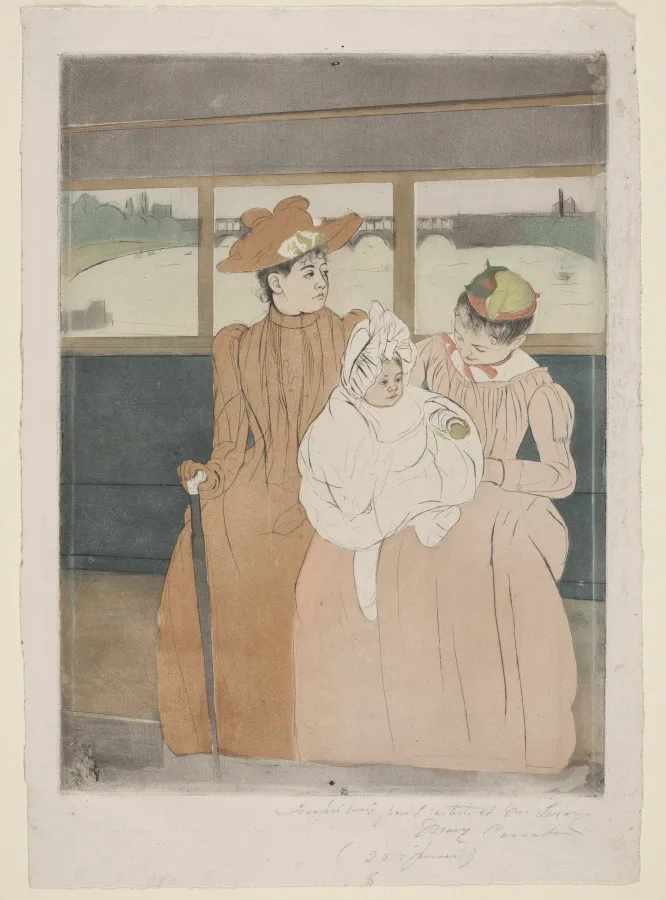
In the Omnibus
Mary Cassatt (American, 1844–1926)
color drypoint and aquatint
People can share a confined space while directing attention differently. Compare posture, gaze and proximity in a modern travel scene and a mythological painting. A visible arrangement supports some observations while leaving private thoughts inaccessible.
France · 1890–91Mary Cassatt (American, 1844–1926)
color drypoint and aquatint
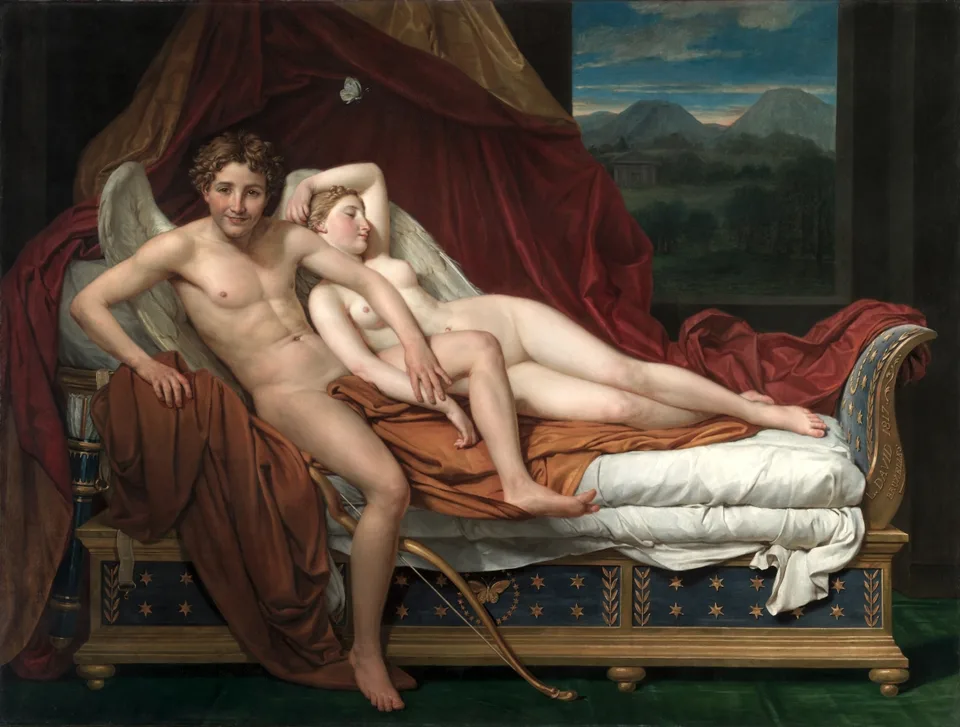 France · 1817
Jacques-Louis David (French, 1748–1825)
oil on canvas
Track where the faces point and whether the figures appear to meet one another’s gaze. The direction of a head is observable; a complete account of what someone thinks is not.
In Cassatt’s print, the nursemaid’s arms and lowered head enclose the child. In David’s painting, Cupid sits beside the sleeping Psyche while looking outward. Compare those different arrangements of proximity and attention without assuming that a shared seat or bed proves an uncomplicated relationship.
Cassatt’s dark carriage panels make hard boundaries around the large area of the orange dress. David’s bed frame meets the diagonal of Cupid’s set-aside bow. These visible edges locate each body in a setting; the bow also supplies a mythological attribute absent from the modern travel scene.
One work depicts a contemporary setting and the other a myth. Comparing their compositions is not a claim that their figures share the same social circumstances.
The comparison of visible choices is our own reading. Follow either artwork page for its full context, uncertainty note and image-rights record.
A gesture is a clue, not a universal language.
Practise leaving room for what you do not know.