Hands that speak
Begin with a hand. Is it raised, resting, holding an object or reaching toward another figure? The visible position is the first piece of evidence. A religious tradition, a story or the purpose of an object supplies the next. These six works let you practise moving between those two kinds of knowledge without assuming that similar poses mean the same thing.
Begin the journey ↓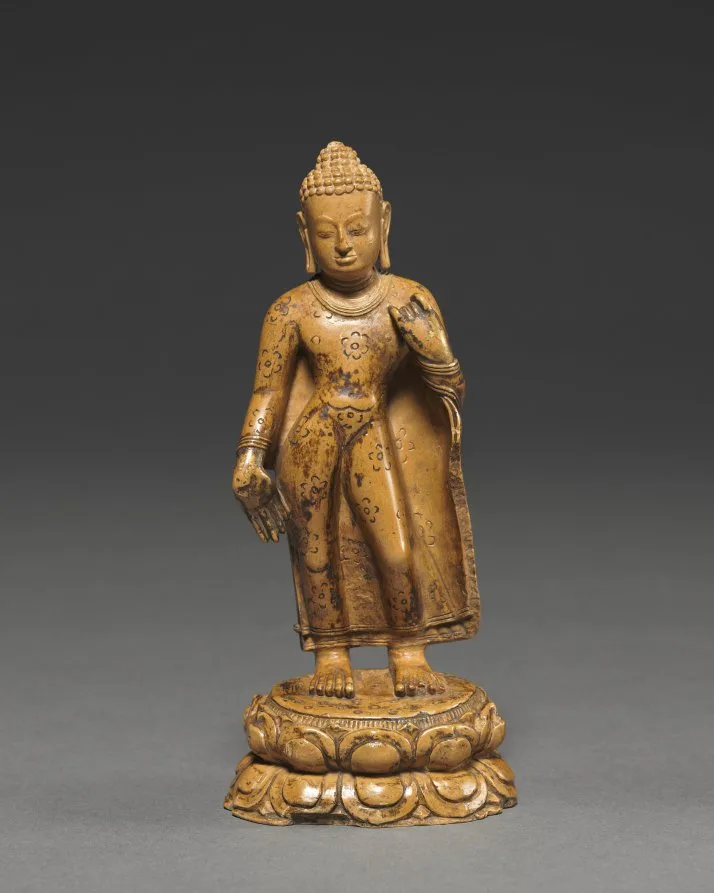
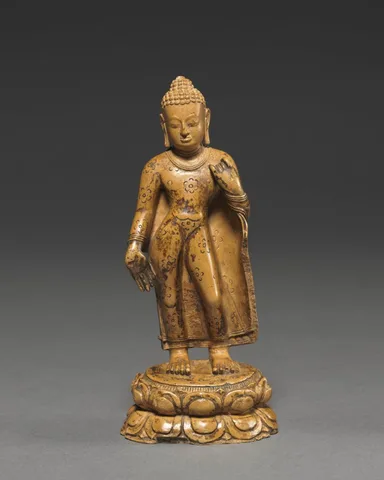
A downward palm, a particular story
The lowered right hand and outward-facing palm are visible. The museum connects them with the Buddha’s descent from heaven and suggests that flowers on his robe may support that reading. Gesture and story reinforce one another without making every downward hand mean the same thing.
Carry this question: Which part can you describe by looking, and which part depends on the Buddhist narrative?
Open the artwork ↗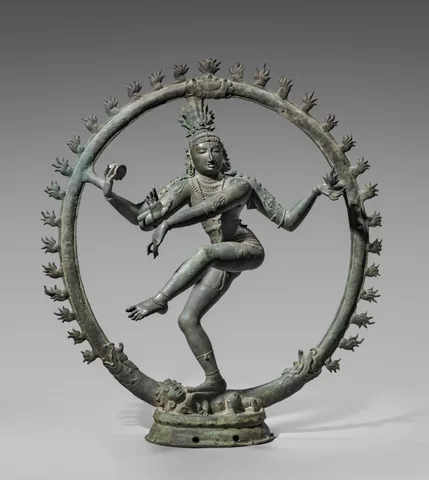
A whole body in motion
Move from the arms to the lifted leg and surrounding form. Multiple limbs organise several actions within one figure. Read the attributes within this particular image of Shiva rather than treating every raised hand as equivalent.
Carry this question: Which parts make the figure feel balanced despite its movement?
Open the artwork ↗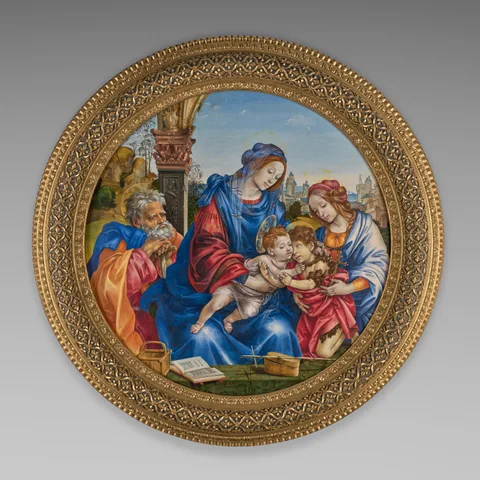
Follow an exchange
The two children embrace while the larger figures support and surround them. The museum identifies Christ and John the Baptist; follow their overlapping arms before tracing the adults’ hands. The exchange gives the circular composition a visible centre without requiring you to name everyone at once.
Carry this question: Which hands belong to the children, and which help support them?
Open the artwork ↗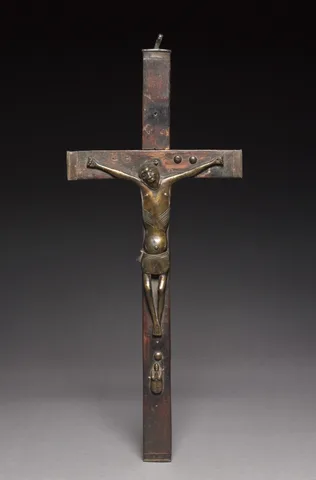
A form with a history of movement
A crucifix made in a Kongo context needs both Christian and local histories. Compare Christ’s outstretched body with the one small figure below his feet. That figure may be Mary or a worshiper: its presence is visible, while its exact identity remains uncertain.
Carry this question: How does scale distinguish Christ from the lower figure?
Open the artwork ↗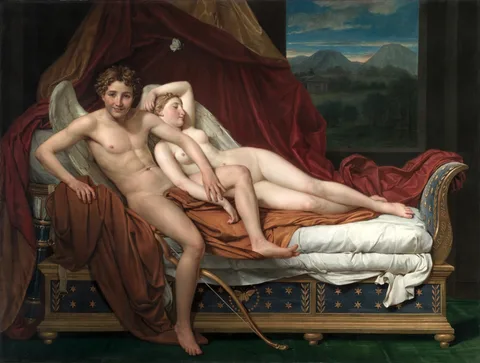
Bodies can complicate a story
Notice how two figures share a bed yet differ in posture and attention. The familiar title does not replace looking: expression, bodily position and a viewer’s viewpoint change the tone of the myth.
Carry this question: Do the two figures seem equally aware of being seen?
Open the artwork ↗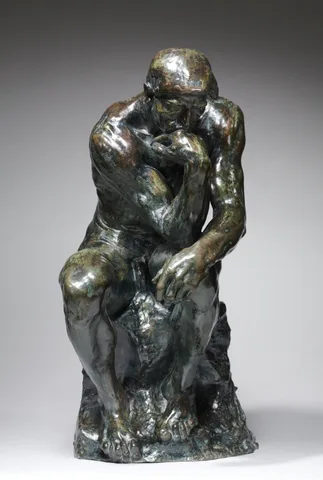
Stillness takes effort
End with a body whose inward attention is expressed through muscular pressure. Look at the head’s support, the torso and the legs. Thought is given physical weight through a pose rather than through a written explanation.
Carry this question: Which contact points make the pose look strenuous?
Open the artwork ↗Look at a pair more closely
- Stillness and movement
A standing Buddha and Shiva in dance
- Together in a small space
Cassatt’s omnibus and David’s Cupid and Psyche
- Gestures need context
A finger at the mouth and a downward palm require different readings.
Read with the sources
Historical context follows the individual museum records linked on each artwork page. These routes make original comparisons of visible form; resemblance alone is not evidence of shared meaning or direct influence.
- Standing Buddha — museum collection record
- Nataraja, Shiva as the Lord of Dance — museum collection record
- The Holy Family with Saint John the Baptist and Saint Margaret — museum collection record
- Crucifix — museum collection record
- Cupid and Psyche — museum collection record
- The Thinker — museum collection record