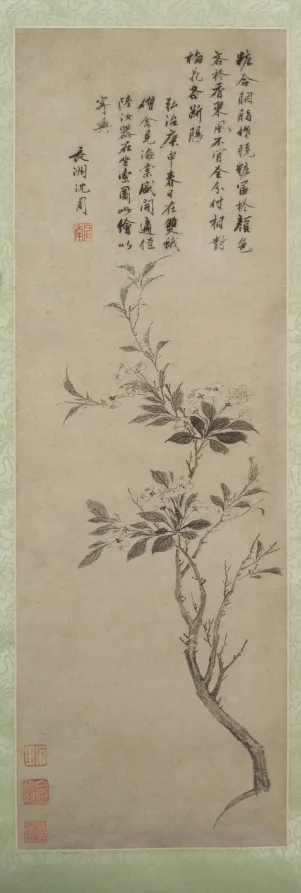
 China, Ming dynasty (1368–1644) · 1500
Flowering Crab Apple
Shen Zhou (Chinese, 1427–1509)
hanging scroll; ink on paper
Both painters let pale blossoms stand out within an ink-based image. Their methods differ, however: fine outlines describe one branch’s petals, while reserved silk plays a central role in the other painting.
China, Ming dynasty (1368–1644) · 1500Shen Zhou (Chinese, 1427–1509)
hanging scroll; ink on paper
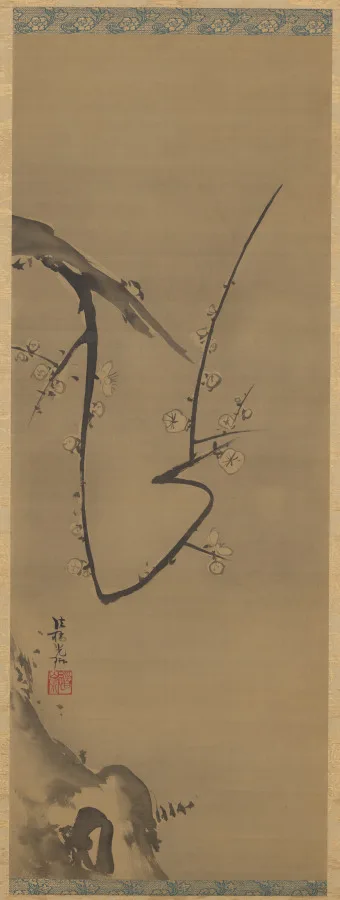 Japan, Edo period (1615–1868) · c. 1700
Ogata Kōrin (Japanese, 1658–1716)
hanging scroll; ink on silk
The crab apple blossoms are defined through fine outlines beside darker leaves. Kōrin’s pale flowers depend on areas protected from the surrounding ink wash. Similar light effects need not come from identical methods.
Shen Zhou’s selected branch rises in an S-like curve. Kōrin sends a branch out from old broken wood and partly beyond the frame. Each makes vitality visible through a different route across the support.
The crab apple shares space with an artist’s poem. Kōrin’s cropped trunk points beyond the narrow picture. One fragment gains context through writing, the other through the suggestion of a larger unseen tree.
Both are culturally situated flower paintings. The comparison identifies visible and documented techniques without assigning a universal symbolic meaning to blossoms or broken branches.
The comparison of visible choices is our own reading. Follow either artwork page for its full context, uncertainty note and image-rights record.
Small figures, selected branches, and remembered places.
A scroll, a screen, a dish, and a lamp organise looking differently.