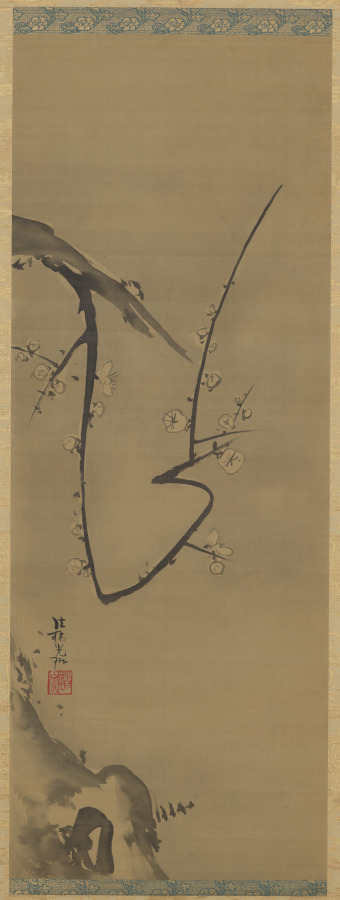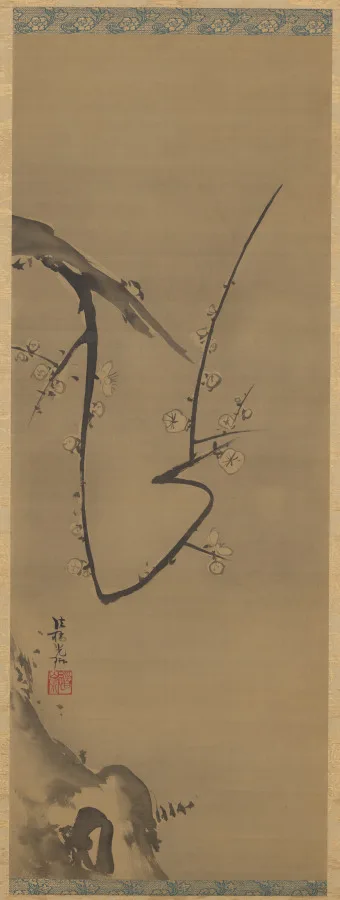
White blossoms appear because the painter kept parts of the silk untouched, making absence of ink an active technique.
The tree seems to leave the picture and return. An old dark limb enters from the left, bends out of sight, and sends a thin new branch into the open field. Small blossoms punctuate that branch, their pale shapes standing out from the surrounding wash. The composition makes a contrast between worn wood and new growth without needing a full view of a garden.
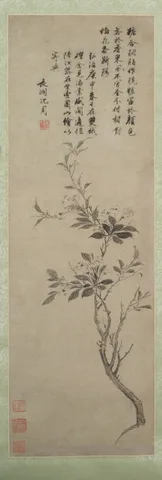
The museum explains that Kōrin reserved the blossom shapes, leaving selected areas of silk unpainted while washing the surrounding surface with ink. He then added details to articulate petals and flower centres. That sequence matters: the pale flowers are not simply thick white pigment painted over a finished dark ground. Compare Shen Zhou’s Flowering Crab Apple, where fine outlines describe blossoms, to see two different uses of pale support in flower painting. Both rely on careful planning, even when the branch’s movement feels quick, irregular, or spontaneous to a viewer.
The museum reconstructs the likely painting sequence rather than documenting the artist at work. Reserved silk explains the pale blossoms; the current tone of the support does not establish its exact original colour.