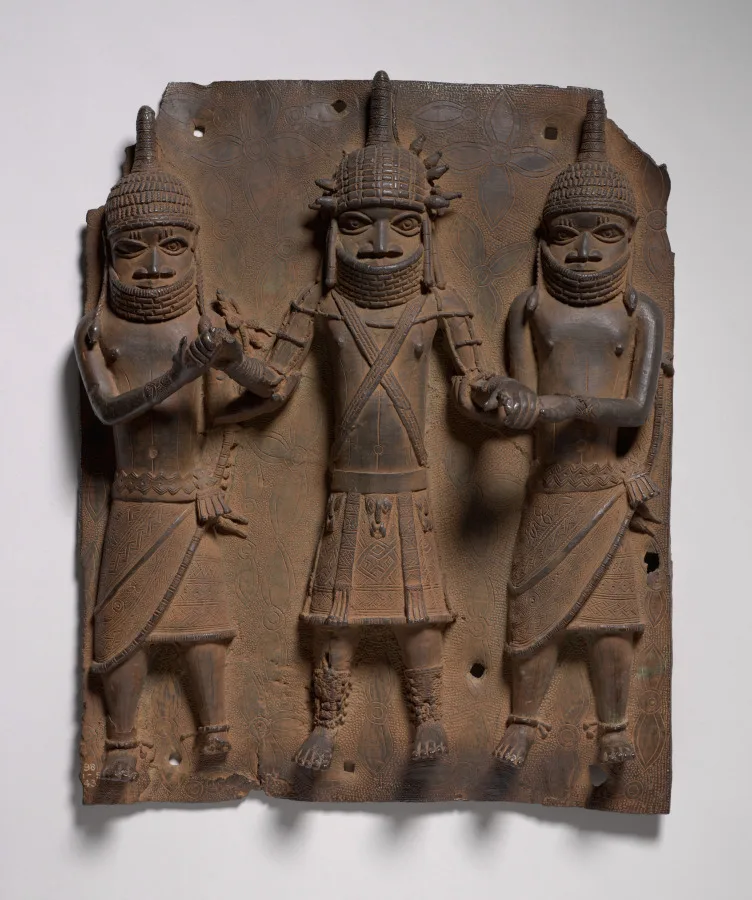
 Nigeria, Benin Kingdom, Ẹdo peoples, members of the Igun Eronmwon (royal brasscasters) guild · 1500s–1600s
Royal plaque with attendants
Maker unrecorded
Copper alloy
Both reliefs make courtly presence visible through bodies, dress and placement. Compare their visible strategies while keeping their political histories separate. Also attend to what the collection records reveal about makers and later displacement.
Nigeria, Benin Kingdom, Ẹdo peoples, members of the Igun Eronmwon (royal brasscasters) guild · 1500s–1600sMaker unrecorded
Copper alloy
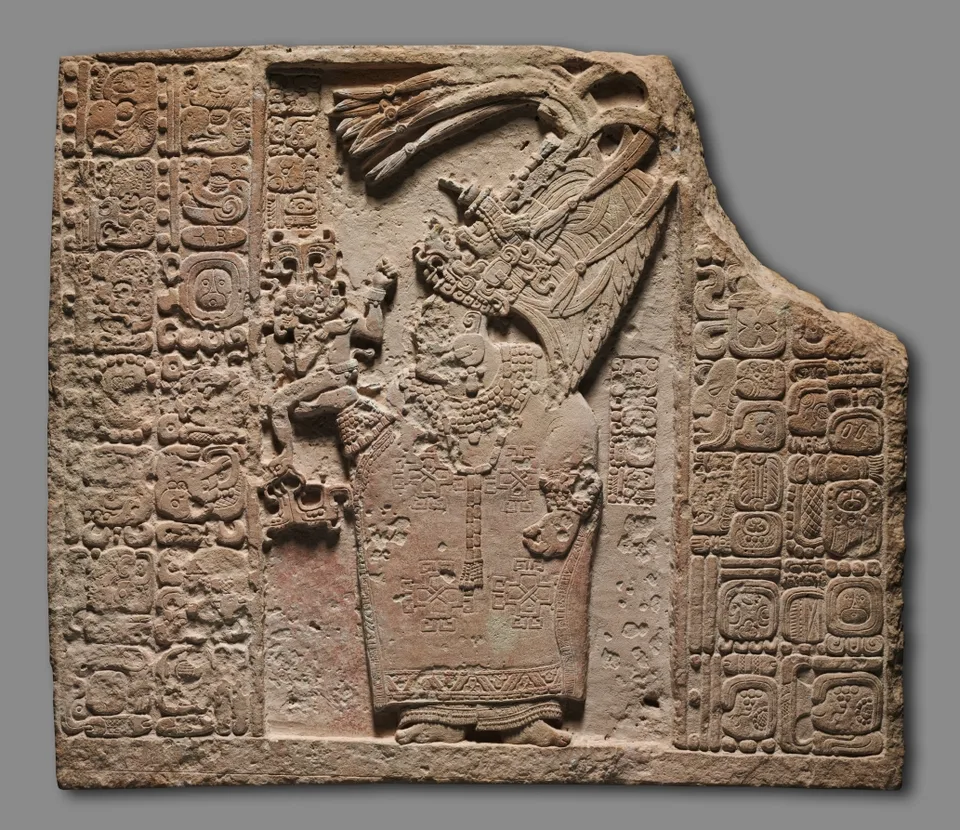 Guatemala or Mexico, Usumacinta River region, Maya style · c. 795
K’in Lakam Chahk and Jun Nat Omootz
limestone
Size, placement and the space around a figure establish emphasis. Follow those features before relying on a title. A composition can tell you where to look even when the represented names are unfamiliar.
Headdress and ornament reward close looking in each relief. Their particular meanings depend on Benin and Maya contexts. Similar visual richness is not evidence that the same regalia or rank system is involved.
Clasped supporting hands on the Benin plaque and writing beside the Maya woman are visible features whose significance the museum explains. The inscription helps date the Maya ritual to 795. Other information comes from records rather than those details: the Maya work’s named sculptors and the Benin plaque’s seizure in 1897 both belong to the objects’ histories.
The comparison does not equate the two court systems. Nor does open image licensing settle ownership, provenance or the ethics of collection history.
The comparison of visible choices is our own reading. Follow either artwork page for its full context, uncertainty note and image-rights record.
Clothing, adornment and the making of a public self.
Who is made visible, and on what terms?