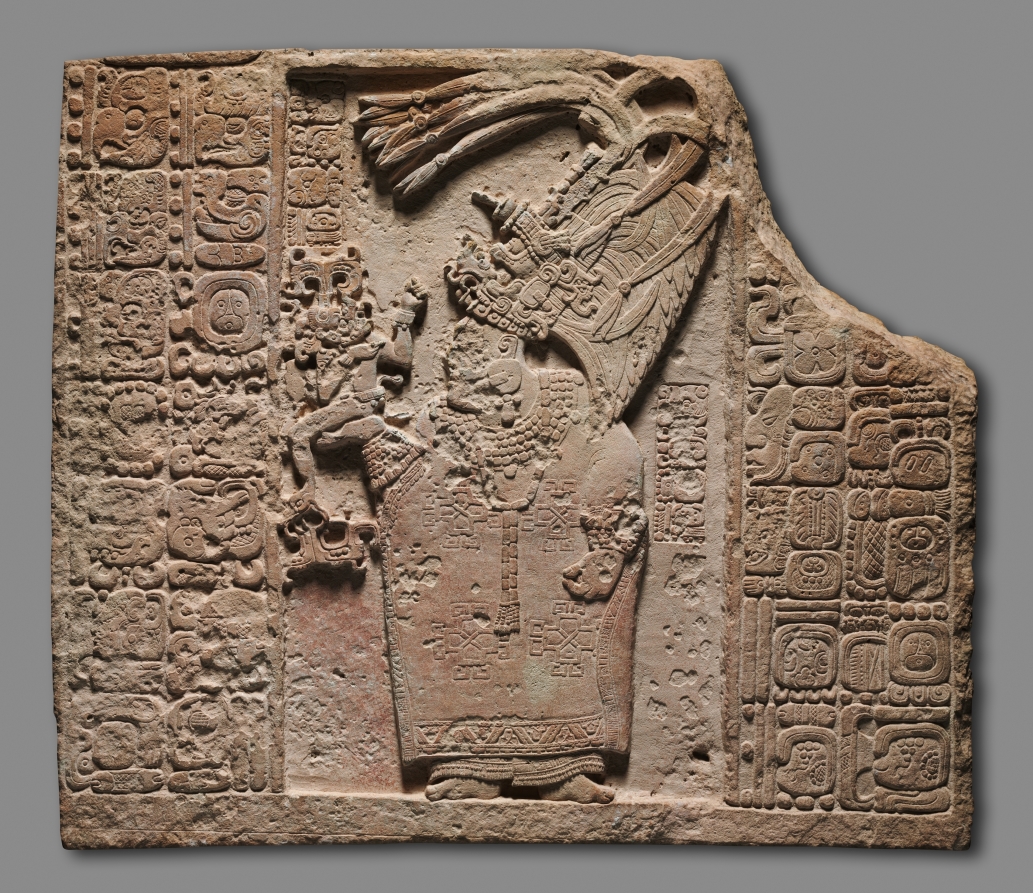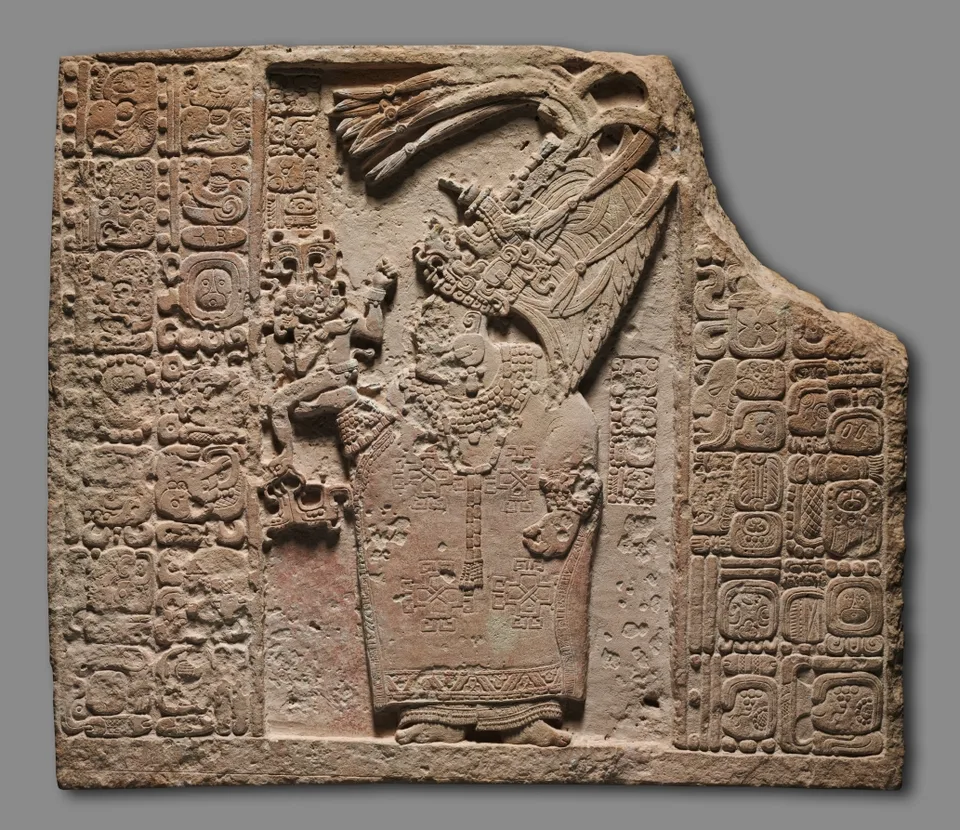
A still royal figure holds a restless-looking deity, while dress and carved writing frame her participation in a ceremony.
The woman's long garment and upright posture form a stable vertical shape. Against that stillness, the small being she holds looks much more animated, with a complex head and twisting lower body. A tall headdress extends the composition upward, while writing encloses the figure on both sides. Looking moves naturally between body, clothing, sacred attribute and text.
The museum attributes the carving to K’in Lakam Chahk and Jun Nat Omootz and identifies the subject as a royal Maya woman. Her jewelry and costume communicate high rank. The held being is a deity associated with royalty, described in the collection record as having a serpent leg and a smoking torch on its brow. The inscription refers to a ritual completed in 795, but the nature of that ritual remains undefined in the museum's account. The probable palace setting would have brought image and political memory together; the precise original placement is not established here.
The original palace setting is probable, not certain, and the ritual is not fully identified in the cited record. Surviving stone represents textile and featherwork; it is not itself evidence that the original garments survive.