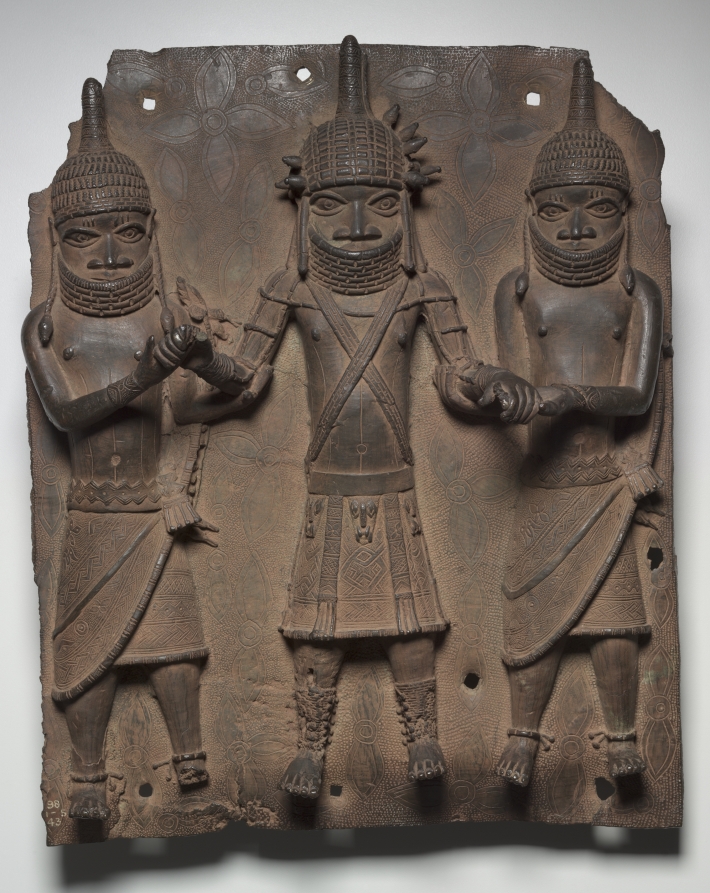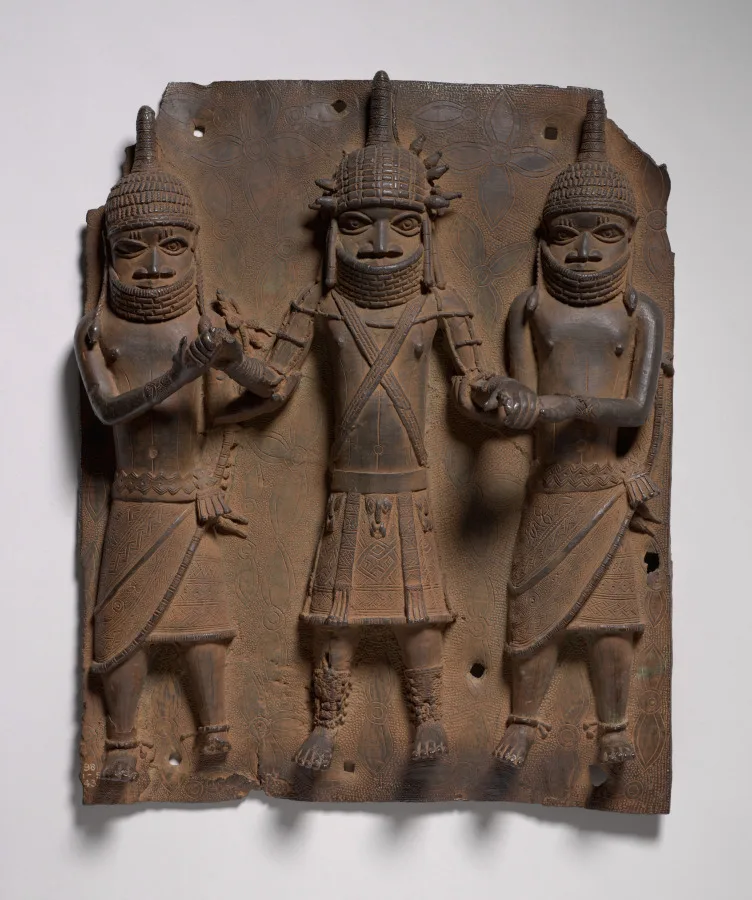
Three figures stand together, but differences in scale and the joining of their hands make royal authority visible.
Begin with the hands. The central figure, an Ọba or king of Benin, receives support from attendants on either side. This is more than a neat arrangement of three bodies: the plaque turns the practical burden of royal dress into an image of the ruler's responsibilities. The greater size of the central figure declares his importance within this particular courtly setting.
Members of the Igun Eronmwon royal brasscasters' guild made plaques for the palace of the Benin Kingdom, in present-day Nigeria. Clothing and jewelry distinguish rank, while the projecting bodies make the scene legible against its shallow patterned field. The work also carries a violent later history. The museum records that British troops took it from a palace storeroom during the 1897 seizure of Benin. It entered the British Museum in 1898 before eventually reaching Cleveland. That removal is part of how this court object became a museum object.
Relative size communicates rank here; it is not a universal code for all art. The open-access image license concerns reuse and does not settle questions about the object’s removal or ownership history.