Objects across cultural settings
Objects may move, designs may circulate, and artists may represent visitors without reproducing them neutrally. These are related but different processes. Compare a luxury mirror, arriving merchants, a wearable sheath, an inscribed Buddha and a courtly portrait of an ascetic, asking what evidence supports each connection.
Begin the journey ↓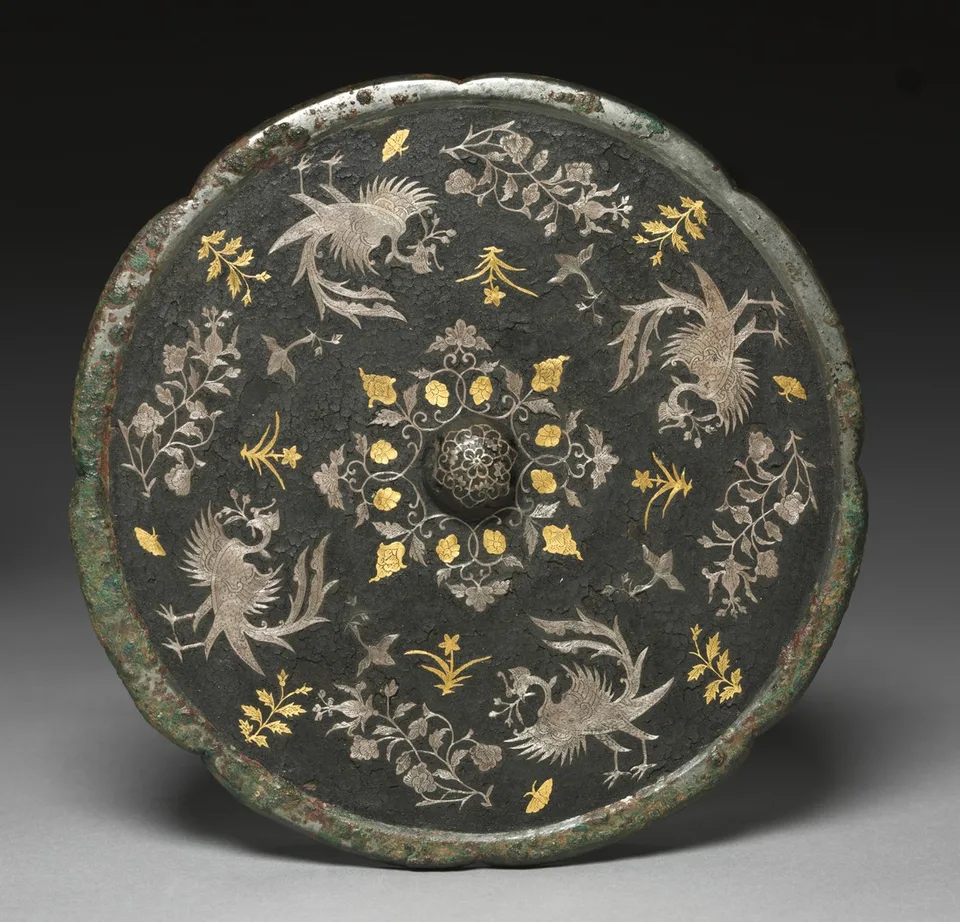
Compare ornament carefully
Birds and floral forms invite the museum’s comparison with Persian and Central Asian designs. Comparable mirrors served as diplomatic gifts, but that does not document a particular embassy for this mirror.
Carry this question: Where does comparison stop short of an individual travel history?
Open the artwork ↗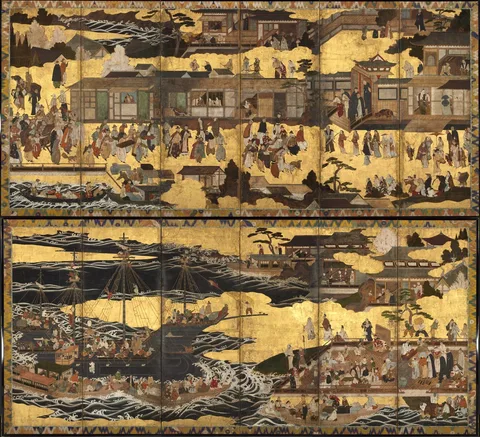
Recognise the viewpoint
The crowd belongs to a Japanese image of foreign arrival. The historical title and probable Portuguese identification should be understood as classifications within a particular encounter, not neutral labels for all visitors.
Carry this question: How do costume and grouping present unfamiliar people to the viewer?
Open the artwork ↗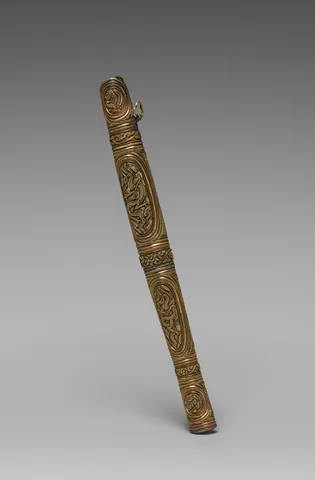
Follow a portable display
Tiny engraved panels made a practical cover into an elite belt accessory. Its surviving decoration can be studied closely, while its original wearer and exact arrangement on clothing remain unknown.
Carry this question: What can a small wearable object reveal without naming its owner?
Open the artwork ↗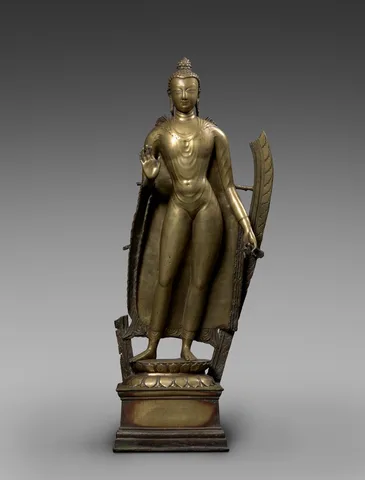
Combine inscription and wear
The extended foot suggests approachability, while a Tibetan ownership inscription and worn surfaces supply different evidence about the sculpture’s history. Visual interpretation and documented movement need not be collapsed together.
Carry this question: Which claim comes from the pose, and which comes from writing?
Open the artwork ↗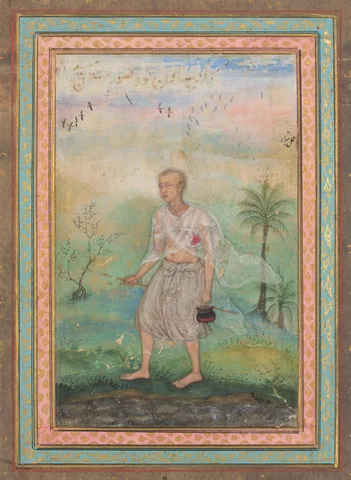
Read an ascetic in a court collection
The red manuscript contributes to the monk’s identity and wisdom in a painting made for Akbar’s collection. A later false attribution on the sheet reminds us that inscriptions also need critical evaluation.
Carry this question: How does patronage change the setting in which this ascetic is represented?
Open the artwork ↗Read with the sources
Historical context follows the individual museum records linked on each artwork page. These routes make original comparisons of visible form; resemblance alone is not evidence of shared meaning or direct influence.