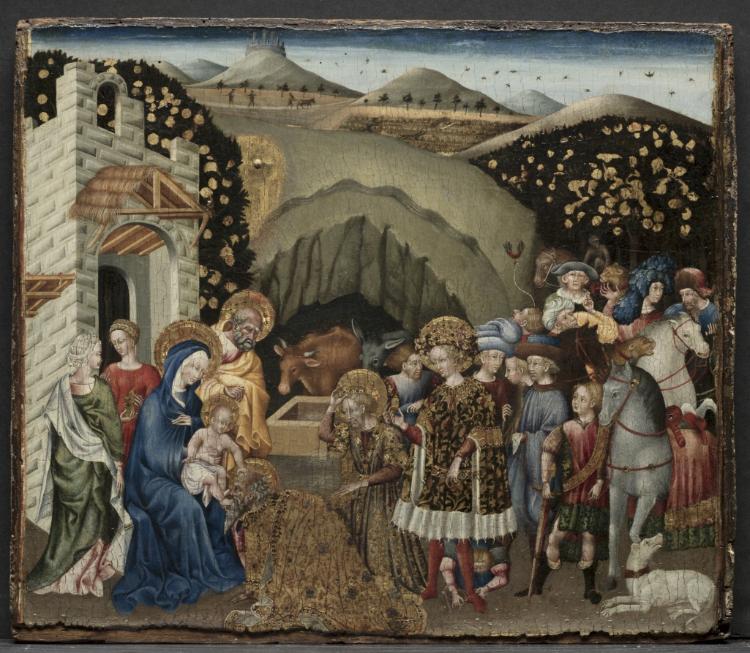
Begin with the bowed visitor, then follow the procession outward to see a sacred story dressed in worldly splendor.
A kneeling figure bends low before Mary and the infant, making a clear devotional center at the left. But the panel soon becomes crowded with other interests: elaborate clothing, lively horses, and a retinue of figures waiting and watching. Giovanni di Paolo gives the Christian story of the Magi both a solemn focus and a richly populated surrounding world. The eye can follow the visitors toward the child or wander outward through the procession.
The museum places this work within a fifteenth-century practice of expanding the Magi’s journey into a display of contemporary aristocratic splendor. That helps explain why the attendants and fabrics receive so much attention. They are not incidental mistakes in a scene supposedly set many centuries earlier; they connect sacred narrative with the visual pleasures and social distinctions familiar to the painter’s audience. The gold and patterned surfaces also reward close looking, while the distant hills provide a striking contrast with the crowded foreground.
The scene draws on Christian narrative and later pictorial traditions, rather than documenting an eyewitness event. The number, dress, and entourage of the visitors reflect artistic conventions as well as the underlying story.