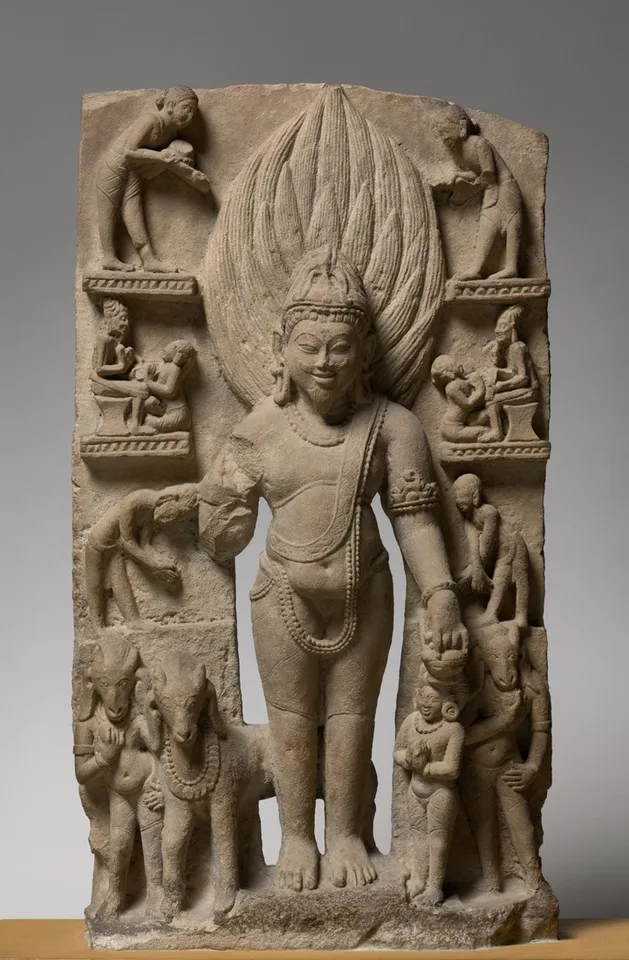
Flames rise behind the central figure while smaller scenes above show people engaging with the same power through ritual.
The flames make the central figure immediately different from the smaller people around him. They rise behind the head as a tall, pointed field, while the standing body remains frontal and composed. A goat at the lower left adds another identifying feature. Above and beside the deity, little groups on ledges create a second scale of activity that rewards looking beyond the largest figure.
The museum identifies Agni, the Hindu god who embodies sacrificial fire, and describes the goat as his mount. The upper scenes show Brahmans performing fire sacrifice, teaching disciples and undertaking heat-related ascetic practice. The relief therefore brings a divine power and human engagement with it into one composition. The smaller scenes are not incidental decoration, but their details cannot all be resolved equally in a single photograph. Scale establishes the deity’s importance while allowing practices associated with fire to surround him.
The small upper scenes rely on the museum’s identification and are not equally legible in this view. The relief cannot reconstruct a particular ritual performance or its full procedure.