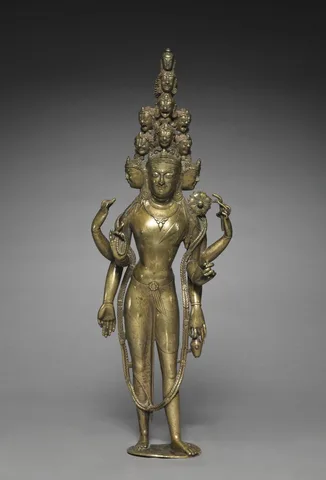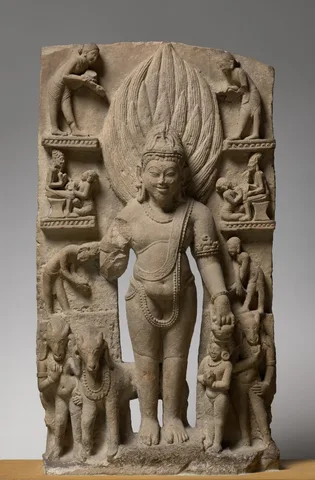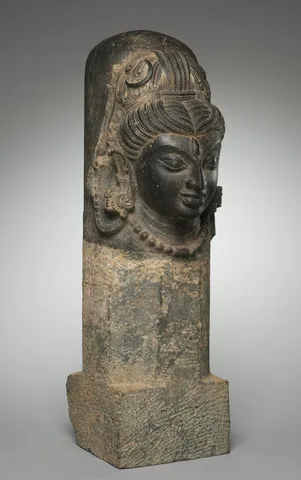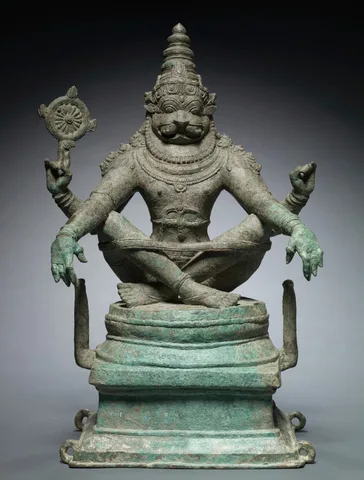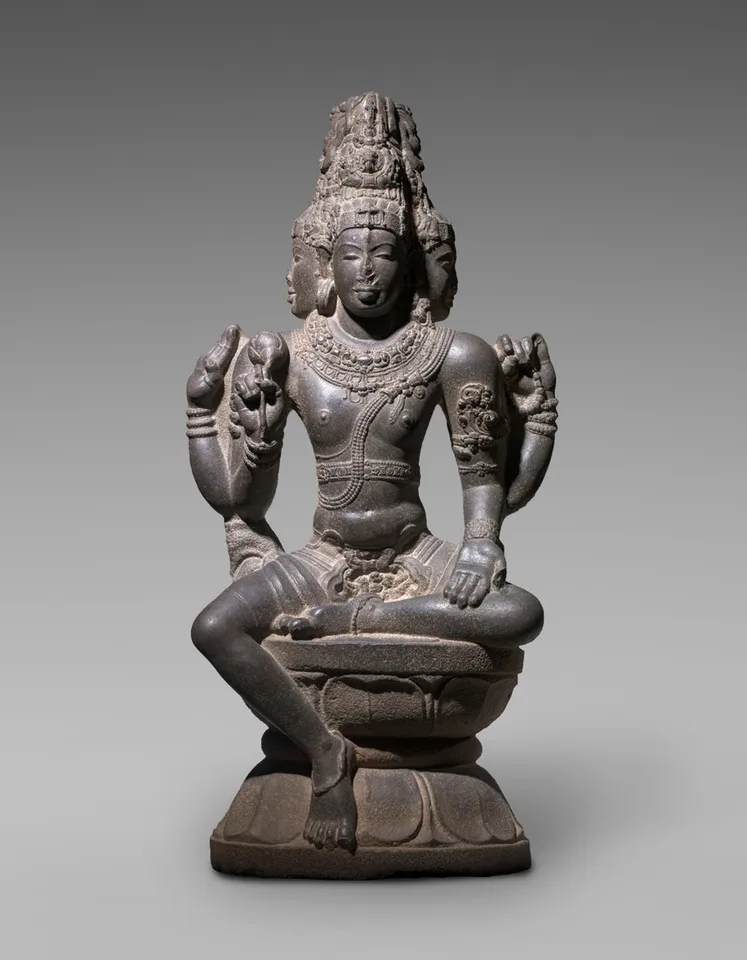
Multiple faces and hands expand one seated figure’s reach, while jewellery and piled hair combine royal and priestly qualities.
The central face looks outward while other heads extend the image to either side. Four arms provide several gestures at once, and the seated body remains stable beneath them. A tall arrangement of matted hair rises above elaborate jewellery. This combination makes the figure’s appearance more complex than a simple contrast between a richly dressed ruler and an unadorned priest.
The museum’s title is Brahma-Shiva, while its description explains Brahma’s creative role and this special regal aspect. Four heads convey creative activity in all directions, and the hands include reassurance and gift-giving. The sculpture’s back retains chisel texture, leading the museum to suggest placement near a wall or in a niche; the frontal photograph cannot test that surface directly. Its modern provenance includes the Albright-Knox collection and a 2007 deaccession sale before acquisition by Cleveland, a documented later chapter distinct from its original temple setting.
The current title and descriptive discussion are not identical in emphasis. This frontal view cannot reveal every head or the textured back used to infer the original placement.