More than one human capacity
Extra heads and limbs are not decorative additions to ordinary portraits. These images use bodily form to communicate particular divine qualities, while a face emerging from a linga expresses another relationship between abstraction and embodiment. Attend to the specific museum identifications rather than merging the traditions into a general symbolism.
Begin the journey ↓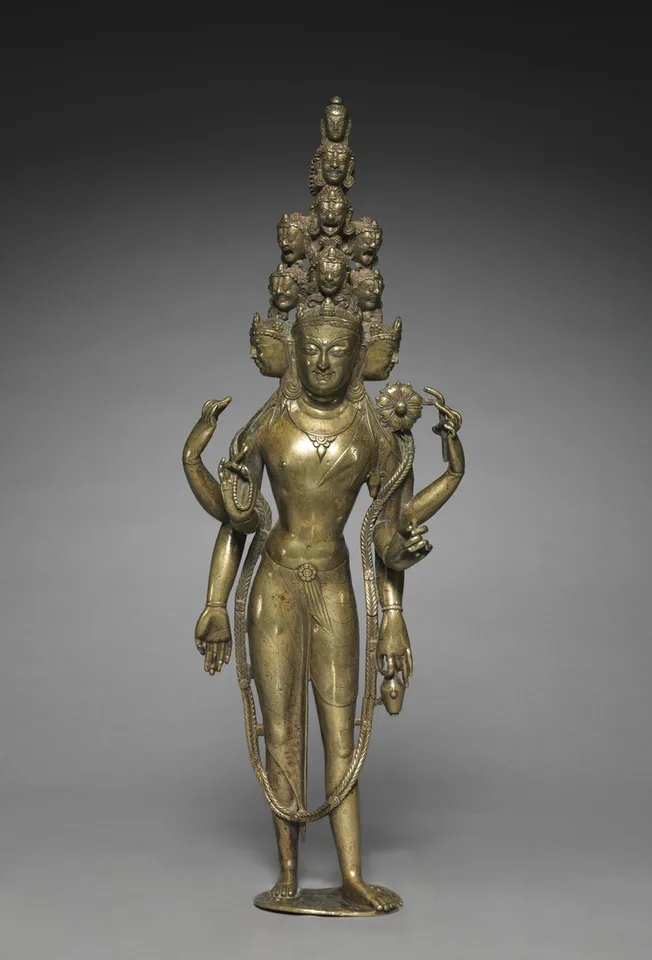
Hold different expressions together
The stacked faces belong to one form of Avalokiteshvara. Their differentiated expressions represent aspects specified by the tradition, not a sequence of private moods or a group portrait.
Carry this question: How does the single body unite the many faces?
Open the artwork ↗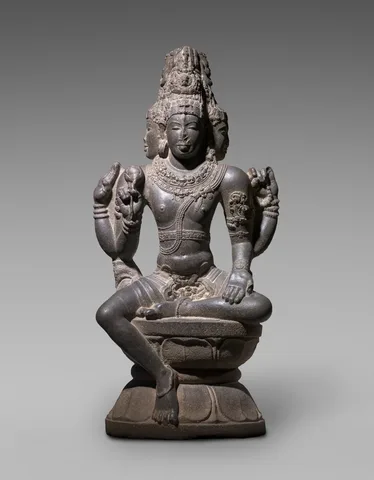
Extend creative reach
The heads turn beyond the central view, while multiple hands permit several gestures. The museum’s discussion of Brahma’s creative activity gives this expanded body a particular purpose.
Carry this question: What does the frontal photograph reveal and conceal about the heads?
Open the artwork ↗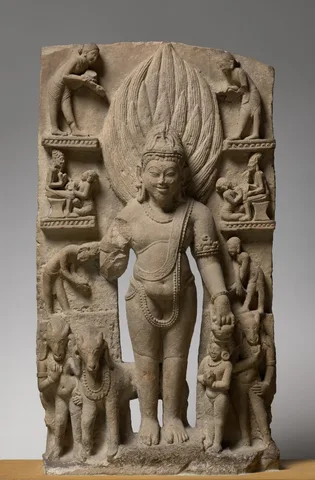
Connect deity and practice
Small ritual scenes surround the central embodiment of fire. Their scale makes them easy to miss, yet they connect the divine figure with human practices of making offerings, teaching and ascetic discipline.
Carry this question: How does the surrounding activity change the main figure’s meaning?
Open the artwork ↗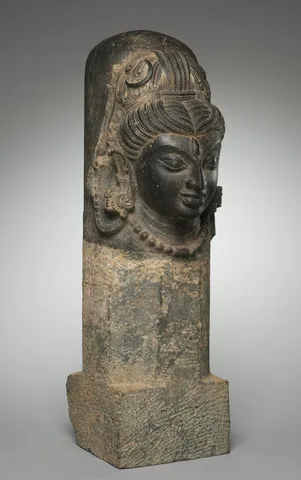
Move from potential to a face
Detailed features emerge from a plain shaft in an intentionally different degree of embodiment. Treating the lower form as unfinished would miss the temple image’s identified structure.
Carry this question: Why does the contrast between carved face and plain stone matter?
Open the artwork ↗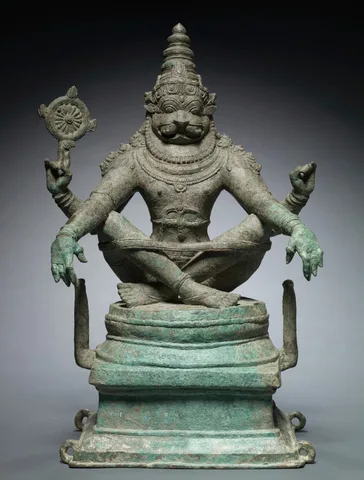
Concentrate extraordinary power
The yoga band stabilises the raised legs beneath a lion face. This form recalls Narasimha’s force while concentrating attention on discipline rather than depicting the famous combat itself.
Carry this question: What changes when the man-lion is seated in concentration?
Open the artwork ↗Read with the sources
Historical context follows the individual museum records linked on each artwork page. These routes make original comparisons of visible form; resemblance alone is not evidence of shared meaning or direct influence.