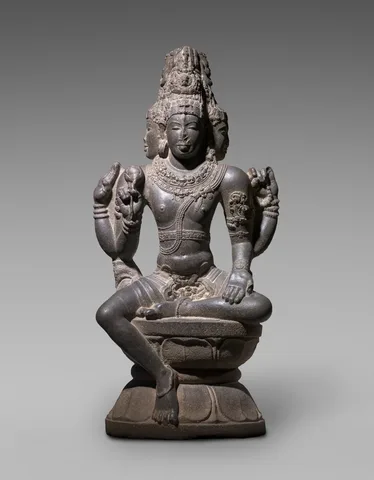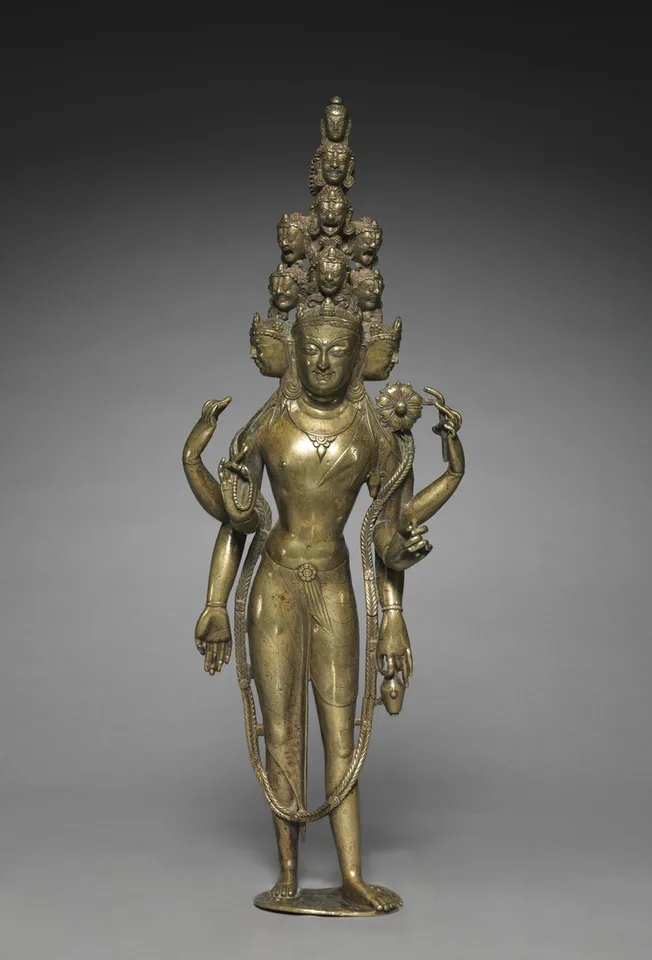
A tower of different faces rises above one graceful body, making compassion visible through several expressions and capacities at once.
The body is remarkably slender compared with the dense tower above it. Several heads rise in tiers, while six arms open space around the torso. Jewellery and finely worked crowns make the figure princely, but other attributes belong to ascetic practice. The combination asks us to read difference within one divine presence rather than treat the extra faces as a crowd of separate people.
The museum identifies this as an eleven-headed form of Avalokiteshvara, the bodhisattva of compassion, from the western Himalayas. It connects the athletic modelling with Kashmir and describes a range of calm, fierce and other expressions specified by texts. A head of Amitabha crowns the arrangement, and small Amitabha images occur within the crowns. The antelope skin and prayer beads add ascetic qualities to the jewellery. Not all eleven faces or every small attribute can be fully inspected from one frontal photograph.
The frontal view does not display all eleven heads or attributes equally. The identification relies on the museum’s iconographic study, and the expressions should not be read as personal moods.
Why should the different heads be read together rather than as separate people?
Practise looking at Eleven-Headed Bodhisattva of Compassion (Avalokiteshvara) →