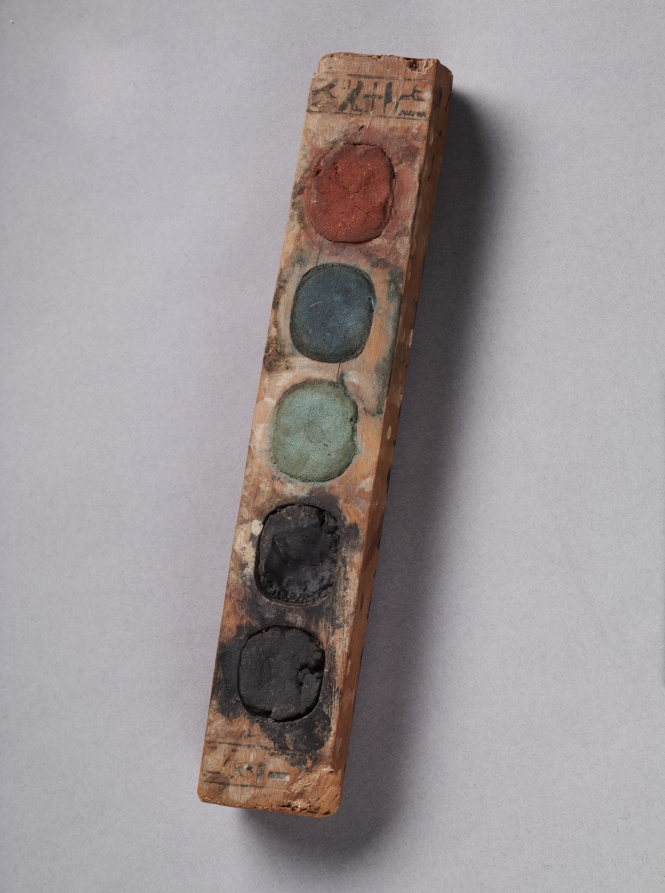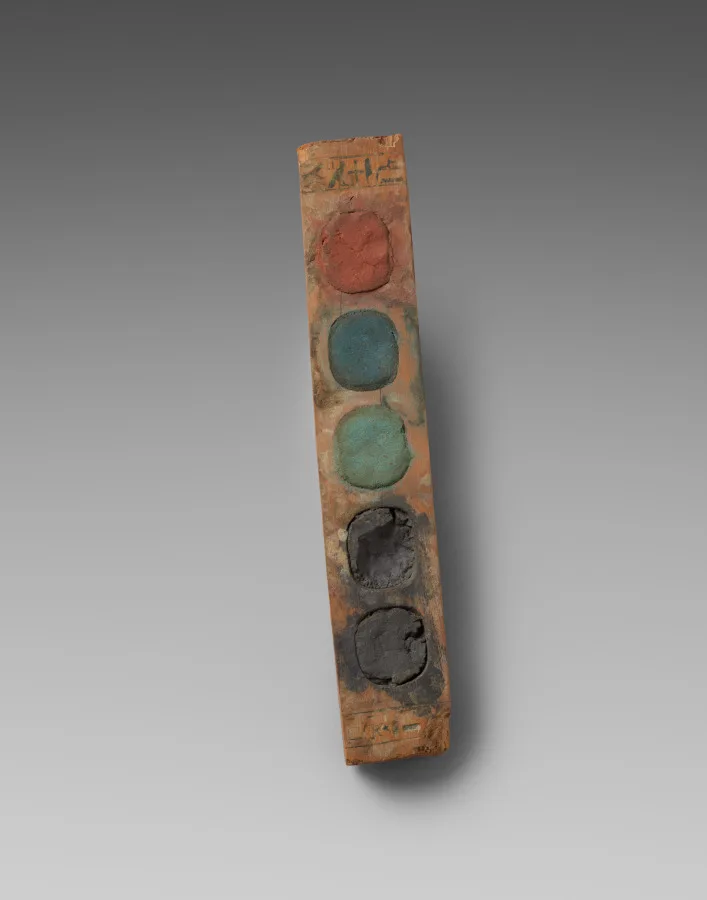
Five circles of pigment bring an ancient maker’s materials into view before any finished picture has been painted.
Instead of starting with a completed image, start with what made images possible. Five round compartments hold distinct colors in a long piece of wood. The form keeps the pigments apart while bringing them together in a portable working set. Cracks and uneven surfaces make the residues look very different from fresh paint squeezed from a modern tube.
The box belonged to Amenemope, a vizier who advised the pharaoh during Egypt's New Kingdom. The museum suggests that he may have painted for pleasure and that the box may have accompanied him in burial; neither proposal can be seen directly in the photograph. Conservators identified the mineral pigments using X-ray diffraction. That scientific evidence is different from merely recognizing red or blue by eye. This small object therefore opens two complementary ways of reading art: noticing how a tool is organized and asking what research can tell us about its materials and use.
Amenemope’s recreational use and the box’s burial are possibilities, not established facts in the museum record. A photograph can distinguish visible colors but cannot by itself identify their chemical composition.