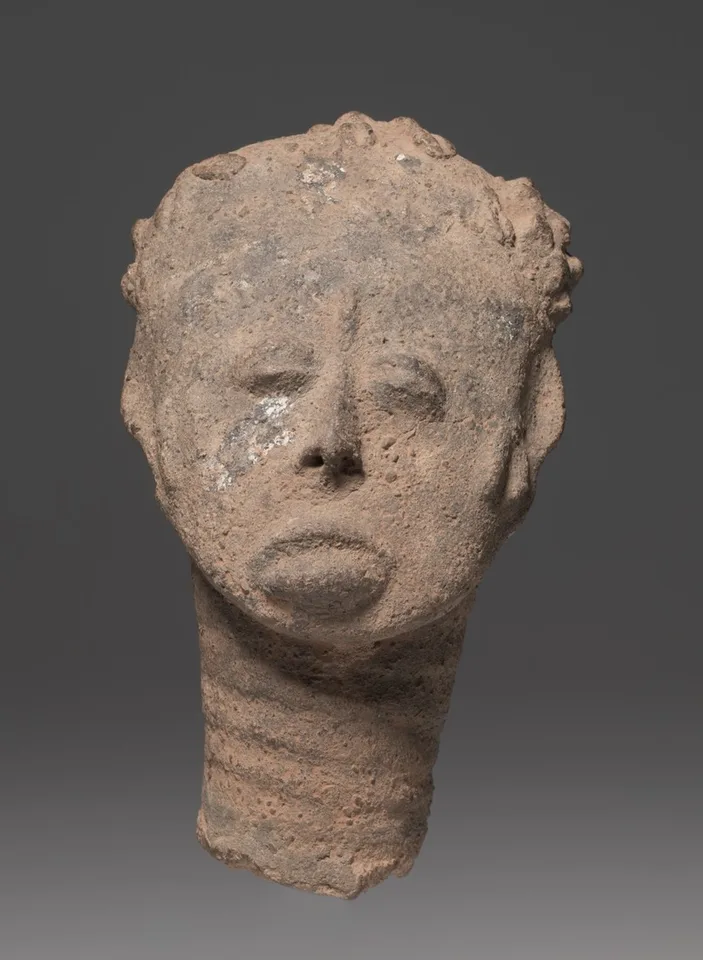
A small clay face carries a distinctive hairstyle, while the rings below it turn a neck into a memorial sign.
The maker of this memorial was a master woman potter working among the Asante. The museum explains that such sculptures commemorated the dead through selected features, including hairstyles and facial markings, without attempting a naturalistic likeness. After its placement in a sacred forest clearing, family members asked the departed spirit to accept the image and help them communicate with ancestors. The object therefore participated in an encounter involving people, place and speech.
The surviving head makes that selective approach to identity visible. Little projections distinguish the upper contour, while the eyes occupy restrained horizontal openings. Below the face, repeated neck ridges establish a second rhythm. The museum connects these rolls of flesh with beauty, prosperity and well-being. They are an artistic convention, not a medical description. The rough surface and broken lower edge also belong to the image we meet today, although they need not reproduce its original appearance.
The deceased person is not named in the record. The sculpture preserves selected signs of identity, but surface wear and the irregular lower edge limit reconstruction of its original appearance.