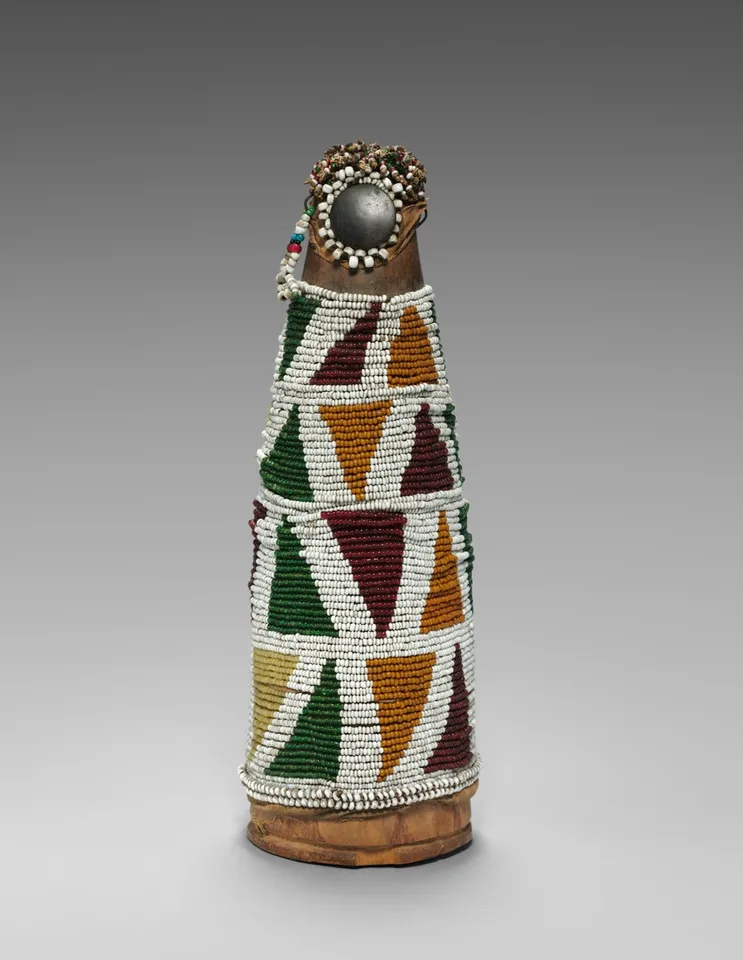
A metal disc becomes a face above stacked bead triangles, turning a simple wooden core into a richly worked figure.
The museum attributes this figure to a Southern Sotho-style maker in Lesotho. Its construction involved different kinds of work: a man carved the wooden core, while a woman covered it with cloth and beads. The glass beads and round metal face were imported materials, incorporated into a locally meaningful form. The result does not imitate a complete human body; it gives special emphasis to the face and to patterned covering.
The triangles change direction as they descend the tapering body. White bead borders separate the strong colours and define the edges of each section. Against this busy surface, the smooth circular face is strikingly spare. Historical accounts connect related figures with several settings involving conception, including gifts to brides, initiation and divination; some accounts describe toys. The museum emphasizes changing meanings over time. That range matters: the beadwork is visible, but one exclusive function cannot be read directly from the figure’s shape.
Accounts of these figures differ, and their meanings changed. This example cannot securely be assigned to a particular rite, bride or child from its appearance alone.
Which detail most clearly interrupts the all-over bead pattern?
Practise looking at Figure (kgöngwana-tshingwana/Ngwana sehô) →