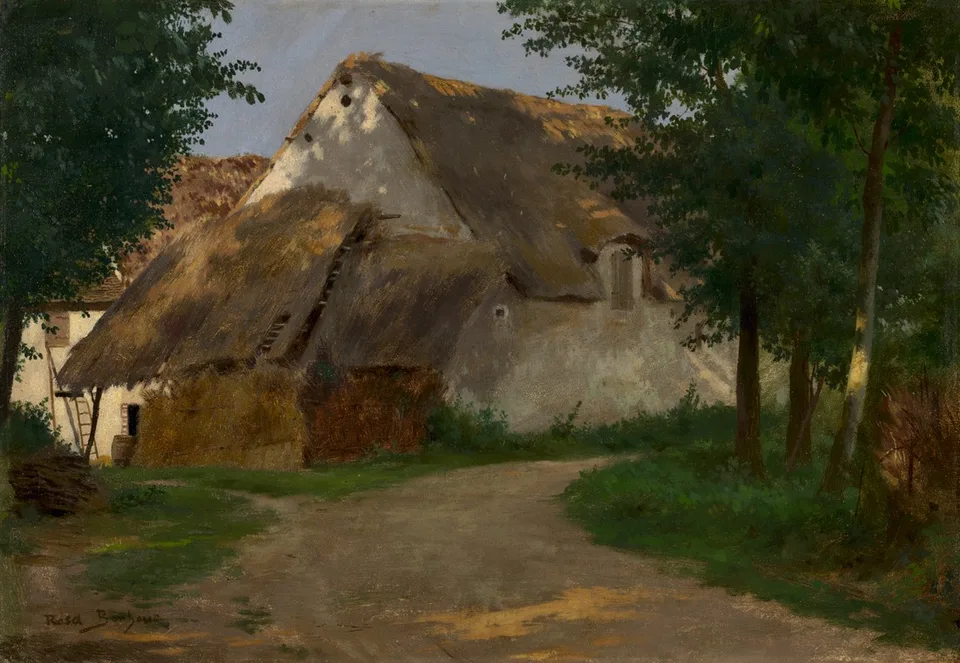
A roof, a path, and patches of sunlight let a rural building occupy the place usually given to a figure.
The farmhouse fills the middle of the picture, but its edges are softened by thatch, trees, and shade. The broad roof slopes toward a lower outbuilding on the left, producing a sequence of related triangles. At ground level, the path curves around the structure and disappears beyond it. These shapes make the building feel both substantial and embedded in its surroundings.
Rosa Bonheur is especially associated with animals, yet this painting gives architecture and vegetation the principal roles. The museum suggests that houses near the Forest of Fontainebleau, where she lived for decades, may have inspired the subject. The identification remains a possibility rather than a documented address. Her established success at the Paris Salons provides a useful counterpoint to the modest setting: a celebrated artist could devote sustained attention to weathered walls, irregular roofs, and a quiet stretch of earth.
The museum proposes a Fontainebleau-area inspiration but does not identify this farmhouse securely. Its quiet appearance cannot tell us how many people lived or worked there.