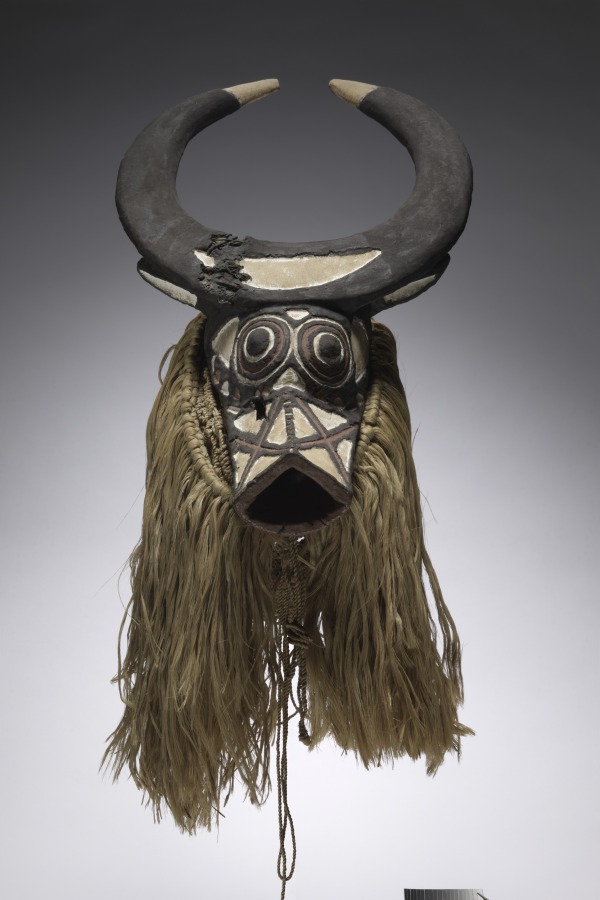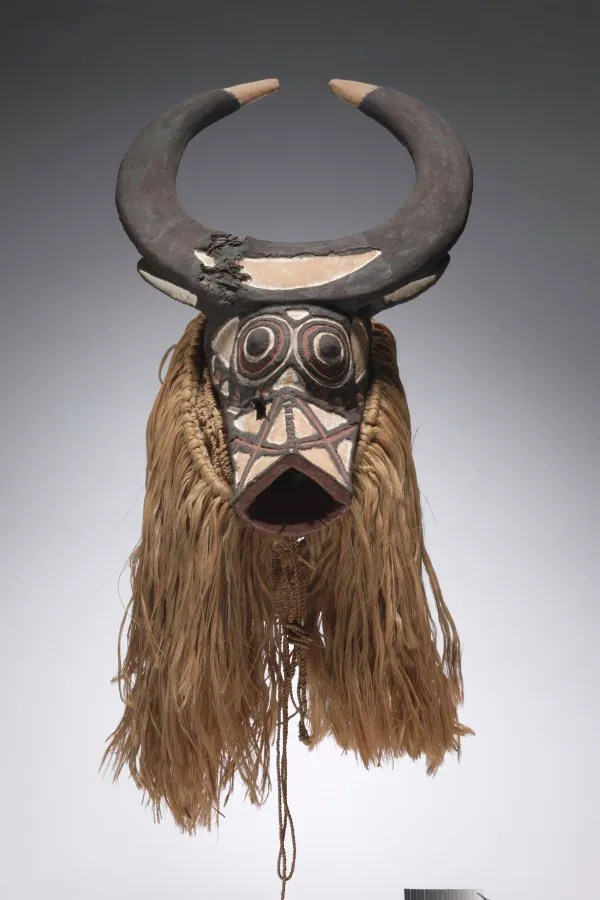
Wide horns announce a buffalo while painted circles and a long fiber surround reveal a carefully constructed performed image.
The horns claim the most space, but the face is just as deliberately organized. Painted rings enlarge the eyes, pale lines divide the muzzle, and the open mouth becomes a strong dark shape. A long surround of plant fibers continues the face downward. These different materials would have behaved differently when a wearer moved, an effect that a still photograph can only suggest.
The museum identifies a bush buffalo and cautiously attributes the mask to a Bwa-style maker in Burkina Faso. Its account places such masks within performances associated with protective bush spirits and community events. The object is therefore more than an animal portrait. Its right horn was once broken and repaired, evidence that continued use or preservation mattered. Look at the junction between animal features, geometric decoration and fiber rather than treating any one part as the entire meaning of the masquerade.
The Bwa attribution is qualified as possible. The museum describes several occasions for comparable masks; the image does not identify which particular event this example performed in.