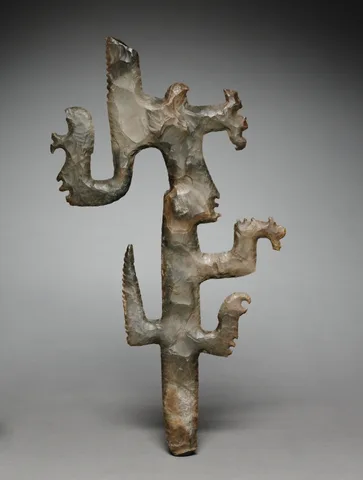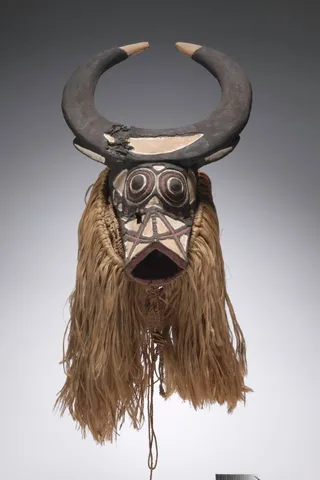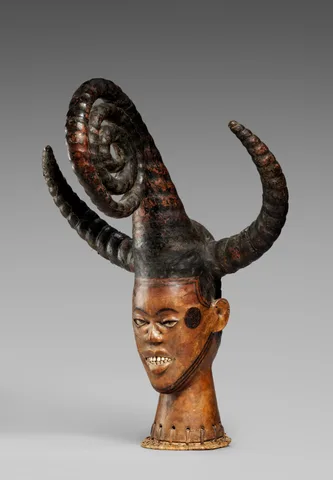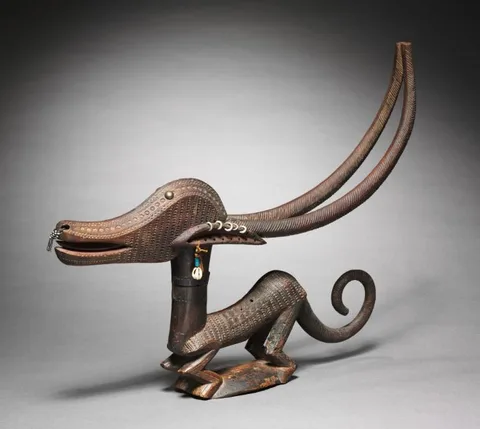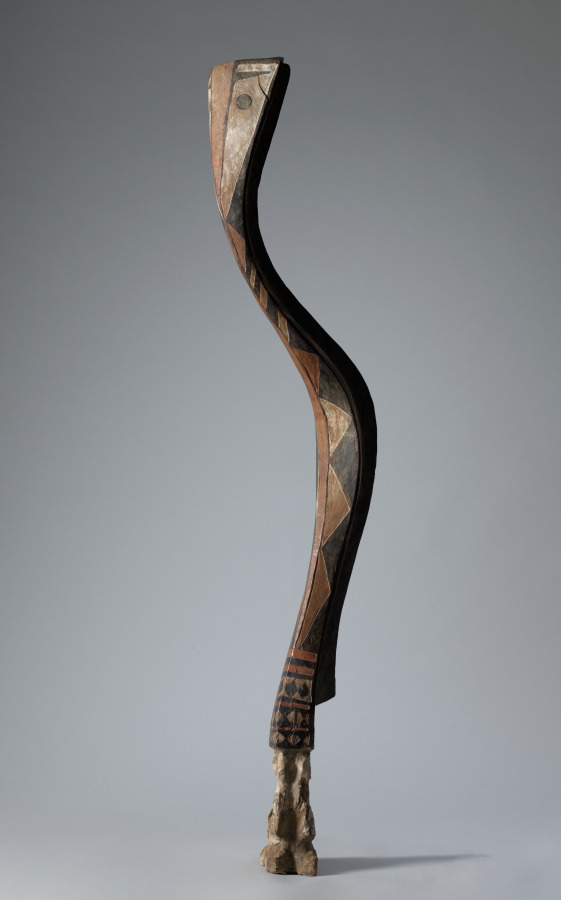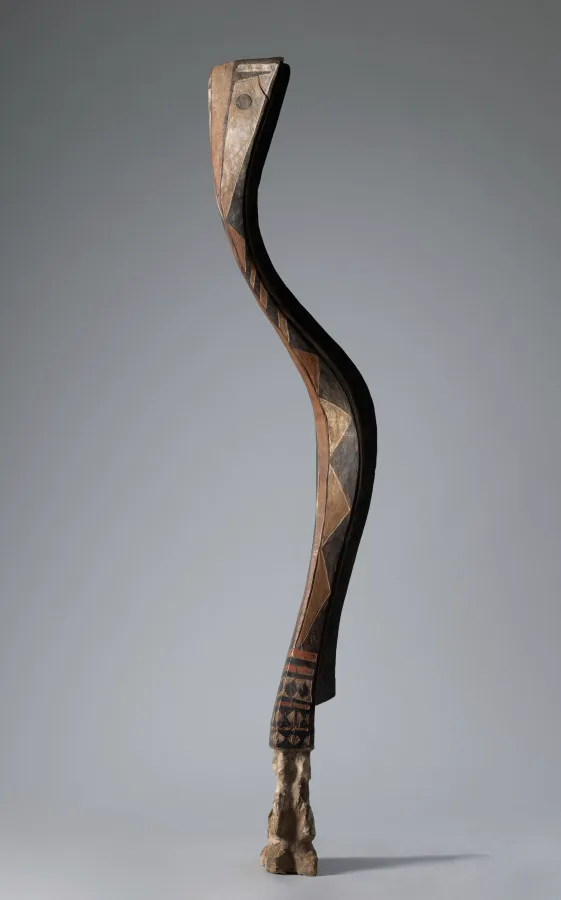
A painted serpent rises in a long curve, designed to tower above a wearer rather than rest quietly on a pedestal.
The curve is the first thing to follow. Rather than coil into a compact animal, the serpent rises in a long wave, with painted divisions changing as its edges turn. Its narrow profile in this photograph can make scale difficult to judge. The museum records a height of nearly five feet: when performed, it stood well above the crowd.
A palm-branch framework secured the sculpture above a costumed wearer. The museum associates this type with initiation settings among Baga and neighboring communities, while qualifying both the maker's attribution and identification with the serpent-spirit Ninkinanka. The original object had two faces, a feature that this selected angle does not fully communicate. Its design therefore concerns movement, changing viewpoints and bodily support as much as a serpent's appearance. A surviving staged photograph from about 1954 records this particular headdress, but a staged image and a complete account of ritual performance are different kinds of evidence.
The Baga-style attribution and Ninkinanka identification are qualified. The museum describes two faces, but this photograph does not show both equally; it should not be treated as a complete view.