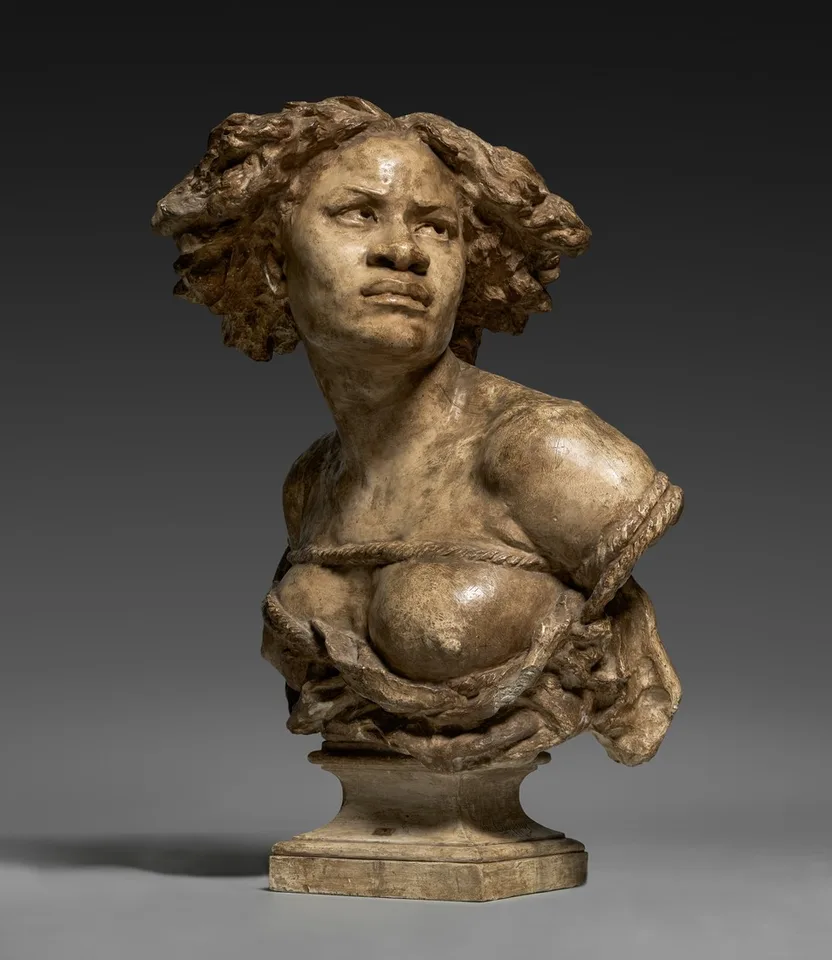
A raised face confronts the viewer’s attention while the rope records violence across the body below it.
The head turns sharply away from the torso, and the eyes lift beyond the immediate space in front of the bust. That movement gives the face an active direction. Below, the rope presses across the chest and torn clothing gathers unevenly around the body. The relationship between those areas is essential: the image presents resistance alongside the visible means of constraint.
The museum interprets Carpeaux’s sculpture as an expression of abolitionist sentiment and identifies the subject as an African woman subjected to enslavement. This plaster retains its original colored surface and may have served as the master model for numerous casts. Its hatchings and subtle modeling therefore carry information about making as well as expression. The represented woman’s individual identity is not supplied by the record. We should acknowledge the sculpture’s anti-slavery argument without assuming that a French artist’s image gives direct access to an unnamed woman’s own voice or experience.
The record does not identify the model or represented woman by name. Abolitionist intent does not make the sculpture a first-person testimony or remove the unequal conditions of representation.