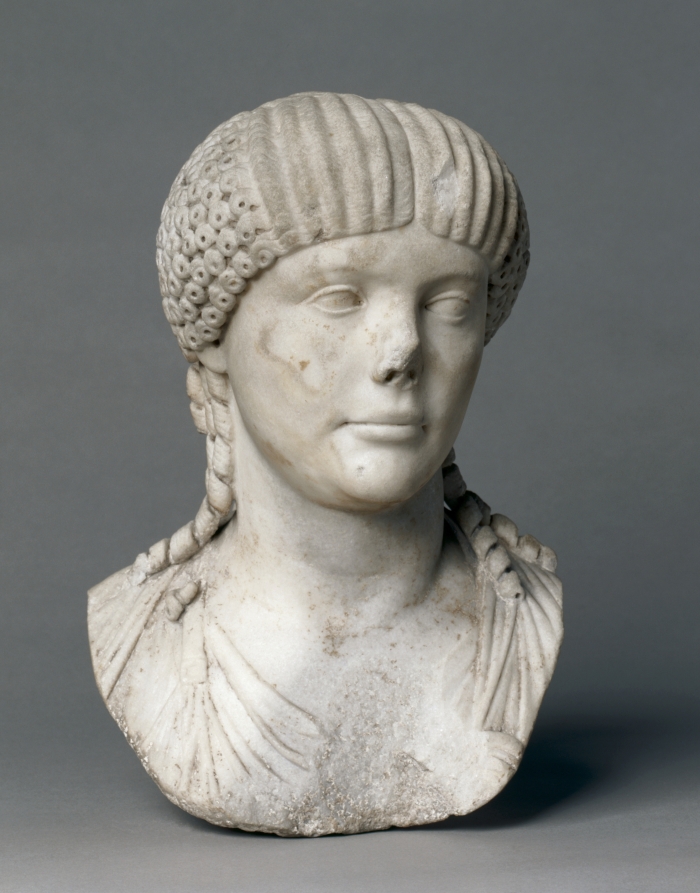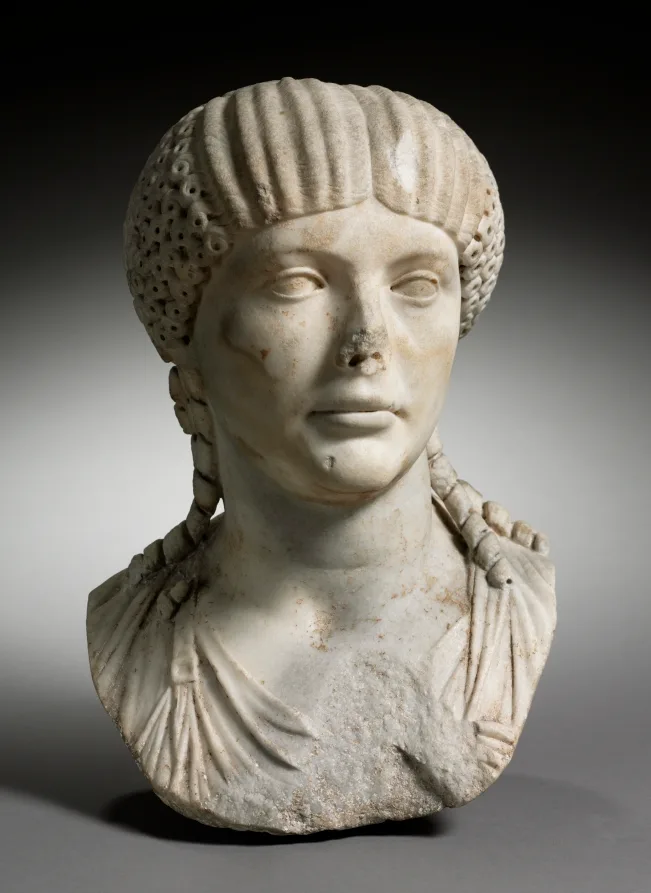
Waves, tight curls and hanging ringlets turn hair into identifying evidence, though the woman's imperial name remains a proposal.
The hairstyle contains several systems at once. Broad waves frame the forehead, tight curls concentrate at the sides, and longer ringlets fall toward the shoulders. The face itself is smoother and less busy, so hair becomes a major source of distinction. Clothing supplies another set of clues below the neck.
The museum tentatively identifies the sitter as Claudia Octavia, the first wife of Nero. The identification is not certain, and her dramatic biography should not be treated as something visibly encoded in every facial feature. The stola worn over a tunic indicates a married upper-class woman within Roman dress conventions. These contextual clues establish a type of social presentation more confidently than a personal name. The damaged nose and surviving marble surface also belong to the object's current condition. A careful reading can admire the elaborate carving while keeping attire, proposed identity and later damage as separate kinds of evidence.
Claudia Octavia's identification is tentative. The sitter's smooth features do not reveal private emotions or independently confirm an imperial name; the damaged nose further limits the surviving likeness.
Which statement best matches the strength of the evidence?
Practise looking at Portrait Bust of the Empress Claudia Octavia →