Wrinkles make a face seem knowable, but empty eyes and a lost identifying context remind us how much remains unknown.
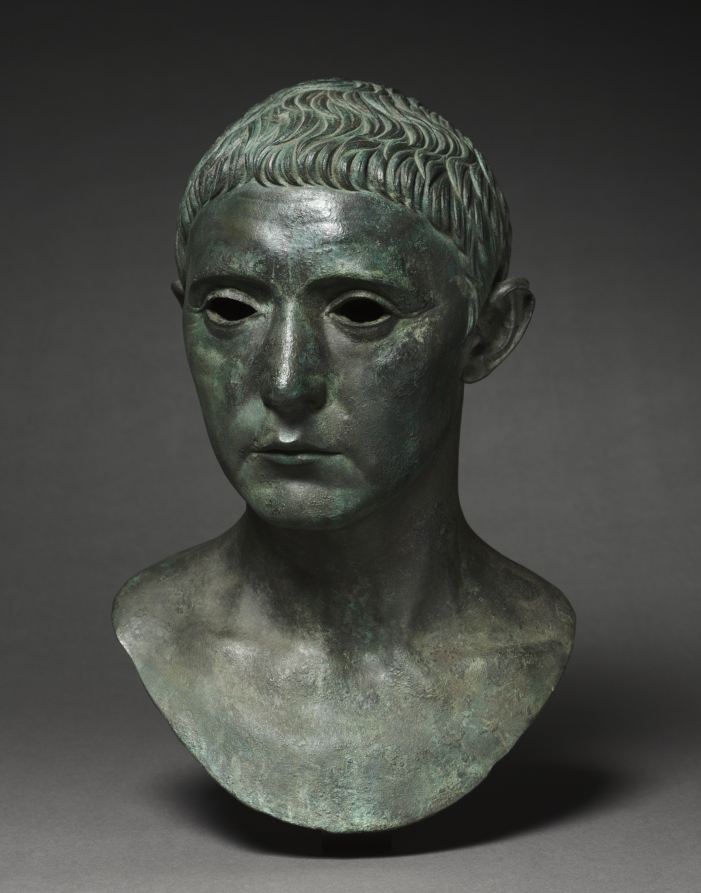
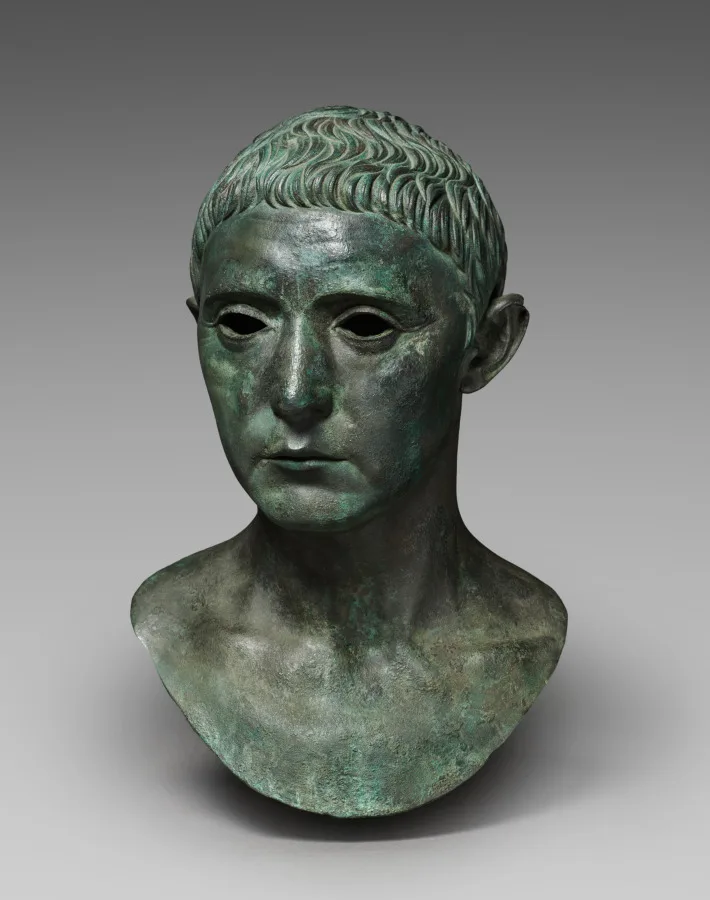
The face invites a sense of recognition: fine forehead lines, slightly unequal ears and a restrained mouth make it feel individual. Yet the eye sockets are dark and empty, and no name appears in this view. A convincing portrait can preserve selected bodily details without preserving the information needed to identify its sitter.
The museum dates the bust to the Augustan period, while noting that some scholars favor a late Republican date. It probably once stood on a shaft as a herm, with an inscription that would have named the subject. The eyes were originally inlaid, perhaps with stone, glass or ivory. Their loss changes the encounter considerably. Read the surviving modeling and the missing additions together rather than imagining the present hollow gaze as the maker's intention. Neither apparent realism nor a carefully arranged hairstyle can independently recover the man's biography, office or private disposition.
The sitter is unknown, the herm setting is probable, and dating has been debated. The original eye-inlay material is also uncertain, so the current empty sockets are not an intended portrait expression.