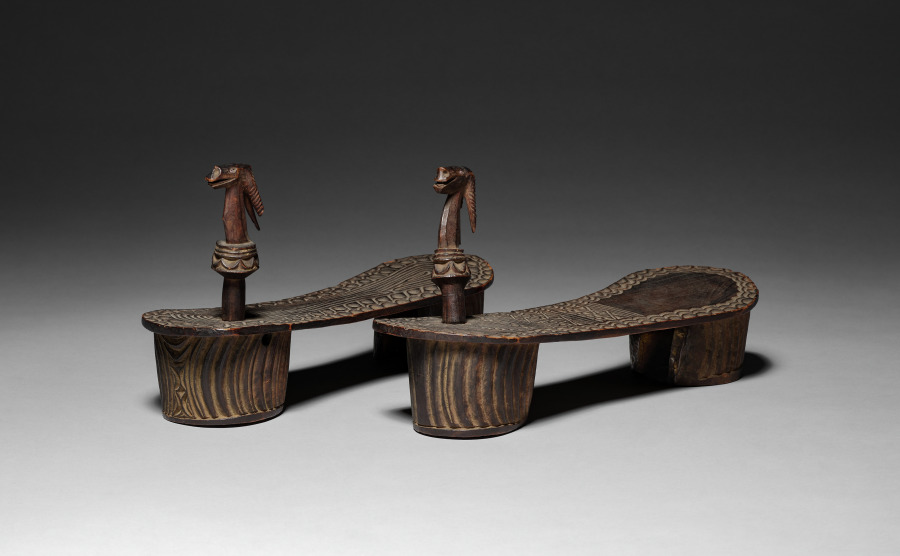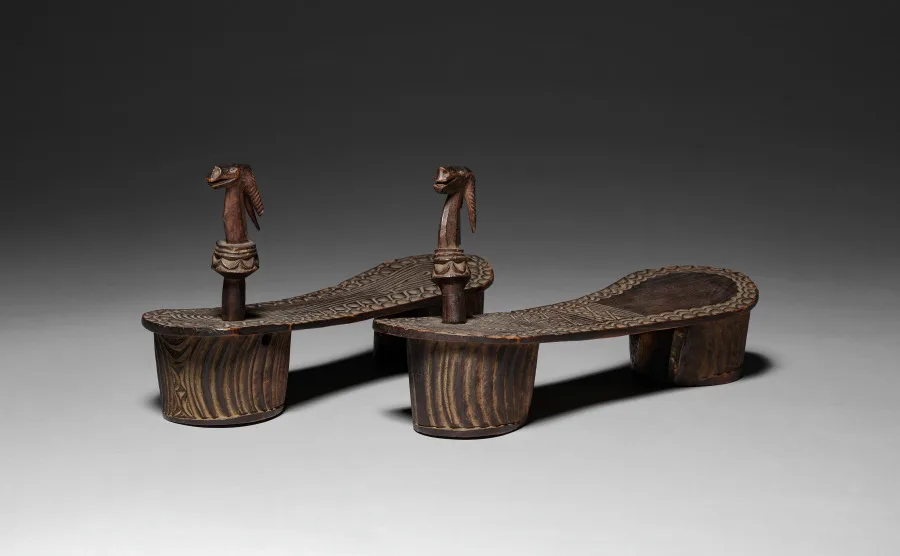
Animal-shaped toe pegs rise from patterned wooden soles, showing how footwear could communicate more than protection for the feet.
Imagine the toes around the tall pegs rather than looking for a conventional strap. The soles are raised above the ground by substantial supports, and crisp carved patterns cover surfaces that ordinary use might wear down. The animal-shaped pegs make practical contact points into small sculptures. Construction and display belong to the same piece of footwear.
The museum locates the carving in Central Africa while describing a much wider history of wooden sandals around the Indian Ocean. Such shoes could signal elite standing, but their meanings changed as formerly enslaved people on the East African coast adopted simpler versions. The route inland also intersected with slave trading. Those histories prevent an uncomplicated story of beautiful objects freely circulating. The clean carved surfaces suggest this pair was rarely worn, yet do not identify the owner's status by themselves. A museum label and a single photograph cannot reconstruct every stage of their journey.
The pair's route and association with particular traders are proposed rather than fully documented. Broader histories of elite and emancipated wearers should not be assigned as a specific biography to these sandals.
What supports the museum's suggestion that this pair was rarely worn?
Practise looking at Sandals (mitalawanda / mitawanda) or Clogs (kiatu cha mti) →