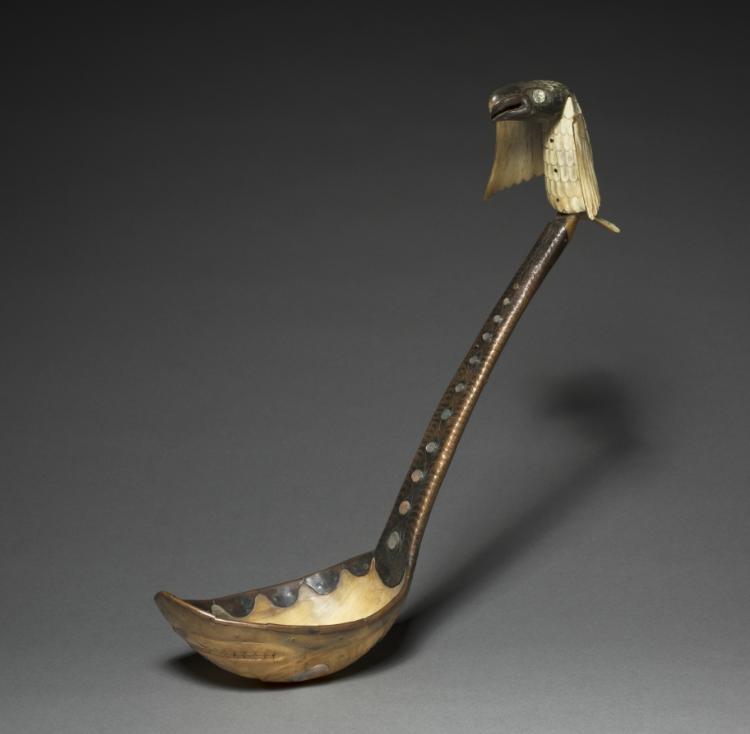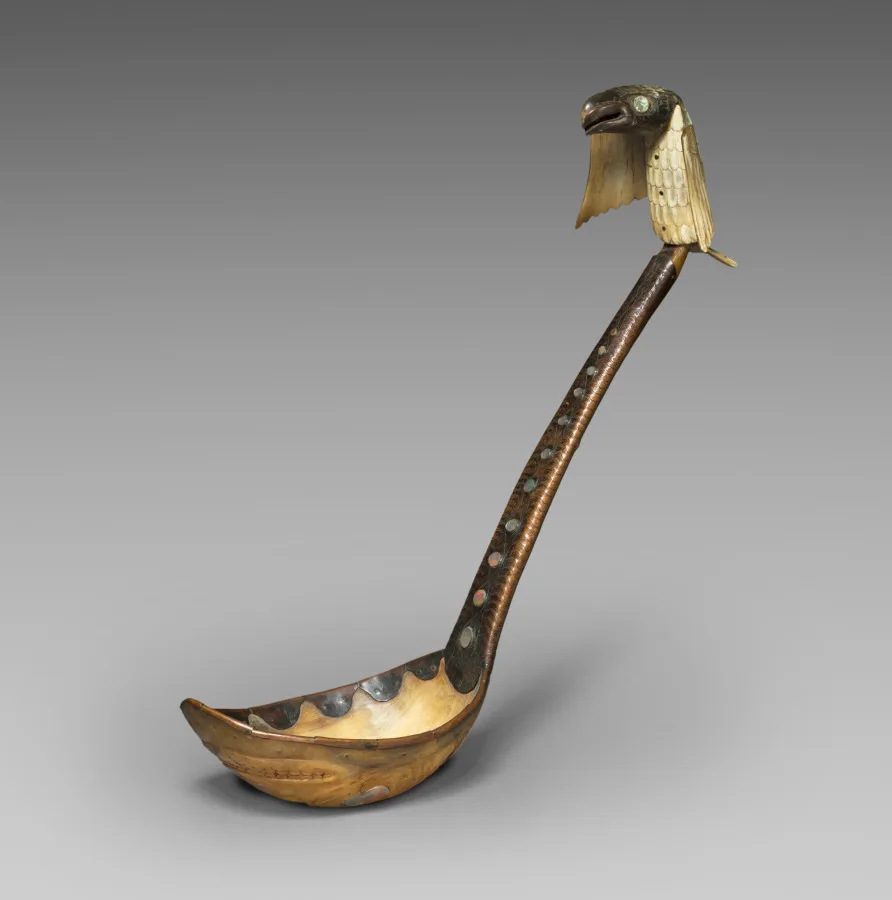
An eagle presides above a long-handled ladle, linking the serving of food with a carefully made image of family standing.
The ladle's bowl and bird-headed upper end are far apart, joined by a long handle that guides the eye between them. Pale inlays punctuate the dark shaft, while the curved bowl catches broad warm light. The object combines several materials and scales of attention, from a serving vessel's practical capacity to the small details of the eagle above.
The museum identifies a Tlingit feast ladle made from horn, bone, copper and abalone shell. Elaborate utensils were valued possessions of noble clans and could be used during potlatch feasts. The eagle and a bear head on the underside may be family crests connected with histories and rights. That interpretation is qualified, and the underside's bear is not equally visible in this selected view. Reading the ladle means keeping serving, craftsmanship and social identity together without inventing a named family or treating the museum photograph as a complete account of a living ceremonial tradition.
The crest interpretation is possible, and no particular family is named in the short record. The bear imagery is on the underside, outside the clearest area of this selected view; the complete feast context is not reproduced here.