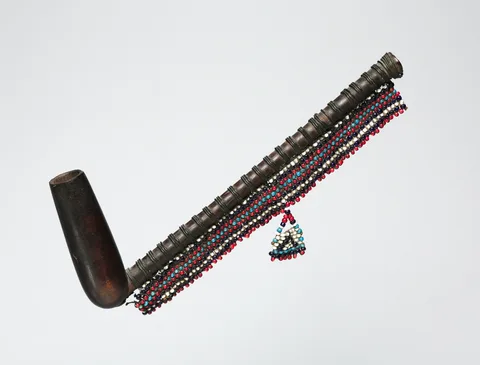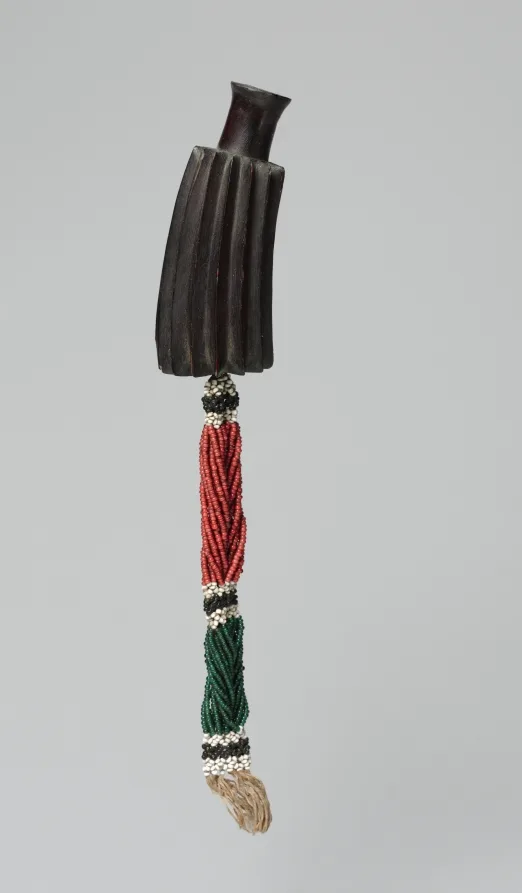
Parallel wooden ribs and a long beaded attachment make a small container an object of use, display and personal taste.
The wooden body and the beaded attachment behave differently. Deep ribs make the dark container compact and firm, while the long strands below introduce flexibility and bright color. Its neck identifies an opening, and the hanging ornament gives a small object an unexpectedly long silhouette. Neither part alone explains the whole design.
The museum identifies a snuff container in a Northern Nguni-style tradition and suggests that its ribbed shape imitates a fruit. Such personal objects could be worn, carried or attached to clothing, expressing wealth and taste while participating in social practices of taking snuff. The record proposes that a man carved the wooden part and a woman made the beadwork, but does not securely name either maker. Reading the object therefore involves both material collaboration and bodily use. The photograph shows the arrangement of parts; it does not establish who carried this particular example or exactly how it was worn.
The fruit resemblance and makers' gendered roles are qualified in the museum account. No named owner or specific wearing position is documented for this individual container in the cited description.