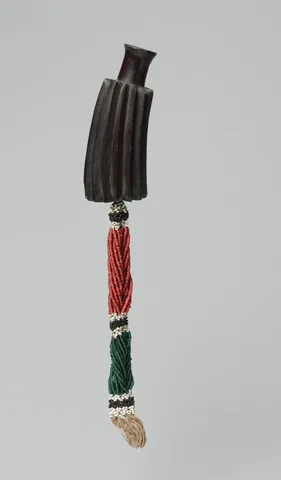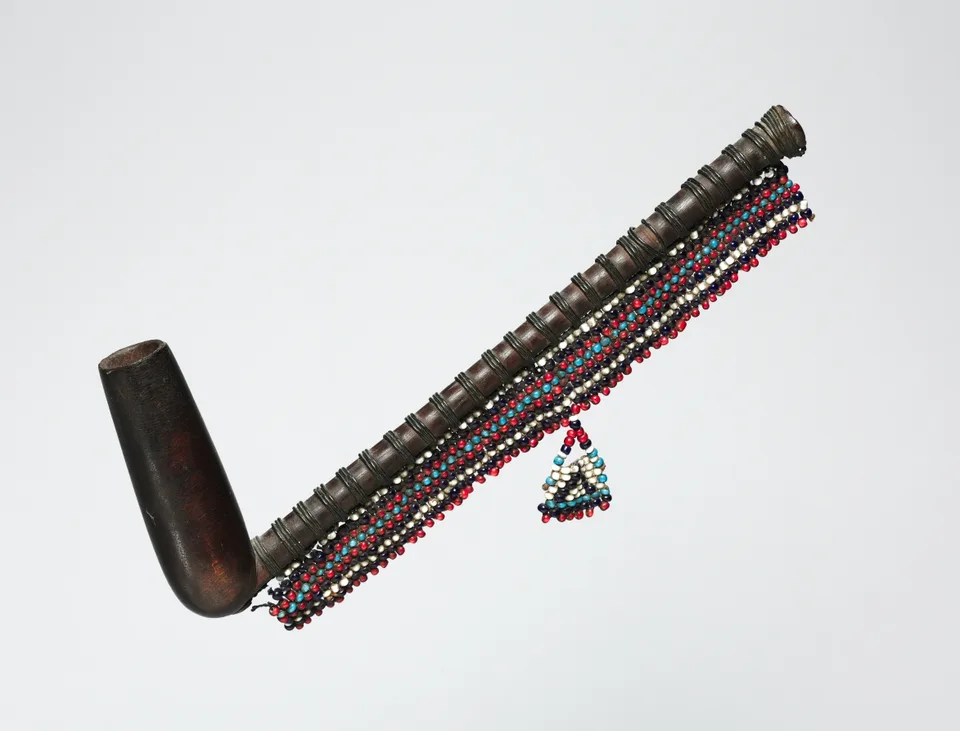
A tiny beaded apron hangs from a long pipe, offering a clue to ownership that its wooden bowl alone cannot provide.
The long diagonal stem makes the pipe's proportions immediately distinctive. Its dark carved sections contrast with rows of small colored beads below, and a miniature apron-like ornament interrupts those rows. The pipe is therefore both a smoking implement and a surface for bodily and social clues, even without its former user present.
The museum connects long stems with mothers directing smoke away from children carried on their backs. It also identifies the small apron form as evidence suggesting female ownership. That suggestion should not become a securely named owner or proof of one specific use. The account distinguishes male carving from beadwork added by a woman and describes pipes passing between people and generations. The object can therefore connect craft, leisure and family continuity. Looking closely at the different materials helps explain how those roles were assembled, while the record supplies the historical associations that appearance alone cannot establish.
The apron suggests female ownership rather than proving a particular owner's identity. The explanation of long stems describes a broader practice, not a documented scene involving this exact pipe.