Objects meet bodies
Practical use and elaborate craftsmanship often occupy the same object. A small container can hang from beadwork; footwear can carry carved animals; a serving utensil can incorporate crest imagery. These five examples come from distinct communities. Attend to the point where each object would meet a body, while resisting the urge to invent an individual owner or occasion.
Begin the journey ↓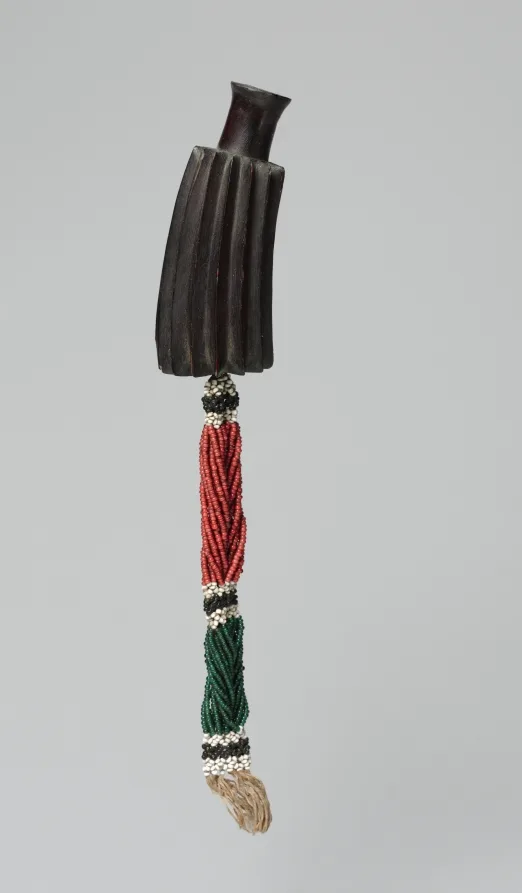
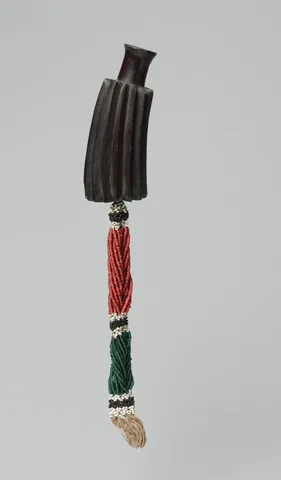
A small chamber and a long attachment
The ribbed wooden chamber is much shorter than the beaded strand attached below it. Its scale encourages close attention to a portable object. The museum places it within Nguni snuff traditions, where making, personal adornment and social relationships could overlap.
Carry this question: Why might an attachment occupy more visible length than the container itself?
Open the artwork ↗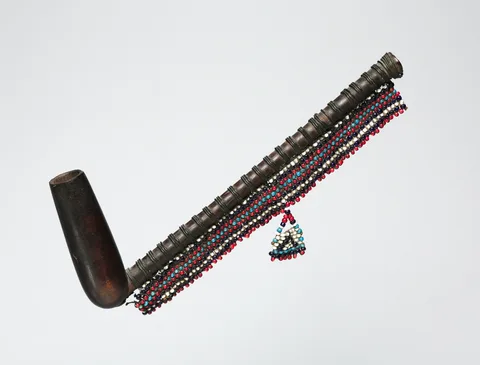
A miniature apron beside a pipe
A small beaded pendant hangs below the long pipe stem. The museum reads its apron-like form as evidence that the pipe probably belonged to a woman. The qualification matters: the ornament offers a reasoned attribution, not a named owner or a complete personal history.
Carry this question: How does the pendant interrupt the stem’s long diagonal?
Open the artwork ↗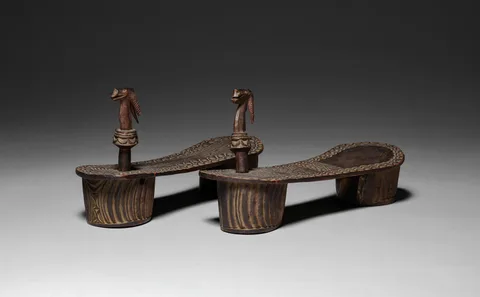
A patterned sole with little wear
Crisp geometric carving covers the soles, suggesting limited wear. The source places related footwear within histories of elite display, its adoption by formerly enslaved people, and possible slave-trade routes into Central Africa. Those histories do not identify this pair’s wearer. The raised base and animal-shaped toe pegs show how the feet met the object.
Carry this question: What can the crisp carving suggest about use without proving that the sandals were never worn?
Open the artwork ↗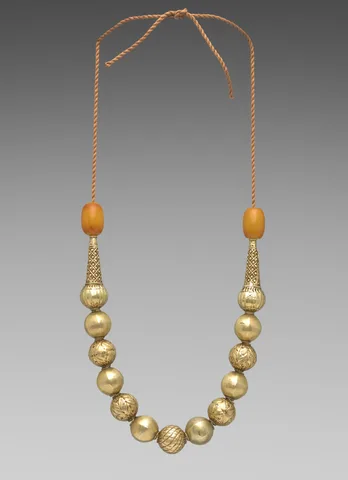
Gold colour from another metal
Smooth and patterned spheres alternate along the necklace’s lower arc. They are gilt silver, while the yellow beads are resin, possibly copal. The museum tentatively associates the piece with Harar bridal adornment; appearance alone would not establish either its materials or that specific setting.
Carry this question: Where do smooth and patterned surfaces catch light differently?
Open the artwork ↗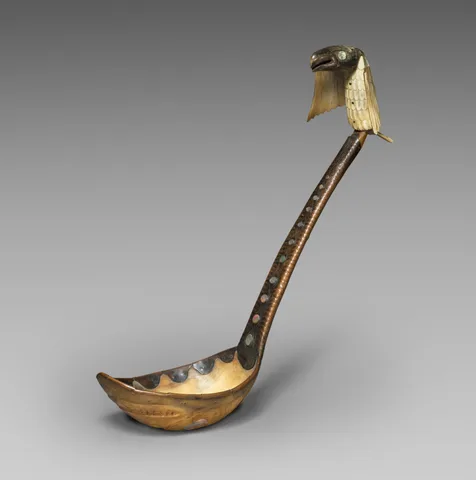
Serving beneath an eagle
A broad horn bowl opens below a long inlaid handle topped by an eagle. The museum connects elaborate Tlingit utensils with potlatch feasts and clan possessions. A possible crest association does not authorize naming a particular family or reconstructing a specific feast.
Carry this question: How does the long handle connect practical serving with the conspicuous bird above?
Open the artwork ↗Read with the sources
Historical context follows the individual museum records linked on each artwork page. These routes make original comparisons of visible form; resemblance alone is not evidence of shared meaning or direct influence.