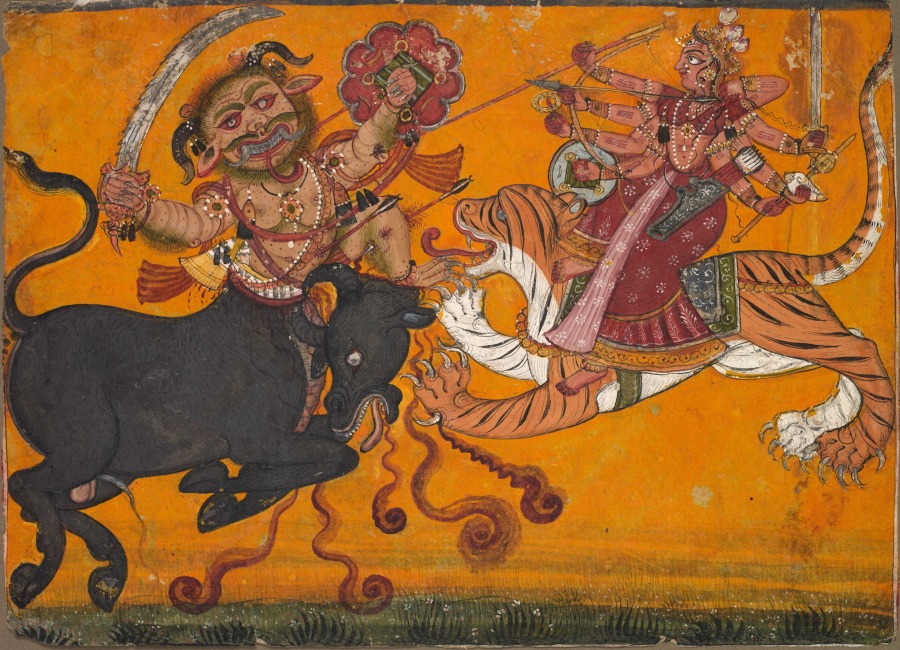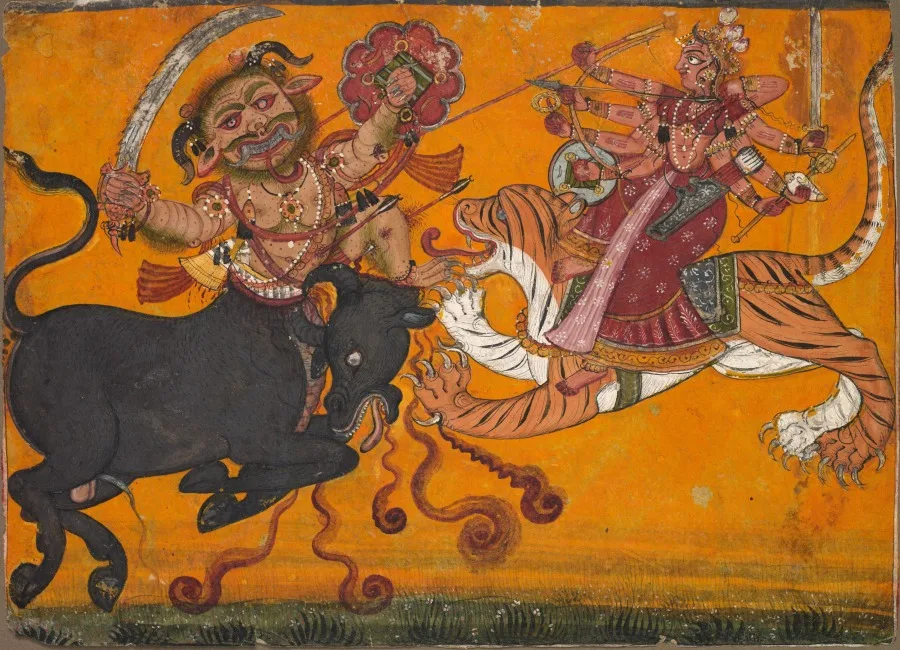
Many arms, a striped mount, and a demon emerging from a buffalo compress successive moments of battle into one intense image.
The goddess’s many arms spread actions around a single body. A bow, shield, and other weapons remain simultaneously available as she rides her striped mount toward the enemy. The museum identifies Durga confronting Mahisha, whose true form emerges from the buffalo after its defeat. The painting therefore brings transformation and combat together rather than showing only one ordinary opponent.
The orange ground removes most surrounding scenery, keeping attention on the collision of bodies, weapons, and gestures. The museum places this work in the Pahari kingdoms of the Himalayan foothills and explains that painters there represented Durga’s mount as a tiger in this example. That specificity matters: recognising a general story should not lead us to replace the animal actually depicted with a more familiar version. Compare Shiva as Lord of Dance, where multiple arms also organise several attributes, but within a different deity’s form and theological setting. Similar visual devices do not make their meanings interchangeable.
The image includes violent combat and a demon’s transformation. The tiger is specific to this depiction; the reading should not replace visible details with attributes remembered from another Durga image or another deity.