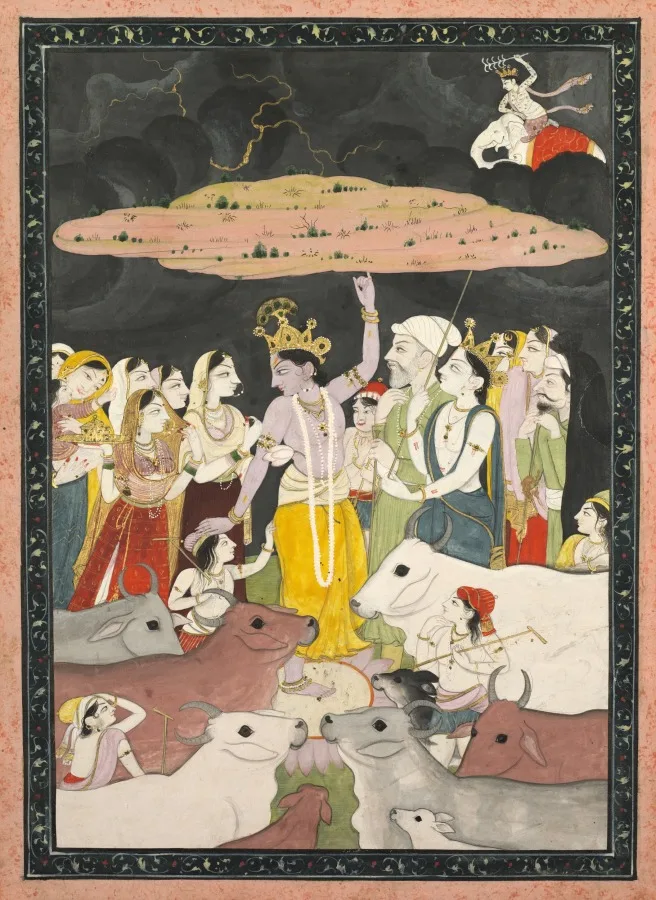
A mountain balanced above a crowded shelter makes protection visible through the smallest possible supporting gesture.
The mountain forms a roof across the scene. Beneath it, people and cattle gather so closely that the lower half becomes a sheltering crowd. Krishna stands at its centre, supporting the great mass with his little finger while turning toward Radha and touching a child. The museum identifies the pale figure nearby as Balarama, adding support with a staff.
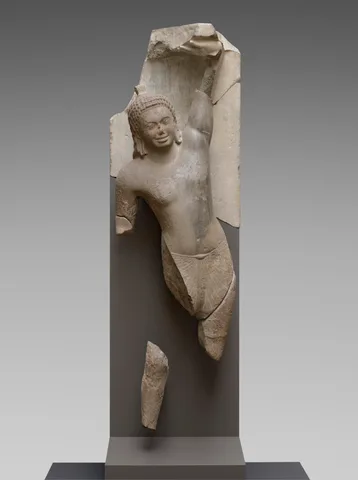
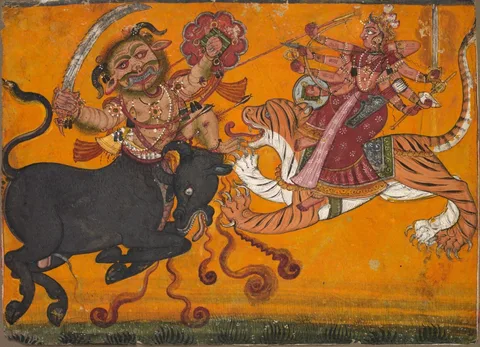
Above this protected space, Indra rides a white elephant through the storm he has sent. The painting therefore shows both danger and refuge at once rather than presenting one isolated heroic body. The contrast between the enormous mountain and the slight supporting finger makes Krishna’s effortless power visible. Compare the early Cambodian sculpture of the same episode: there, a raised arm and surviving stone must carry the story without the painted crowd or weather. Here the surrounding figures show what the action is for, allowing divine protection to be read through the community gathered under a shared roof.
The scene represents a Hindu narrative, not a naturalistic account of a physical mountain lift. Identities such as Radha, Balarama, and Indra follow the museum’s reading rather than colour alone.