Shelter, conflict, and consequence
These images do not tell one shared religious story. Instead, they offer different ways to make danger, protection, conflict, or moral consequence visible. Compare a concentrated bodily action with a crowded painting, a many-armed battle, a court-like judgement, and a quieter forest life. Keep each narrative’s particular tradition and evidence in view.
Begin the journey ↓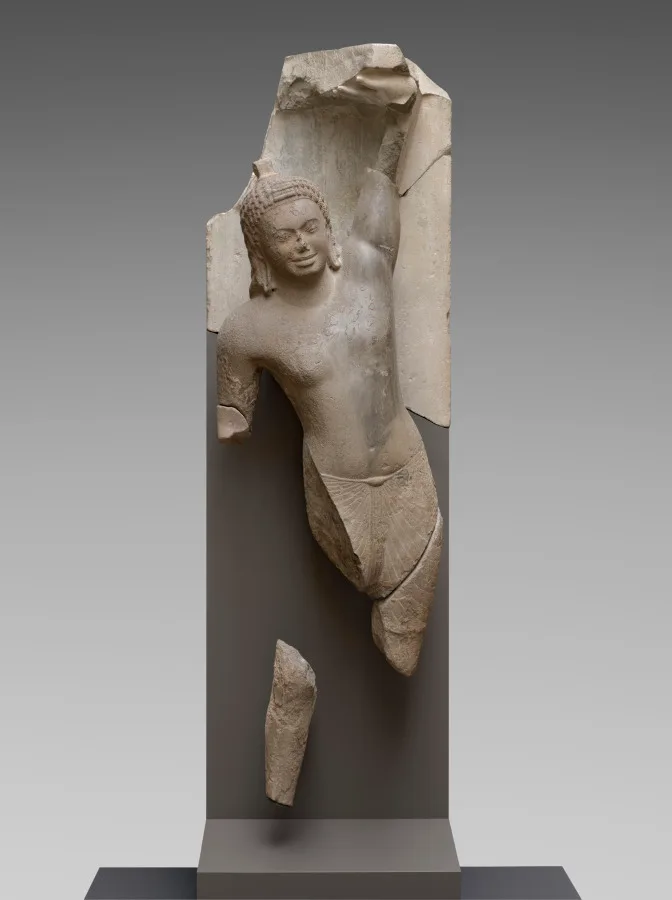
A story in one surviving action
The raised arm carries the mountain-lifting identification despite missing stone. A fragmented body can preserve a narrative clue, but it cannot supply every detail of the original figure or setting.
Carry this question: What does the surviving lift communicate before the title is known?
Open the artwork ↗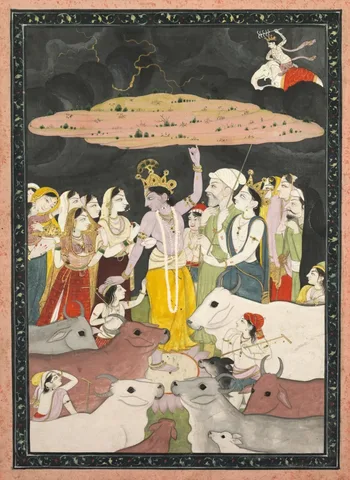
Show whom the action protects
The crowd and cattle gather beneath a mountain roof. The painting expands the same episode by showing beneficiaries and storm, making collective shelter visible around the central lifting gesture.
Carry this question: What does the painted crowd add that the sculpture cannot show?
Open the artwork ↗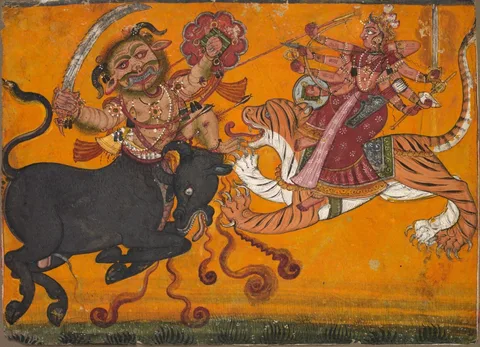
Several actions at once
Durga’s arms distribute weapons around one body, while the buffalo and emerging demon compress transformation into the combat. The striped mount is the tiger actually depicted in this regional version.
Carry this question: How many connected actions can you follow without treating them as separate scenes?
Open the artwork ↗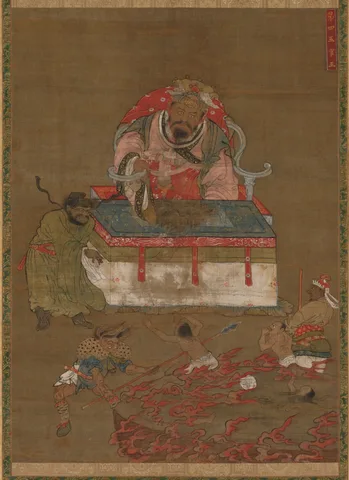
Judgement above, consequences below
The elevated judge and assistant organise the upper scroll like a court. Punishment below belongs to a specific Buddhist moral narrative, rather than a documentary account of an earthly institution.
Carry this question: How does the vertical arrangement connect decision and consequence?
Open the artwork ↗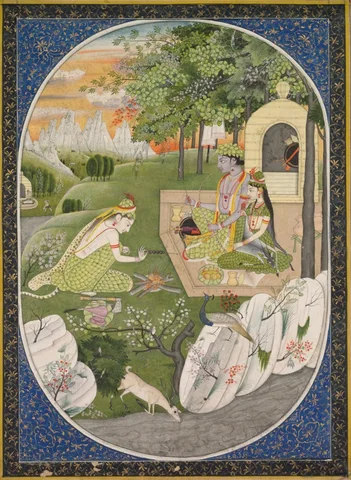
Protection through daily provision
Look at the food preparation and temporary dwelling rather than searching immediately for combat. The narrative includes ordinary acts of living during exile, giving care a quieter visual form.
Carry this question: How does making a meal alter your sense of a heroic story?
Open the artwork ↗Look at a pair more closely
- One mountain, two ways of telling
A Cambodian sculpture and a Kangra painting
Read with the sources
Historical context follows the individual museum records linked on each artwork page. These routes make original comparisons of visible form; resemblance alone is not evidence of shared meaning or direct influence.