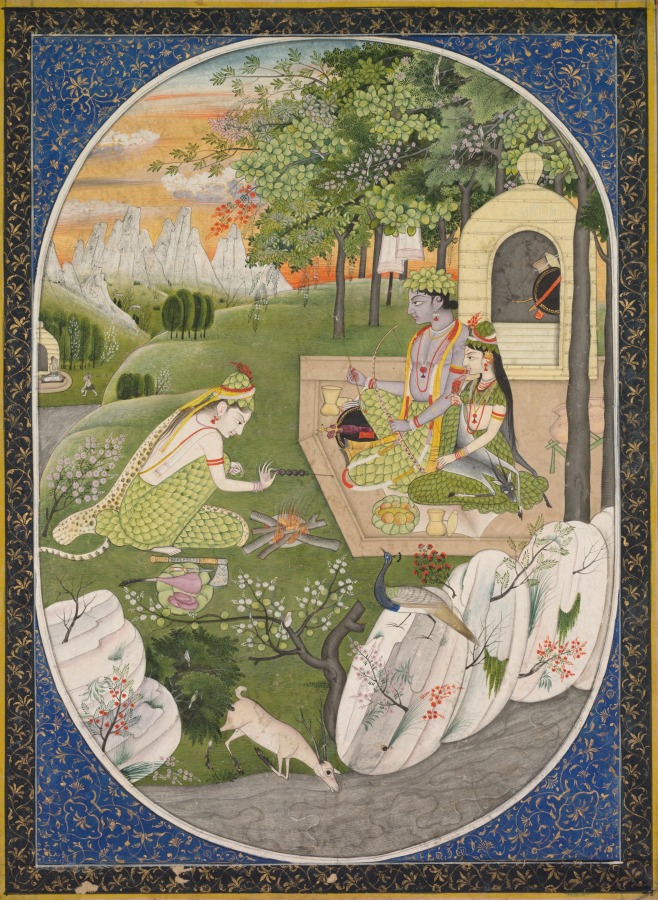
A meal being prepared beside a forest hut brings an epic exile into the scale of ordinary daily life.
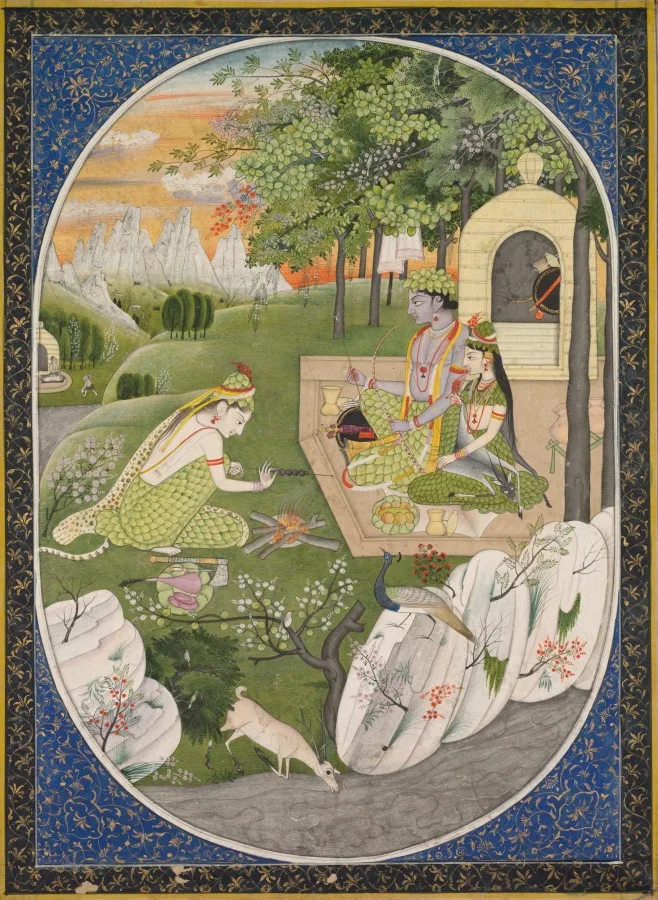
Start with the small fire, where Lakshmana prepares food on skewers. Rama and Sita sit nearby, beside a compact shelter. The scene makes their forest exile legible through practical arrangements: somewhere to sit, something to eat, and a dwelling among the trees. The museum places this episode within a peaceful stretch of their life away from home. It is a narrative of adaptation, not simply a portrait of three figures against decorative greenery.
The oval boundary shapes the landscape as much as the hills do. Pale rocks curve around its lower edge, while tree trunks lead toward the hut and the receding ground. The museum connects the oval format with European models and the soft colours and spatial arrangement with Mughal painting. It suggests that the surrounding Kangra landscape informed the hills. These are several kinds of context operating together: an epic story, local scenery, and pictorial ideas moving between artistic settings.
The Kangra setting and album-series relationship are suggestions in the museum record. The painting represents an episode of the epic; its inviting detail does not make it a documentary record of an actual forest household.
Which detail brings the forest exile closest to an everyday routine?
Practise looking at Rama, Sita, and Lakshmana in the forest →