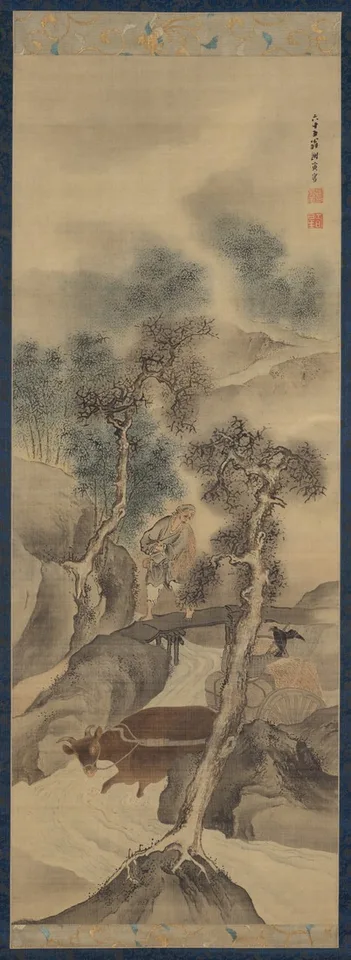
The farmer keeps his feet dry while his buffalo takes the stream, and a crow makes the return home less peaceful.
The crossing divides the work. The farmer uses a narrow bridge, but the buffalo pulls the cart through the water below. The difference makes the practical scene quietly comic: the animal negotiates the stream while the man can attend to a crow attracted by his grain. Tall twisting trees and pale water make these small actions part of a much larger autumn setting.
Yosa Buson was both a poet and a professional painter. The museum relates his training in painting to Chinese manuals circulated as woodblock prints and his poetic travels to the example of Matsuo Bashō. Those histories help explain a cultivated image of rural life, not a simple documentary report of farming. The scene rewards attention to its local action before admiration of the distant landscape. It lets humour emerge through the placement of bodies, bridge and cart rather than through an exaggerated facial expression.
The image is a poet-painter’s constructed rural scene, not evidence for one identified farmer’s life. The museum’s reading of the crow clarifies a small narrative detail.