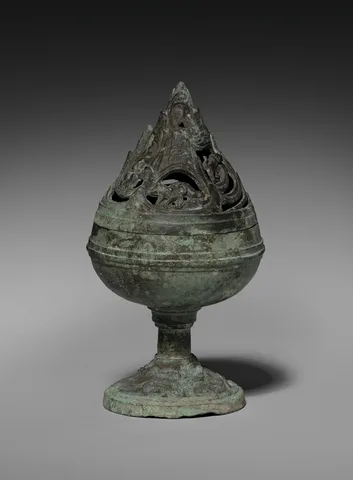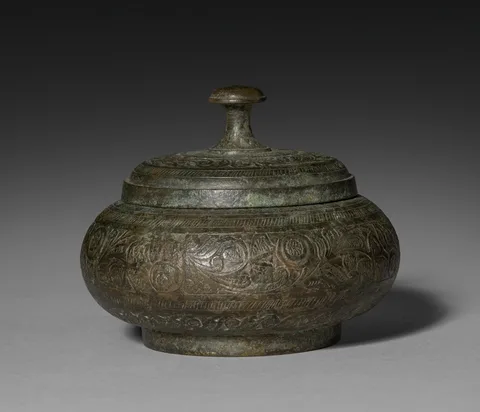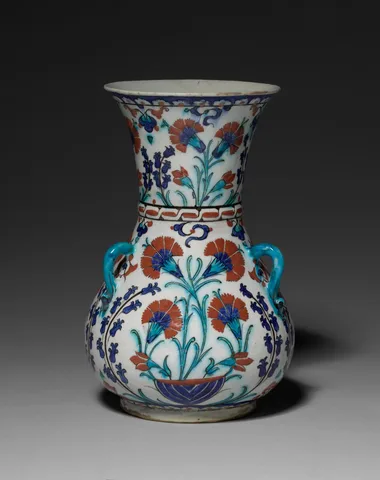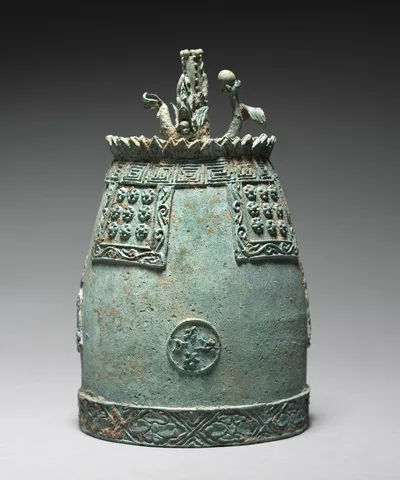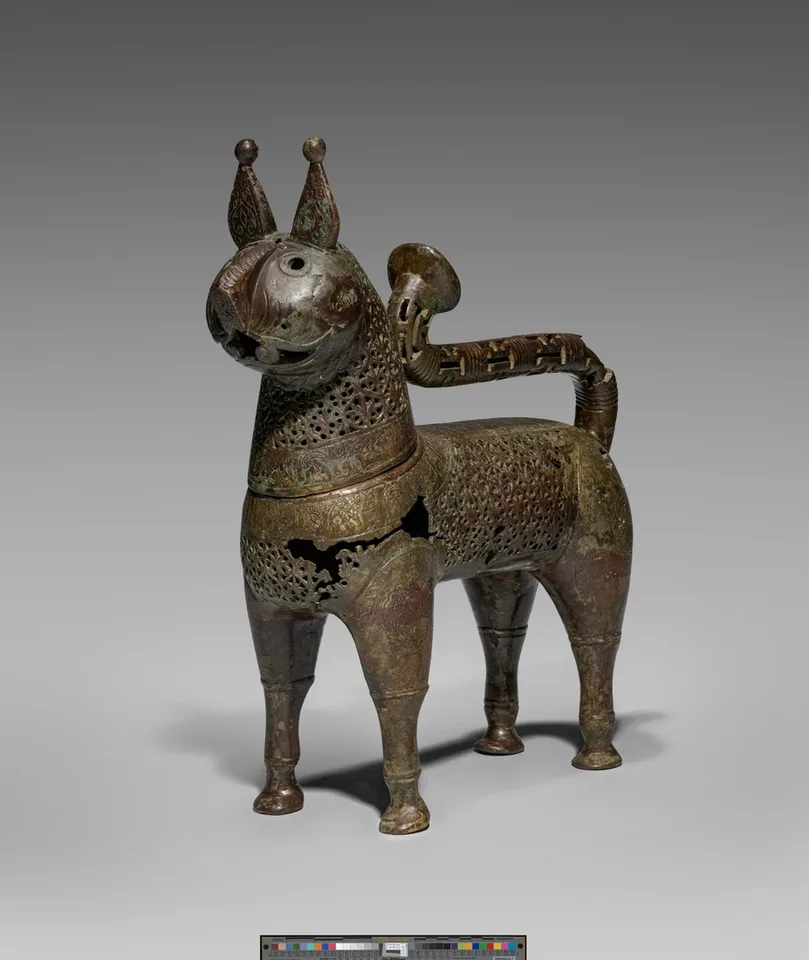
Follow the small openings that once let a metal animal breathe scented smoke.
This animal asks to be imagined in use. Its body could hold hot coals and incense, and the many openings would allow the scented smoke to escape. The museum identifies the creature as a feline, possibly a caracal, rather than a securely identifiable species. Tall ears and a rounded muzzle make an alert silhouette, while the repeated holes give the metal a surprisingly delicate surface. The head was made separately and could be removed to fill the chamber inside.
The object brings several kinds of attention together. A visitor could admire its animal form, follow the patterned metalwork, smell its contents or read its inscriptions. According to the museum, Qur’anic passages around the neck and along the back concern leaving commerce for congregational prayer and returning afterward to seek God’s bounty. The relationship between scent and that teaching is an interpretation offered by the record. The photograph shows the surviving vessel, including damage, rather than a reconstruction of its original setting or operation.
The species is only tentatively identified, and the larger jagged opening is damage. Do not treat every hole as an intentional smoke vent or infer a specific original room from the inscriptions.