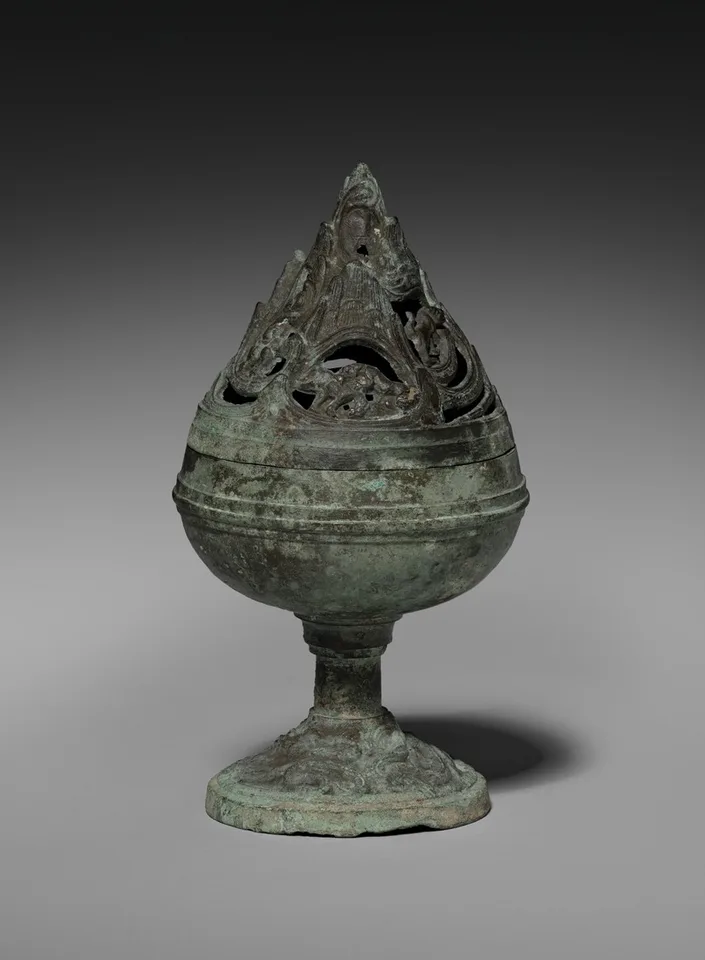
Smoke once escaped through this miniature mountain, making the bronze landscape change while viewers watched and smelled it.
The mountain is also a lid. Its peaks rise from a rounded vessel, and dark openings interrupt the slopes. When incense burned in the cup below, smoke could pass through these gaps, surrounding the miniature terrain with a changing atmosphere. What looks still in the photograph was designed to participate in an event involving movement and scent.
The museum describes hunting scenes and fantastic beings among the peaks, turning the cover into an imaginative realm. The straight horizontal bands on the bowl offer a useful contrast with that restless top: one part contains the burning material, while another transforms its smoke into a landscape effect. This Western Han object brings function and representation unusually close together. We should not pretend to recreate a particular ancient fragrance or ceremony, but the relationship between cavity, openings and mountain form remains visible.
The photograph records the burner without incense and cannot reproduce its scent or moving smoke. It also does not identify a particular historical ritual or user.