Ritual beyond the visible surface
Some objects matter through experiences a photograph cannot reproduce. These works involve scent, fading resonance, concealed contents or a position high within architecture. Begin with openings, joins and fittings, then distinguish what the visible structure supports from what must remain a qualified reconstruction.
Begin the journey ↓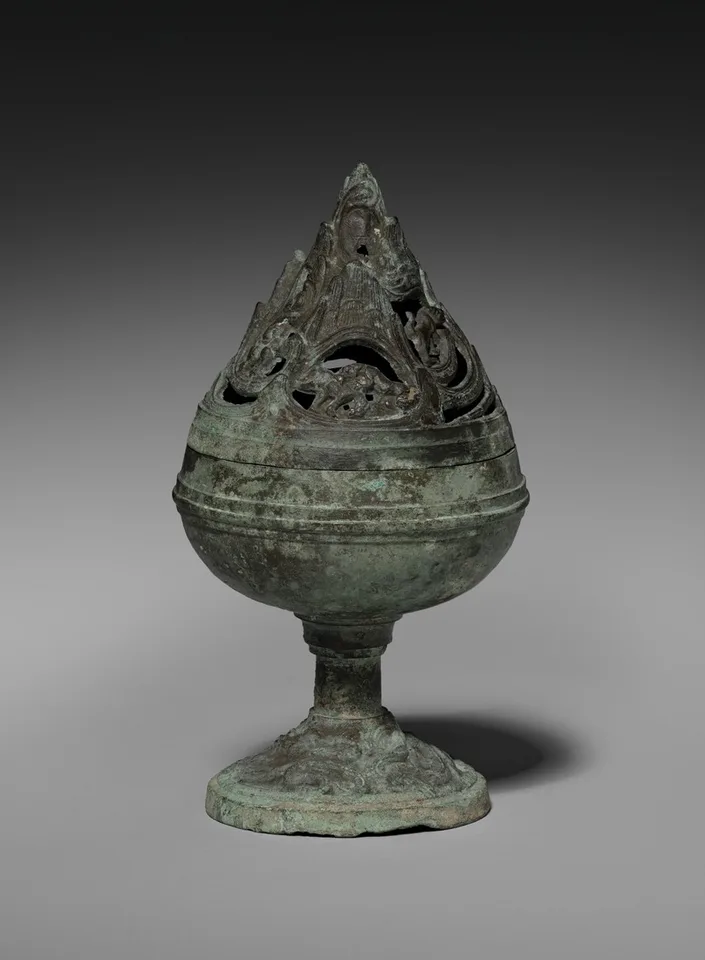
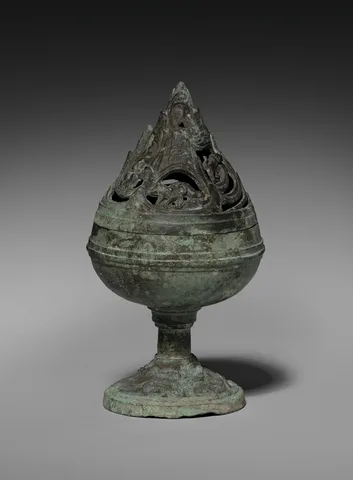
Make smoke into mountain mist
Openings allow incense smoke to emerge among miniature peaks. The useful lid transforms the burner’s output into an imagined landscape, though its ancient fragrance and particular ceremony remain unknown.
Carry this question: How does the opening contribute to both function and imagery?
Open the artwork ↗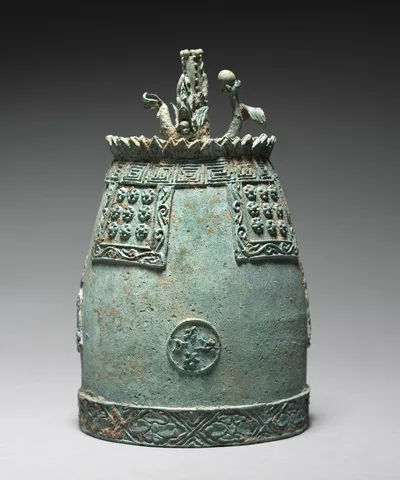
Imagine a sound disappearing
The bell’s mouth produced resonance that faded with time. The museum connects that sensory experience with impermanence, something a photograph can describe but cannot make us hear.
Carry this question: Which part of the meaning depends on time rather than appearance?
Open the artwork ↗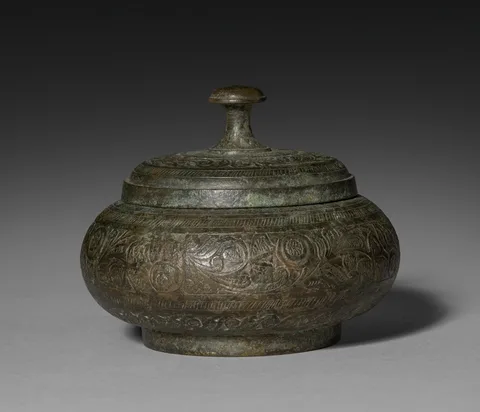
Recognise a meaningful container
The overlapping lid and visible join explain how the box opens. Its classification as a reliquary gives the container significance, while the photograph does not disclose any original contents.
Carry this question: What does the join establish more securely than the decorative pattern?
Open the artwork ↗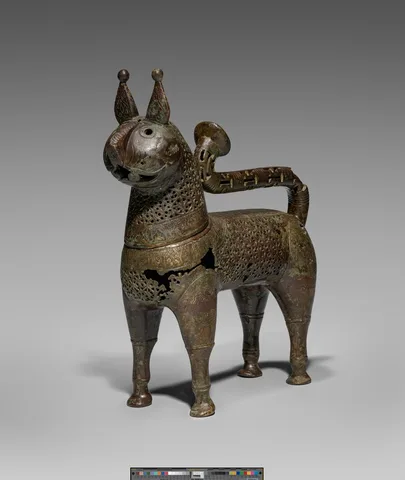
Let an animal release scent
Pierced curls allow smoke to leave the feline body. Unlike the mountain burner, this object turns a creature’s flank into the working surface of an incense vessel.
Carry this question: How does the animal form change your expectation of the smoke?
Open the artwork ↗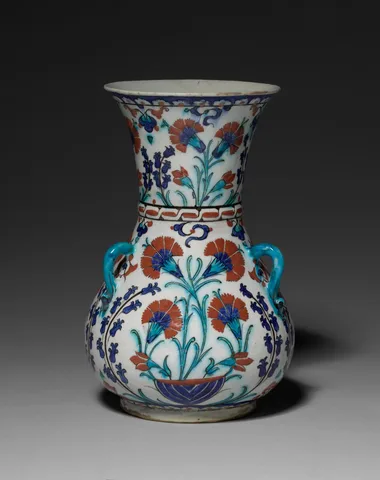
Question a familiar name
The opaque ceramic walls complicate the expectation that a lamp primarily illuminates. Suspension loops and floral decoration support an architectural role, while a possible acoustic function remains a proposal.
Carry this question: Which visible property challenges your first assumption about a lamp?
Open the artwork ↗Look at a pair more closely
- Smoke from a mountain and a feline
Two bodies designed to release incense
Read with the sources
Historical context follows the individual museum records linked on each artwork page. These routes make original comparisons of visible form; resemblance alone is not evidence of shared meaning or direct influence.