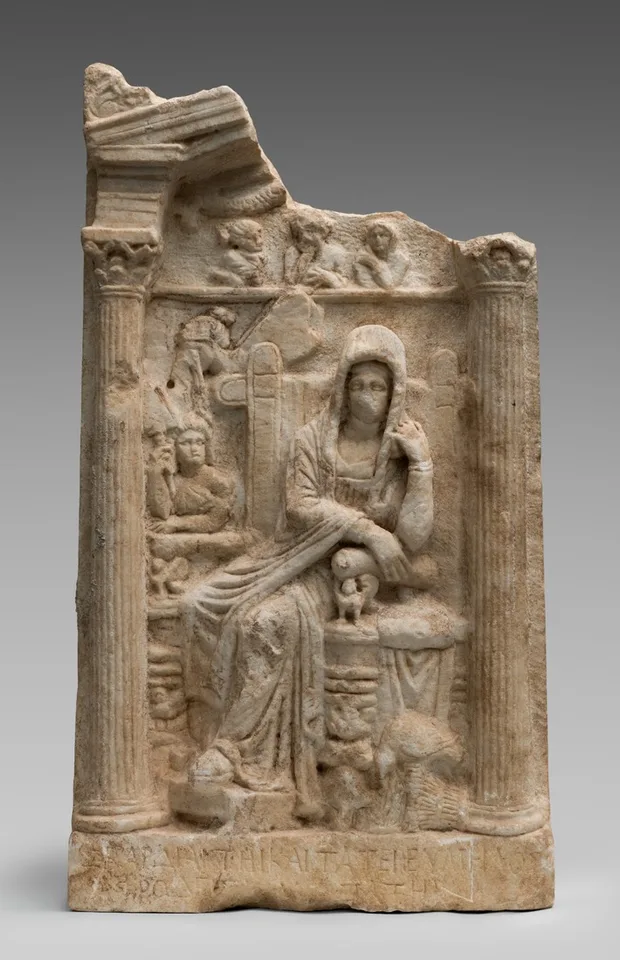
A seated woman occupies a miniature architectural frame, while small surrounding figures expand a memorial beyond the likeness of one person.
The inscription names the deceased as Sbardia, also called Tate, and records that her father Eumelos, son of Aphrodisios, set up the monument. The museum locates this ambitious grave relief in Hellenistic Pamphylia in southern Anatolia. The seated woman is accompanied by a smaller servant with a fan, which indicates social standing. Her elaborate chair and architectural enclosure make the memorial a carefully staged encounter rather than a simple isolated portrait.
Small details shift the subject from remembered life toward mortality. The museum identifies the winged figure above the chair as Sbardia’s departing psyche, or soul, and the figures in the pediment as the Fates. A hen on an overturned basket evokes the good life. The damaged roofline and worn carving require close attention: not every feature is equally legible in the photograph. The inscription provides a stronger basis for naming Sbardia and her father than facial appearance could ever supply.
The upper pediment is incomplete and several small motifs are worn. Identification depends partly on the museum’s reading; the photograph alone cannot recover every figure or the monument’s original setting.