What a posture can tell
An action can remain readable after its setting or attributes have disappeared, but that does not make every identification certain. This route moves through myth, memorials, athletic preparation and functional fittings. Follow the body’s weight, the direction of a hand or the relationship between two figures before asking which interpretation the museum’s evidence supports.
Begin the journey ↓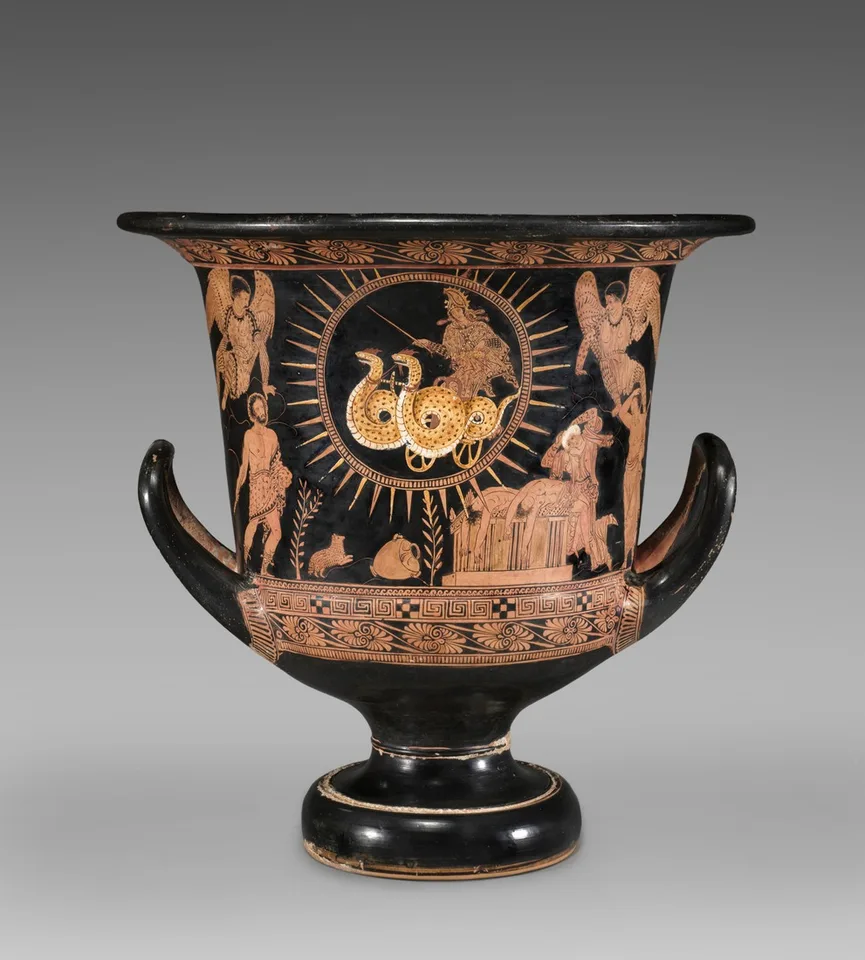
Escape above its consequences
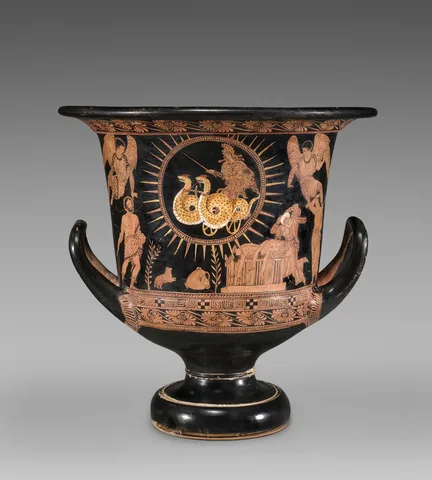
The radiant enclosure lifts Medea’s chariot above the smaller figures below. The museum connects those lower figures with the tragedy’s murdered children, so the visual elevation does not separate escape from its consequences.
Carry this question: How does the circular frame isolate the upper action?
Open the artwork ↗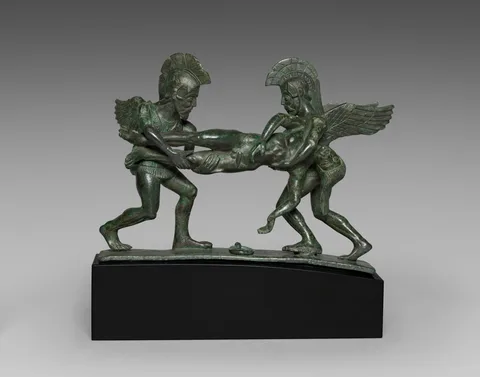
Weight between active carriers
The carried figure’s head tips backward as two active winged figures support his body. The contrast establishes a fallen warrior, even though the museum leaves his identity uncertain between Sarpedon and Memnon.
Carry this question: How does the carried body’s posture differ from the carriers’ poses?
Open the artwork ↗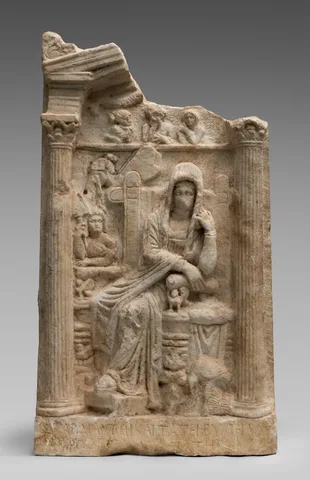
A seated person remembered
The largest seated figure anchors a memorial with smaller companions. The inscription supplies names that the pose alone cannot provide. Observe the chair and surrounding scale before treating the relief as an ordinary domestic scene.
Carry this question: How does the seated figure’s size organize the smaller people?
Open the artwork ↗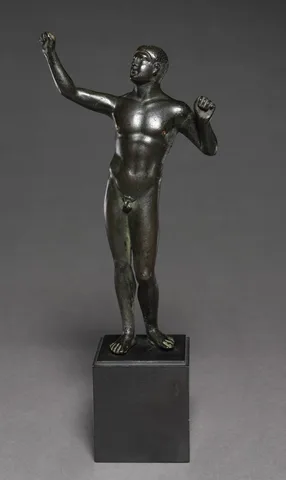
Preparation rather than combat
The raised hand can look ambiguous without its lost straps. The museum interprets the athlete as tightening boxing thongs, making the gesture a preparation for action rather than an actual blow.
Carry this question: How does the higher hand relate to the turned head and the lower hand?
Open the artwork ↗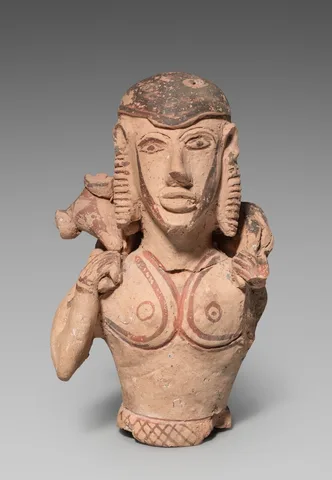
An animal across the shoulders
The carried ram defines the figure’s type, while the warrior-like equipment makes this example unusual. The pose suggests an offering relationship, but the exact hero and recipient deity remain unidentified.
Carry this question: How do the animal’s head and legs connect with the bearer?
Open the artwork ↗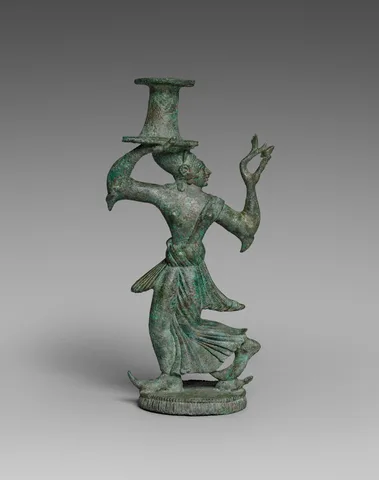
A dancer supporting something larger
The upper socket converts an animated figure into a structural support. The museum proposes a candelabrum or incense burner, so the raised arm belongs to both the represented movement and the object’s practical assembly.
Carry this question: Where does the body become a support for another object?
Open the artwork ↗Look at a pair more closely
- Carrying and escaping
A bronze handle and a painted krater organize the aftermath of death.
Read with the sources
Historical context follows the individual museum records linked on each artwork page. These routes make original comparisons of visible form; resemblance alone is not evidence of shared meaning or direct influence.
- Red-Figure Calyx-Krater (Mixing Vessel): Medea in Chariot (A); Telephos with Baby Orestes (B) — museum collection record
- Sleep and Death Cista Handle — museum collection record
- Grave Stele (Relief) — museum collection record
- Boxer — museum collection record
- Kriophoros (Ram-Bearer), Statuette — museum collection record
- Candelabrum Stand of a Dancing Maenad — museum collection record