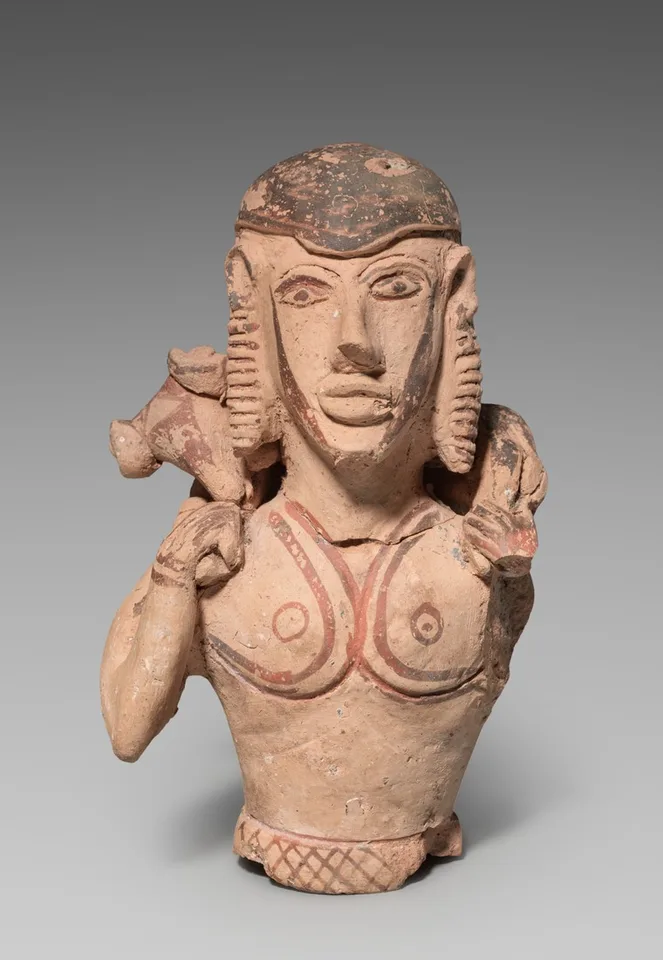
A ram rests across a painted warrior’s shoulders, bringing together an offering pose and the costume of a hero.
A ram-bearer is called a kriophoros in Greek art and is often a shepherd or, in later examples, Hermes. The museum describes this early Cretan figure as unusual because it appears to wear a warrior’s equipment. A painted chin strap suggests a helmet, outlined shapes indicate breastplates, and a crosshatched belt is identified as a heroic zoster. The museum interprets the ram as probably being presented in sacrifice.
The animal’s horizontal body binds the two shoulders together, while its projecting head breaks the frontal symmetry. The human hands hold its legs close to the chest. Paint does much of the descriptive work: curved outlines turn a relatively simple torso into armour, and the thick waist band becomes a conspicuous emblem. The surviving figure is incomplete below the belt, so its original stance cannot be inspected. The unusual combination of bearer, animal and martial costume is more secure than naming one particular hero or intended divine recipient.
The helmet identification and sacrificial purpose are qualified, and no particular hero or recipient deity is named. The missing lower body prevents a full reading of the original pose.