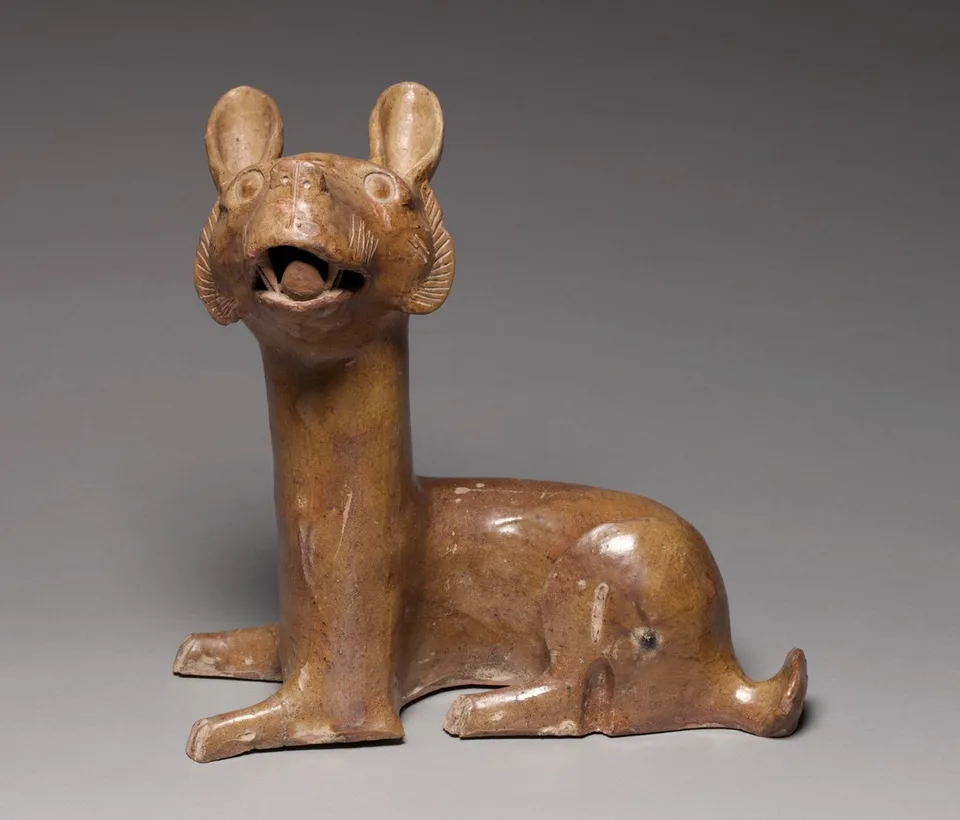
A wide mouth, alert ears and scratched whiskers give this seated pottery dog more personality than its simple body suggests.
The dog’s head seems almost too animated for its compact seated body. Upright ears, ringed eyes and an open mouth draw attention upward, while the front paws hold a steady position on the ground. Scratched lines around the muzzle and cheeks add a shaggy texture without requiring separately modelled hairs. The smooth glazed body makes those small incisions especially easy to notice.
The museum places this lively naturalism within Han tastes and beliefs about a pleasing existence beyond death. It contrasts the dog with more solemn animal images on ritual bronzes. That distinction is useful, but the object should still be studied as a specific piece of modelling: the exaggerated neck, frontal face and curling tail create humour through proportion. No individual pet or owner is identified, and the available provenance does not supply a documented original burial context.
The dog is not an identified pet portrait. The museum gives a broader Han context, while the available record does not establish its precise original placement or owner.