Animals as particular objects
Recognising an animal is only the beginning. These works use fur patterns, lively modelling, tack and a hollow body for very different purposes. Move from what is visible to what the object does, resisting the temptation to give every animal one fixed symbolic meaning.
Begin the journey ↓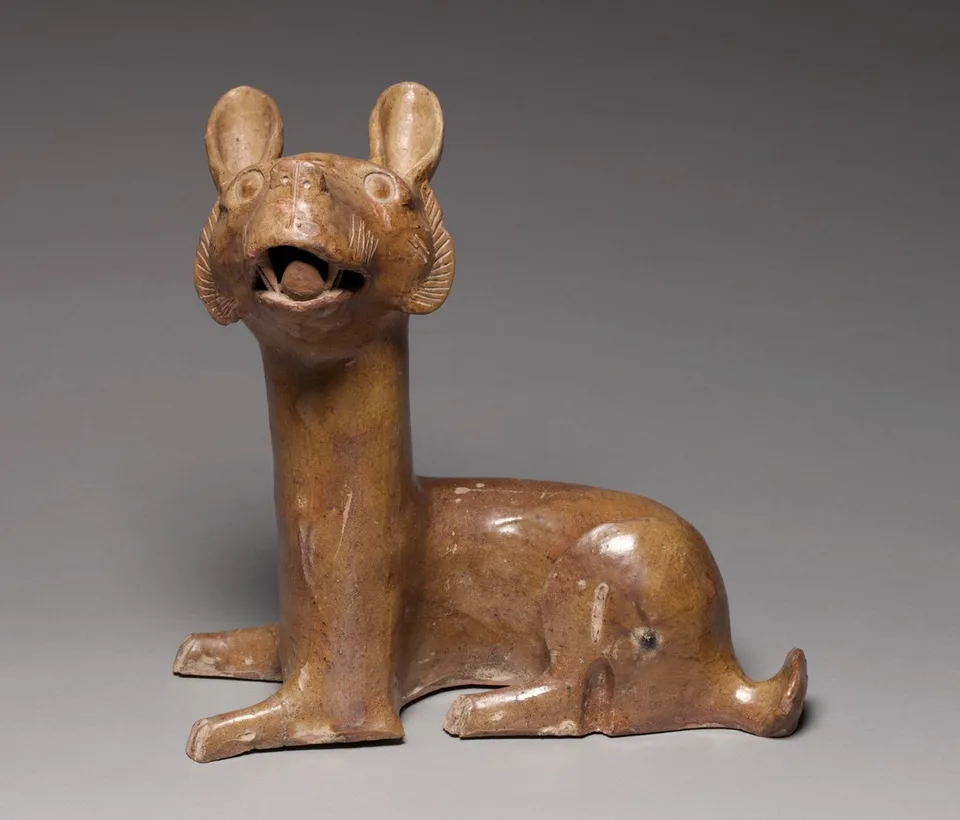
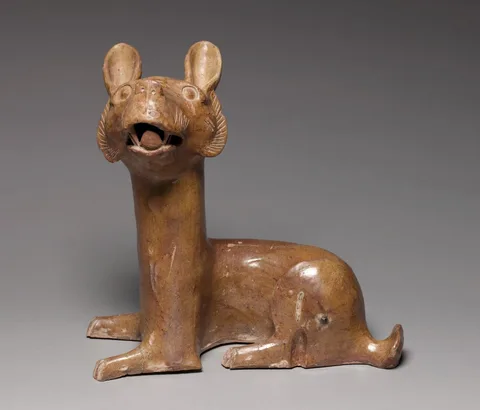
Animate a compact body
Incised whiskers and an open mouth make the dog lively without modelling every hair. Its humour depends on proportions and small marks, rather than on an identified pet’s biography.
Carry this question: Which small feature gives the head its strongest character?
Open the artwork ↗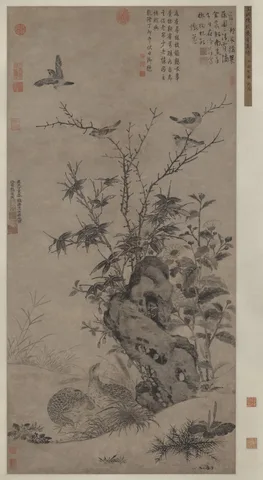
Differentiate through ink
Tiny feather marks distinguish the low bird from the larger rock and long leaves. Monochrome does not erase material differences; it makes variations in line and wash do more of the work.
Carry this question: How do feathers differ from stone when strong colour is absent?
Open the artwork ↗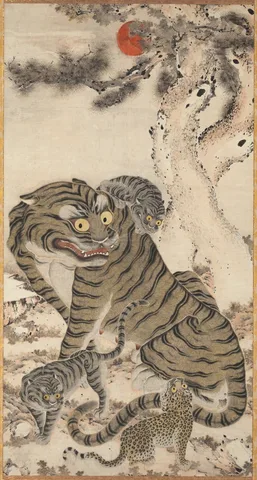
Notice more than one feline
The spotted leopard differs from the striped tigress and cubs. The museum gives each a place in an auspicious Korean composition, a reading that should remain specific to this setting.
Carry this question: What would be lost if every small animal were called a tiger cub?
Open the artwork ↗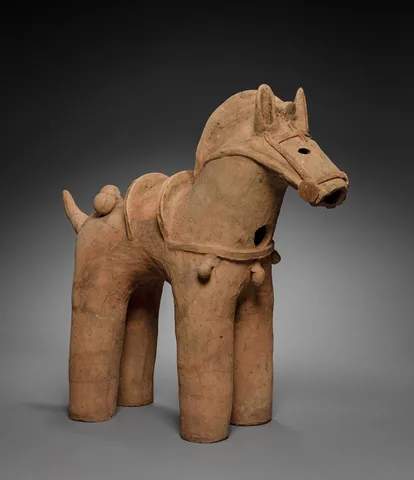
Read the equipment
Bells and straps identify a furnished horse, not simply an animal silhouette. Their comparison with Korean saddlery supports a focused account of regional exchange without supplying the maker’s personal history.
Carry this question: Which details carry more historical information than the general horse shape?
Open the artwork ↗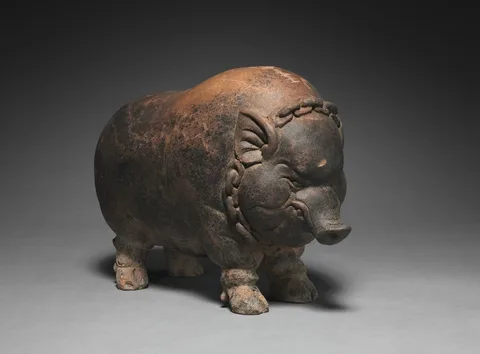
Turn a body into storage
The exaggerated rounded body supplies room for coins, while the fierce face and modelled chain suggest protection. A recognisable animal becomes part of the bank’s practical and expressive design.
Carry this question: How does the useful hollow volume affect the animal’s proportions?
Open the artwork ↗Read with the sources
Historical context follows the individual museum records linked on each artwork page. These routes make original comparisons of visible form; resemblance alone is not evidence of shared meaning or direct influence.