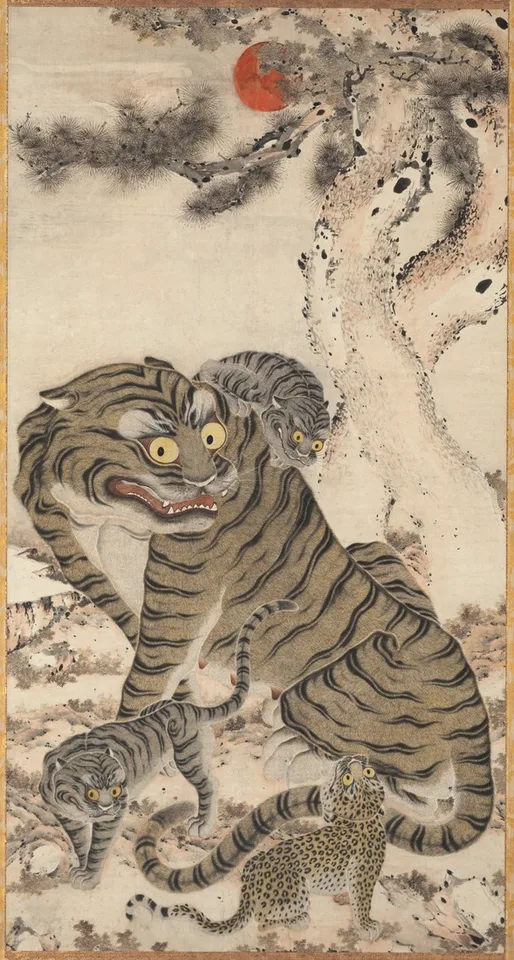
A wide-eyed tigress, striped cubs and a spotted leopard gather beneath a red sun, mixing close observation with auspicious imagery.
The animals are not all the same kind of feline. Striped cubs accompany the large tigress, while a spotted leopard stands below. Their patterns and exaggerated eyes make the group lively and easy to distinguish. Above, a small red sun provides the brightest accent against the pale pine and largely earthy palette. The scene combines attention to skin markings with an emphatic, almost theatrical family grouping.
The museum explains this as an auspicious composition: pine suggests longevity, the tigress and cubs prosperity, and the leopard good fortune. It also places tiger imagery within Korean New Year protection practices. Those associations belong to the work’s cultural setting; they should not be transferred automatically to every tiger or pine image. This painting’s unusual substitution of a sunrise for the magpies often found with tigers gives its particular arrangement a further point of interest.
The symbolic associations come from the museum’s Korean context, not universal animal meanings. The composed group and expressive faces should not be mistaken for a wildlife observation.